

After a first half of the season where the team languished in the relegation zone, the second half saw a major comeback, helped by the contributions of new players acquired during the special registration period in June. The 2025 season, fought under the new head coach Rikizo MATSUHASHI, became a year of clear progress, gaining both challenges and achievements despite the struggles. While the football side showed only gradual improvement, the business side recorded the highest sales in the club’s history and announced plans for a new training facility, among other positive developments. This season review has Shigeya Kawagishi, the club president, looking back on the year. The first part covers the evaluation of the first year under the MATSUHASHI regime, the changes seen in the team, and the support provided in terms of strengthening the squad.
Interview and composition by Kei Sato (Freelance Writer)
──The 2025 season in the Meiji Yasuda J1 League ended with an 11th place finish. This is a decline compared to last season's 7th place. First, how do you perceive this result?
Of course, we are not satisfied with the ranking. As I mentioned in the previous interview (conducted after the financial results announcement in June this year), we struggled quite a bit in the first half of the season and at one point fell to 18th place, which is in the relegation zone. In the first few matches of the season, we played with a three-back formation and felt the team was making progress, and I even exchanged words with fans and supporters saying, "We can check our answers after each match." At that time, the staff also felt a sense of confidence, but because the results did not follow as expected, the team gradually became distrustful and doubtful. After all, we had dropped as low as 18th place.
However, the team did not collapse. There was unity. Although it was disappointing to be eliminated in the 3rd Round of the J.League YBC Levain Cup, that allowed us to take time in June to reset, add new players, and switch tactically to a four-back formation. Being able to restart from there was a positive development.
──From the restart after the break, we steadily accumulated points.
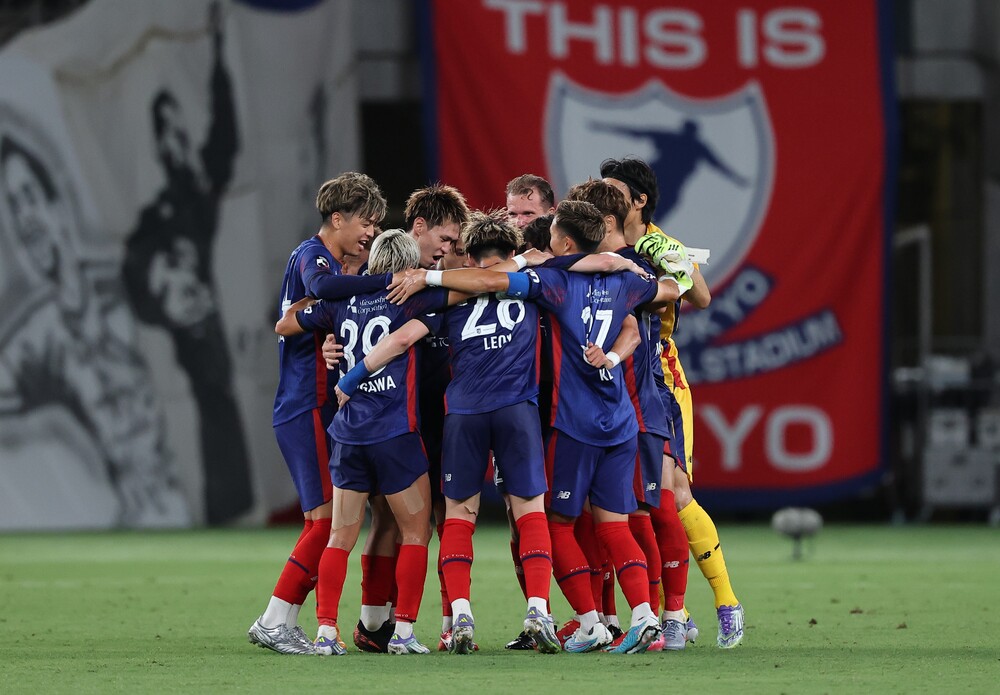
I think the players were also familiar with the four-back formation. Since the restart after the break, I heard from the field that both the mindset and methods had been organized. The difficult period was long, but the team was united in their approach. Considering the period after the break as the second half of the season, there were 20 matches including postponed games, and the team earned 31 points. In terms of ranking, if we look only at the second half, the team was in a position to compete among the top. While it is natural to point out that the team was far from winning the championship, I believe the team fought together until the end to secure the highest possible position in the second half.
──Was the poor performance in the first half of the season largely due to bringing in a new manager?
No, I don't necessarily think that is the case. From the beginning, there was a shared understanding that the team Rikizo MATSUHASHI builds is fundamentally a four-back formation, with attempts to try a three-back depending on the situation. In fact, during the Okinawa camp, training with the four-back continued until the latter part, and in the training match on the final day, we used a three-back and were able to get a very good feel for it. On top of that, when it came time to start the season, there were some concerns about the side-back positions due to injuries and conditioning issues, so after careful consideration by the manager, the decision was made to adopt the three-back formation for the opening match.
Judging from the results, the conclusion is that the three-back formation did not really fit. Although there was some progress immediately after the start, it can also be pointed out that when the team’s form declined, they couldn’t find a place to regroup as a team. This is something I discussed with the manager as well, but switching from a three-back to a four-back formation amid a congested schedule was quite difficult. Therefore, at some point, we needed time to revert back to the four-back. Being able to dedicate the two-week break at the beginning of June to that was significant. There were other minor adjustments as well, but fans and supporters may have felt that the formation after the break suited the team better.
For example, Kota TAWARATSUMIDA, who had been playing as a shadow, seemed to be able to bring out his strengths more by moving to the left side. As a result, I believe there were parts where the players were able to play more vividly due to the formation change. Of course, the reasons for struggling in the first half were not solely due to the formation issues, and there is no doubt that progress was made, but it is also certain that the adjustments made during this period cannot be ignored.
──Is it difficult, from the perspective of team composition, to prepare a lineup that can adapt to any formation?
It’s not just about this season; I hear about the approach to team composition every season. Simply put, the idea is to have two regular-level players for each position as much as possible to encourage competition. With a congested schedule and various competitions intertwined, there is inevitably a risk of injury. While a third backup player is also necessary for that reason, preparing to that extent for every position is difficult from the perspective of available personnel in the first place.
For example, even across all of Japan, the absolute number of left side backs is not large. The same can be said for left-footed center backs. It is also difficult to have multiple regular-level players for these positions. In that sense, certain positions inevitably become contested among teams. I feel that assembling the envisioned lineup in its complete form is a challenging task.
──Please tell us how you perceived the team's performance in the second half of the season.
First of all, I think it was significant that the new players who joined the team, after we were able to reinforce some of the targeted players to a certain extent, performed well. As we switched to a four-back formation, Alexander SCHOLZ and Sei MUROYA joined the lineup, and the addition of goalkeeper Kim Seung-gyu was also important. With the defense stabilized, I feel the attacking players were able to move forward with confidence. The team’s mentality changed greatly, and with Motoki NAGAKURA, who can hold the ball up front, joining the team, a good flow was created.
What I felt strongly was the “Yokohama back-to-back matches” in June. We won 3-0 away against Yokohama F. Marinos (Sec. 15 / June 25), and then, after just two days, we also secured a 2-1 victory at home against Yokohama FC (Sec. 22). Especially in the Yokohama FC match, Masato MORISHIGE scored a penalty kick in the last play of additional time to secure a come-from-behind victory, which gave confidence to both the players and the entire team, and I felt that from then on, they were able to play with conviction.
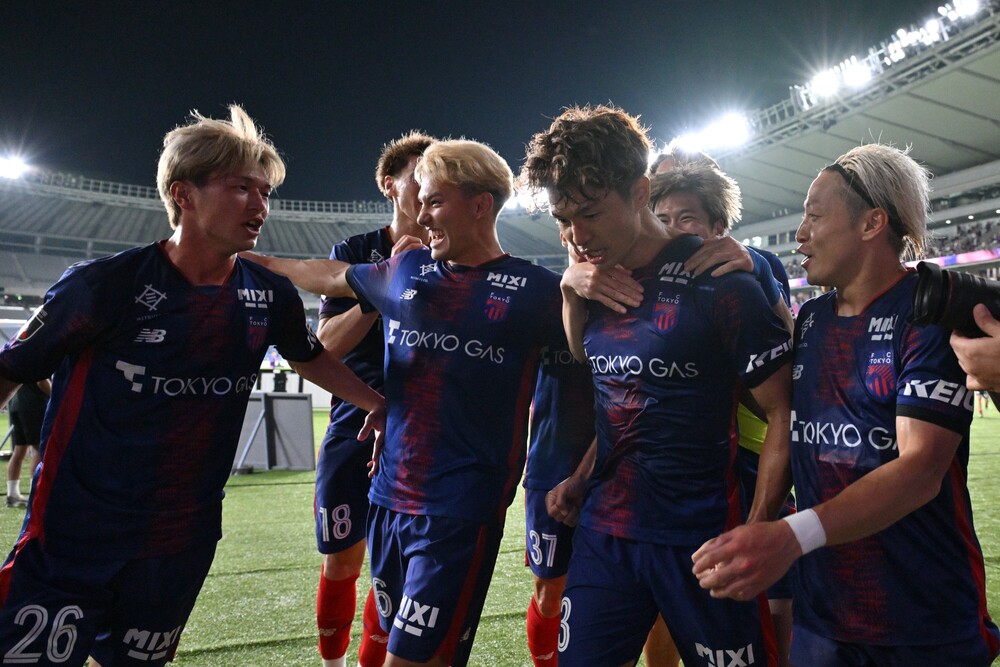
──So, the hesitation seen in the first half of the season was gradually dispelled, correct?
That's right. After overcoming the matches against Yokohama FM and Yokohama FC, which were battles between lower-ranked teams, the desire within the team to move forward with a positive mindset grew stronger. From there, the mentality shifted to trying to improve our ranking even by just one position. Specifically, the defensive reinforcement I mentioned earlier succeeded, and we were able to seriously focus on how to reduce the number of goals conceded. The increase in the number of clean sheets (matches without conceding goals) is proof of that. Compared to the first half, we became able to defend more tenaciously. We were able to hold competitive matches even against the league's top teams, and in away games against Sanfrecce Hiroshima and Vissel Kobe, we saw defensive improvements such as patiently holding on to secure one point. There were more matches where we didn’t collapse easily and managed to snatch points, and within ourselves, we felt and sensed that improvement.
──I believe there were many things shared with Coach Matsuhashi after competing for a full season.
Of course, that is the case. On top of that, we are carefully reviewing the budget for next season. First, we are considering how the initial budget was set for this season. Although we increased the team’s personnel expenses this summer, including effectively utilizing the transfer fees left by Seiji KIMURA and Taishi Brandon NOZAWA through their overseas transfers, the 2025 season made us think deeply about how the original budget should have been set. We are currently in the process of assembling the squad for next season, but when thinking about competing at the top of the J1 League, I feel that our previous approach will not be enough. While slightly modifying what we have considered our standard, we want to approach the new season with a fresh mindset. It’s not that we haven’t invested in the football side before, but considering our management scale and financial strength, we are now discussing giving it our absolute all.
──On December 4, just before the final matchday, it was announced that Coach Matsuhashi would continue in his role. Could you please explain the reason for this decision once again?
When we carefully reviewed the second half of the season, we concluded that continuing rather than resetting at this point would allow us to reach greater heights more quickly. This was also explained to the media by General Manager Mitsushiro OBARA, but the main reason was the clear sense of progress the team had made. Looking only at the second half, the team earned 31 points in 20 matches (30 points if it were 19 matches), and simply doubling that number would result in 60 points, which would place us tied for 6th in this season’s standings. Considering the content of the matches in the second half, we recognize that the team had the potential to break into the upper ranks.
It is true that the number of goals conceded decreased in defense, and the number of matches where we secured points increased. Additionally, the metrics we use as benchmarks have also steadily improved compared to the past few seasons. For example, one of these is the expected goals value. Although this figure slightly declined in the second half of the season due to many tight matches, it still remained at a higher level throughout the season than before. We also saw improvements in the rate of entering the 30-meter line, the number of entries into the penalty area, and ball possession time in the opponent’s half. The offensive indicators were not bad.
Still, since the result shows a decrease in goals compared to the previous year, it is necessary to acknowledge this and recognize the challenges. We also feel that it has become clear what we need to pursue, such as improving accuracy in front of goal and not just delivering simple crosses, but increasing the number of challenging passes. Increasing effective set plays and addressing details like the easy ball losses from our own throw-ins seen in the final match against Albirex Niigata, which led to conceding goals, are tasks we must thoroughly work on as we continue. We believe that by doing so, a new perspective will emerge. Based on this way of thinking, we asked Coach Matsuhashi to extend his contract.
──You chose to prioritize the benefits of continuity.
Tokyo has a history of changing coaches approximately every year and a half, but when the club aims for the league title, the image is to climb the ladder together with a coach who leads a long-term regime of three or four years. If that coach is Matsuhashi, it would be wonderful, and the club must strive to make that happen. However, if such a situation does not arise, it is natural that we must think strictly about various aspects.
──At the final home game, boos were heard from the stands. How did you honestly feel about the fans' and supporters' reactions?
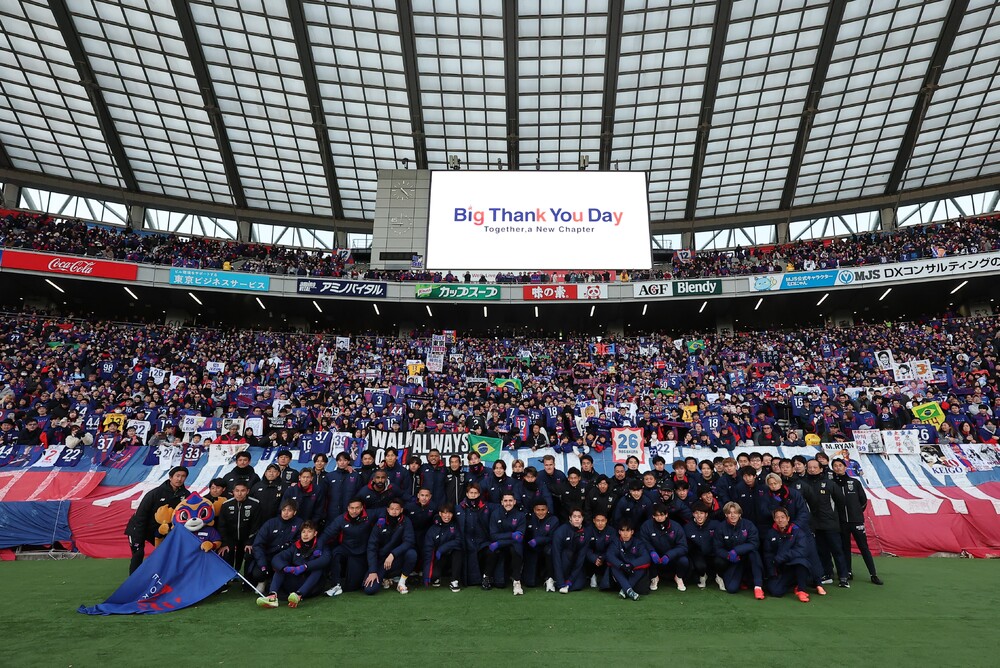
Although Coach Matsuhashi was speaking at the time, I take that as an expression of opinion toward the club. I understand that for the fans and supporters, it was a stressful season, and I believe they wanted to express those feelings somewhere. It was a message of "Do better," and we received that kind of encouragement and admonishment. We will firmly pull ourselves together here and work toward the new season and the future beyond.
The latter part ishere
♢Previous Management Reports are here
2024 Financial Report and the Club's Current Position (Part 1)
2024 Financial Report and the Club's Current Position (Part 2)
2024 Season Summary: Business and Football (Part 1)
2024 Season Summary: Business and Football (Part 2)
2023 Financial Report and the Club's Current Position (Part 1)
2023 Financial Report and the Club's Current Position (Part 2)