

FC Tokyo's 2023 fiscal year financial report, announced on May 21st. The operating revenue reached a record high of 5.929 billion yen, achieving a growth of 660 million yen compared to the previous year. However, there is also the current situation of recording a deficit for the fourth consecutive year.
What kind of efforts were made there? And what is the current state of the club, looking towards a complete recovery from the pandemic and the future?
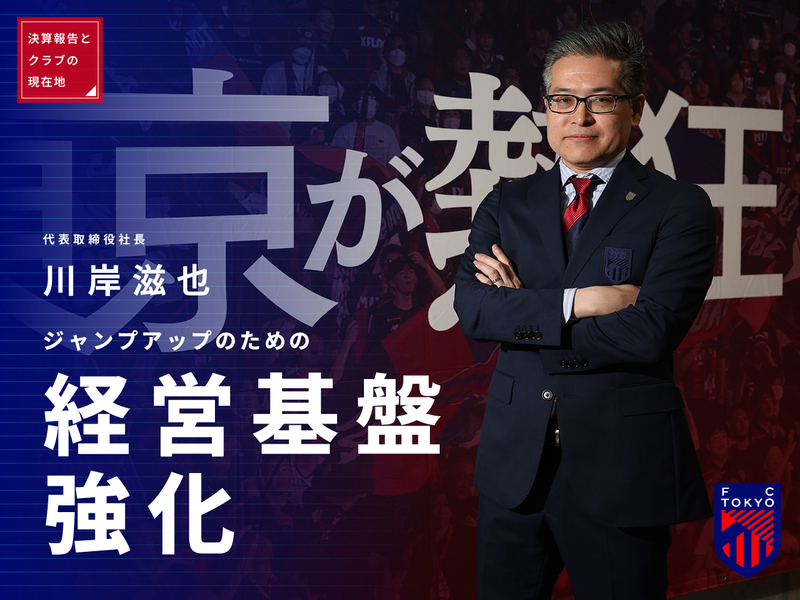
In the second part, we talked to President Shiya Kawagishi about the current state of emblem changes, as well as the combination of business and strengthening.
Coverage and Composition = Kei Sato (Freelance Writer)
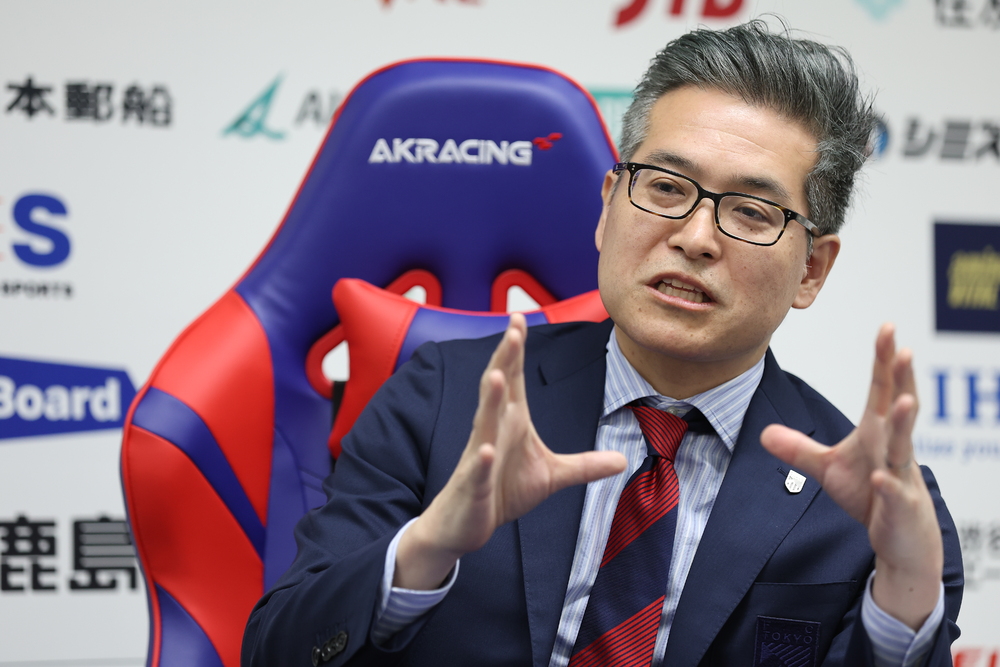
──The club emblem was renewed starting from the 2024 season. Please tell us again about the background and effects of this change.
Kawagishi What I felt when I became president was that the goal setting within the club was ambiguous. Even though the fans and supporters had a common goal of winning the J1 League, there were various opinions on what kind of club they wanted. Therefore, in early 2023, we formulated "FC Tokyo VISION 2030" and shared our goal setting, including the way the club should be.
Change EmblemWhen I became president, I never thought about changing the emblem, but as we formulated VISION2030, we also thought about the role of the emblem. There are many things we need to do to achieve VISION2030. So we decided to change the emblem and show our determination to move forward and take on the challenge. The design embodies the meaning of "inheritance and innovation." One supporter said, "I can feel your determination even though I know there will be criticism." As a club, we have set new goals and this was our effort to take a new step towards the next quarter century, which also coincides with the 25th anniversary of the club's founding.
──How do you feel about the current situation after adopting the new emblem?
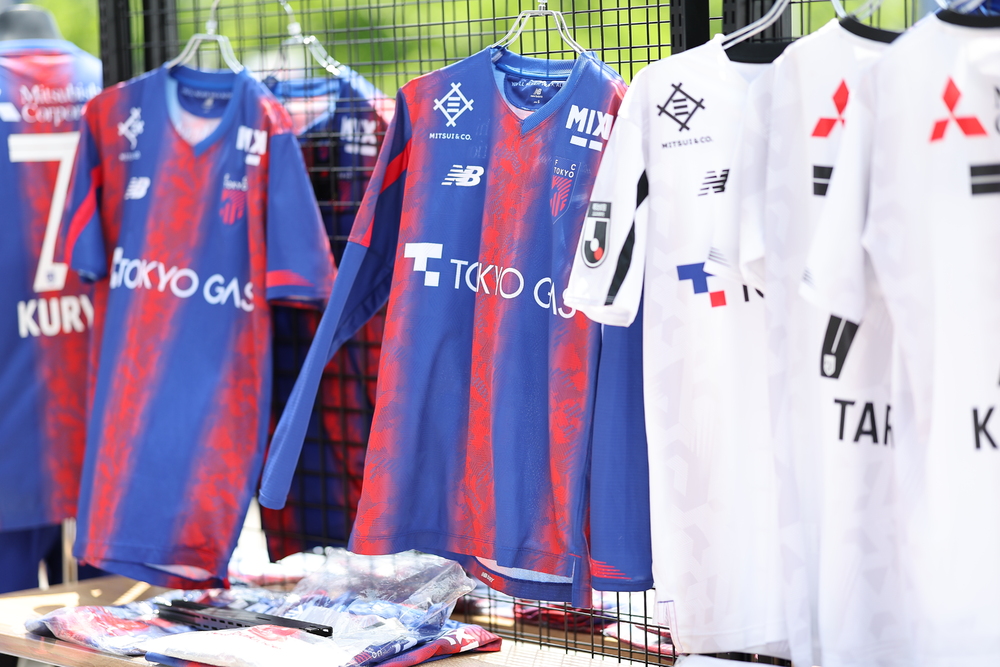
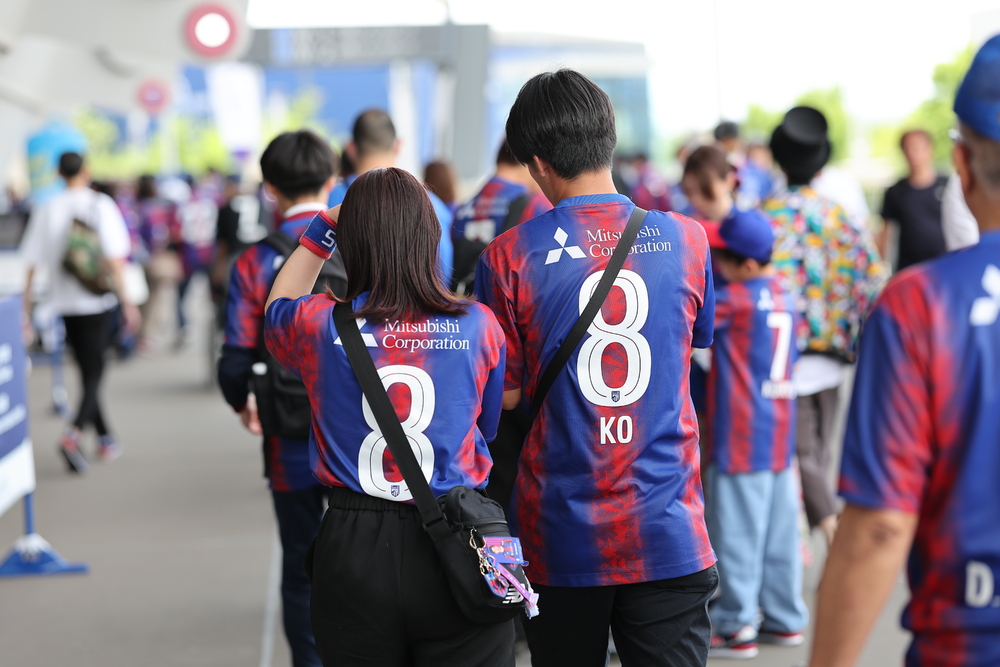
Kawagishi I don't think everyone is fully convinced yet, but I do feel it is gradually being accepted. Opportunities for people to actually pick up merchandise have increased, and the 2024 season uniforms are selling significantly better compared to the same period in the 2023 season. Sales at the stadium have also reached unprecedented numbers, so we have had a better start than expected in that regard as well. There are still not many well-established products utilizing the new emblem, so we will gradually proceed with product development. Moving forward, we want people to see the club’s determination and activities, and eventually, we hope to reach a point where everyone is satisfied.
──I think the increase in uniform sales has been a trend continuing since last year. Is there a possibility of further revenue growth in the 2024 fiscal year?
Kawagishi In every club, uniforms account for a large portion of merchandise sales. This is something I discussed with Chairman Naoki Ogane as well, and I have heard that FC Tokyo has had a culture of supporting the team by wearing blue or red items. Even before I took office, we have been working on encouraging everyone to support the team by wearing uniforms, and now those efforts are beginning to bear fruit. In fact, merchandise sales steadily grew even during the COVID-19 pandemic, then jumped up last season after coming out of the pandemic. This season, it looks like we can move up yet another level.
──Is it expected that merchandise sales will exceed the planned figures?
Kawagishi In the 2023 fiscal year, the number was 600 million yen, but I think it will exceed that. However, in the financial statement announced by Urawa Reds, the merchandise income was 1.65 billion. There is always room for improvement. While recognizing the potential, I would like to aim for around 900 million to 1 billion yen first.
──Within "VISION2030," 2023 was positioned as the year of "overcoming the COVID-19 pandemic." How do you summarize this past year?
Kawagishi We were able to "recover" faster than expected. The impact of the pandemic was quite significant, with sales dropping from 5.6 billion yen in fiscal 2019 to 4.6 billion yen in fiscal 2020. When I became president in fiscal 2022, I was concerned about how far we could recover. Given that situation, we considered fiscal 2022 and 2023 as phases to first restore sales to the same level as fiscal 2019 before the pandemic.
However, it was able to surpass the 2019 fiscal year in the 2023 fiscal year. It can be said that we entered the "Phase 2" of the "VISION2030" growth period, which was originally thought to be after the 2024 fiscal year, as of the 2023 fiscal year. However, it is important to note that we have not fully recovered everything from before the pandemic.
──What does that mean?
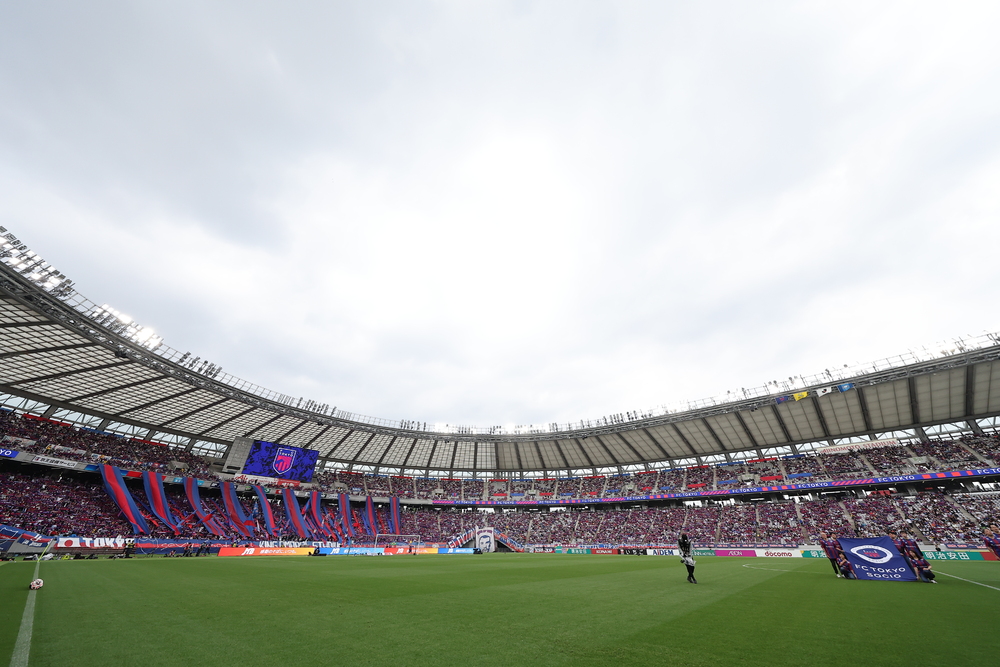
Kawagishi Compared to before the pandemic, attendance has only recovered to about 93 percent of the 2019 season. Upon examining the details, we found that there has been a significant turnover. In other words, it is not that 93 percent of the people who attended around the 2019 season have returned, but rather that new people have come, resulting in the 93 percent figure. This fact is shared among the clubs, but we must calmly accept this point.
──I think it will continue to be a very difficult task to attract new customers, but for example, does holding matches at the Japan National Stadium have a significant effect?
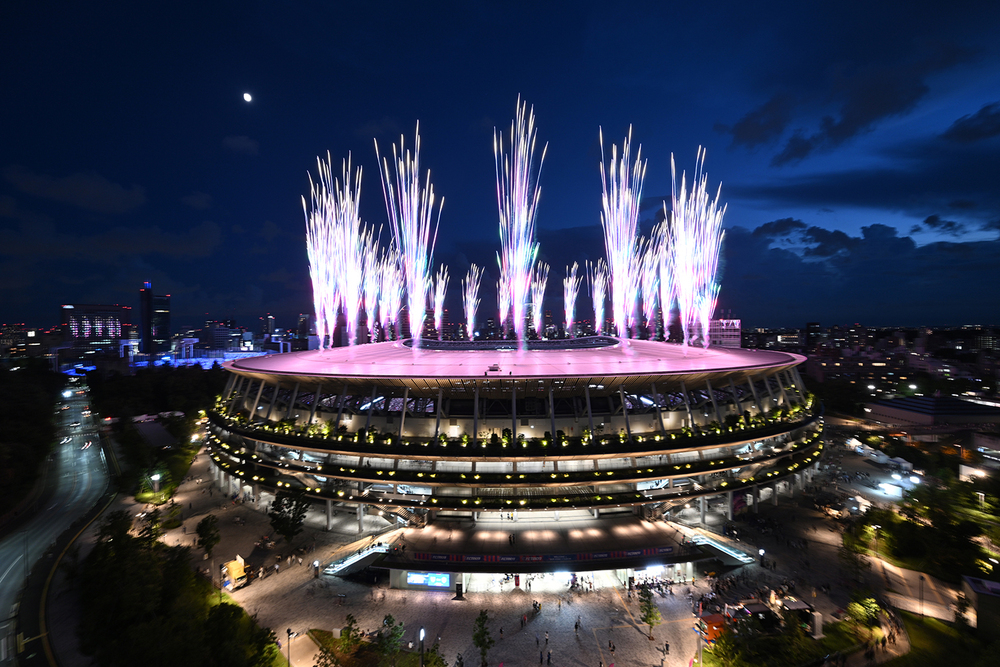
Kawagishi Since the 2022 season, we have already held six matches at the Japan National Stadium. The effect is definitely showing. The number of people who have registered FC Tokyo with a J.League ID is about to reach 600,000. This is an overwhelmingly high number even within the J.League, and many of these registrations came from initiatives aimed at the matches held at the Japan National Stadium. When analyzing their places of residence, it is clear that they are more concentrated on the eastern side of Tokyo compared to when matches were held at Ajinomoto Stadium. In terms of being able to approach people we have never met before, holding matches at the Japan National Stadium can be said to be an important opportunity.
──I believe that in order to turn new customers into repeat visitors, we cannot ignore the need to enhance the core appeal of soccer itself. Conveying that appeal to people who have not yet experienced it and improving the attractiveness of the soccer played by the team are two wheels of the same cart, and it may not be a matter of prioritizing one over the other. What are your thoughts on this point?
Kawagishi First and foremost, it is obvious that the value of a professional sports club lies in the team’s performance itself. In the case of FC Tokyo, as a soccer club, the substance and results of the soccer, as well as the presence and name recognition of the players, are the sources of the club’s value. The job of the business staff is to convert that value into money and enable reinvestment. It is clear that what is communicated from the pitch—that is, the performance—is important, and this is an unchangeable fact. It is also a fundamental principle not to neglect investment in that area.
When I first became president, I was a complete outsider when it came to soccer, so I didn't know what to do right away. On the other hand, I was able to quickly grasp areas for improvement on the business side. So I focused on improving the business side, which resulted in increasing sales by nearly 6 billion yen in just 2 years. However, personally, I feel that the business side has reached its maximum potential. As I mentioned earlier, the club's brand value is created through soccer. So the next step is to improve our performance in soccer. The theory is to turn the gears in soccer and recover in business. It's not like we haven't paid attention to the competitive side before, but starting this season, we are actively working on it.
──Specifically, what kind of initiatives have you started?
Kawagishi Last season, we finished 11th in the Meiji Yasuda J1 League, which is obviously not a satisfactory result. The competitive aspect definitely needs to be improved. However, the difficult part is that everything in this area depends on "people." For example, even if we have analysts and introduce various analysis systems, it is people who arrange those and express them on the pitch. When you think about it that way, it is an extremely analog world, which is why it is so challenging. Improving player performance also depends on people, so it is necessary to invest in the fundamental "people." Of course, this is done with consideration of the on-site intentions, but specifically, we have increased the number of staff involved in the soccer side on the ground.
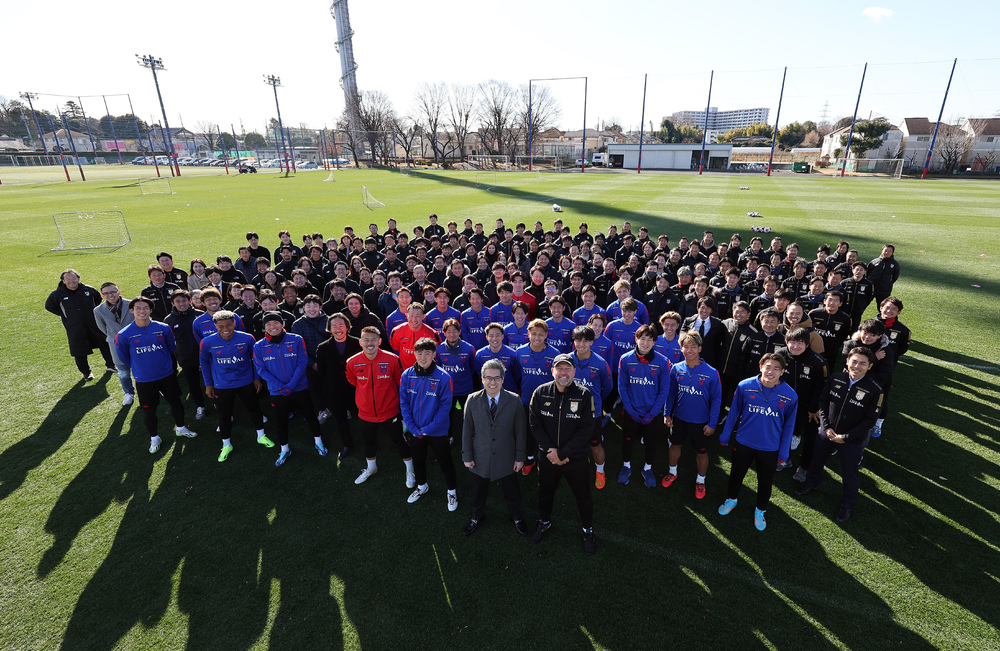
──When covering the training sessions, I notice there are many staff members, voices are raised, and I feel more energy than ever before.
Kawagishi Of course, I understand that simply increasing the number of people does not immediately lead to results. We must carefully assess the situation step by step. Another point, which I have also discussed with General Manager Mitsushiro OBARA, is that sports rely heavily on mental strength, and I have felt that FC Tokyo experiences significant ups and downs. To minimize these fluctuations and maintain a high level, we have added staff who can provide mental support.
As a club, we can support the improvement of athletic performance by investing in people and the environment. Therefore, we have first strengthened our staff. We believe that we now have a system in place that can support players and teams more meticulously than ever before.
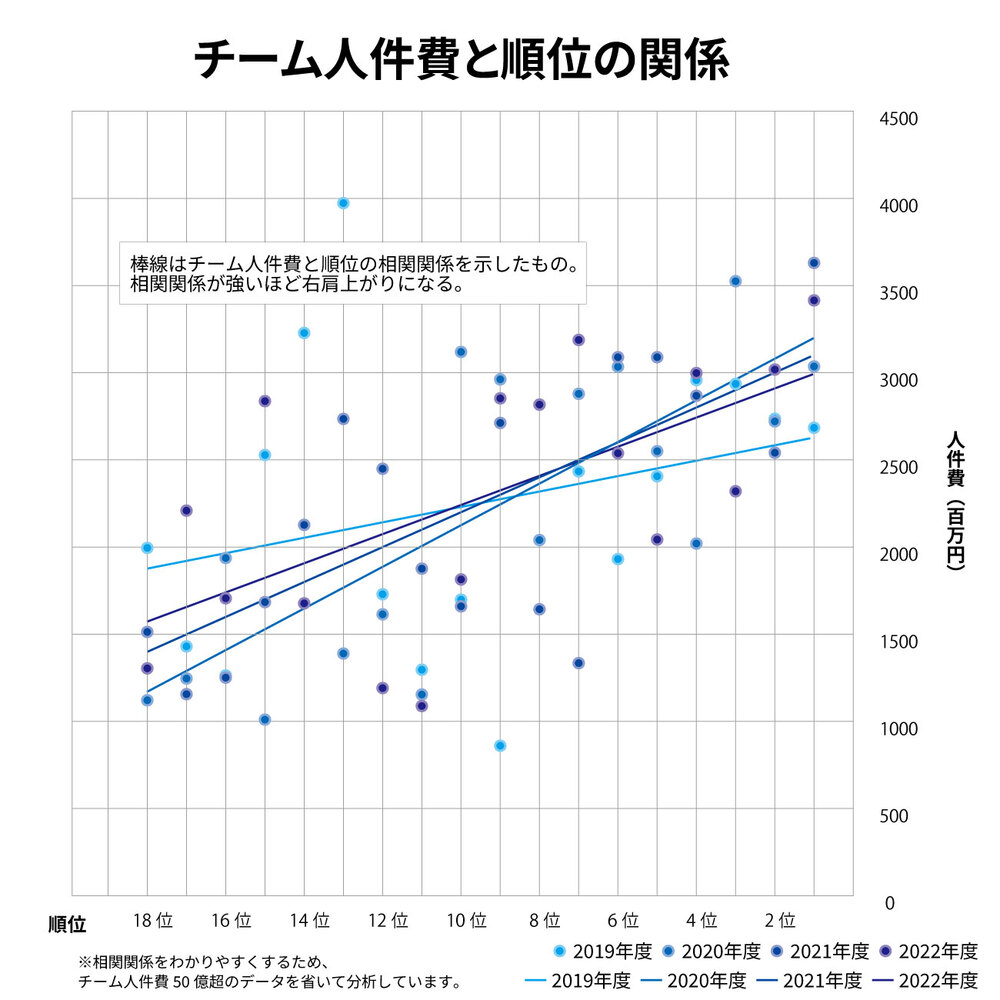
──What about the aspect of player reinforcement? Looking at last season’s standings, Vissel Kobe and Yokohama F.Marinos, who ranked first and second in top team personnel expenses in 2022, ended up finishing first and second in the league as well. FC Tokyo’s personnel expenses were 2.538 billion yen, ranking ninth overall. This is a common case in major European leagues too, but what are your thoughts on this?
Kawagishi I think that is exactly right. No matter how much analysis we do, there is undoubtedly a correlation between personnel expenses and league standings. We are aware that our reinforcement budget ranks ninth in the league, and this is an area we want to address as a club challenge. For that reason, on the business side, we are focusing on increasing revenue and aim to build a solid organization that can make investments.
However, this also requires a certain amount of time. Therefore, I also feel that we need to do something to move up to the next level as soon as possible. We want to strengthen our management foundation and create a situation where we can make a jump somewhere. Of course, we don't want to end up in a situation where we bet everything and it's all over in one year, so we want to continue to expand our base and carefully assess our chances. At this point, we cannot promise anything to our fans and supporters, but please know that we are considering such a direction.
──Finally, please give a message to the fans and supporters.
Kawagishi Including the change of the emblem, the traditions from the club’s founding era have changed, and because everyone had various feelings and thoughts, the FC Tokyo family may have become somewhat divided last season. This season, the team’s performance has gradually stabilized, and I feel that the support at the stadium has become more united. I want to sincerely express my gratitude for creating such a wonderful atmosphere. Based on the club policy presented in 'VISION2030,' we will move forward and aim to make the 2024 season one of even greater unity. Let’s continue to move forward together from now on.
The first part is here