

Speed up
to the next management phase
FC Tokyo's 2024 fiscal year financial report announced on April 24. Operating revenue exceeded the previous year, reaching a club record high of 6.989 billion yen, a 17.9% increase year-on-year. Net profit also turned positive, reaching 72 million yen.
While steadily improving numbers on the management side, the team has not been able to achieve the desired results in the first half of the 2025 season. This has been a result that reflects the difficulty of the sport of soccer.
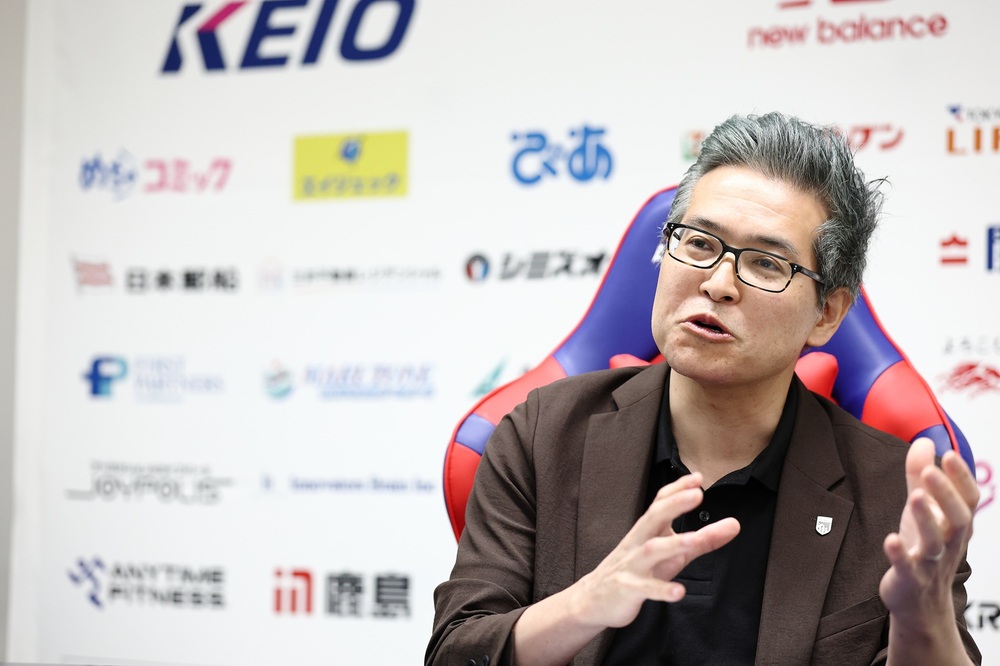
In the latter part of this management report, we had an in-depth interview with President Shigeya Kawagishi.
Coverage & Composition = Kei Sato (Freelance Writer)
Interview Date: June 14, 2025 (Saturday) Before the match against Cerezo Osaka
──The financial results for the 2024 season have been announced, recording a record high sales of 6.98 billion yen.
We recorded sales of approximately 7 billion yen and were able to turn a profit with an operating income of about 100 million yen. This is the result of the support from many fans, supporters, and partners, and first of all, I would like to express my gratitude. It is also the result of the hard work of all our staff, so I want to say "thank you" for that, and I am very pleased with everyone's efforts.
──Please also tell us your analysis of each segment.
In the three seasons since I took over management, I feel that we have steadily progressed rather than leaping from the first year to the second and third years. First, let me explain about ticket revenue (admission fee revenue).
The 2019 season, in which we competed for the championship, was about 1.1 billion yen, and we were able to surpass that figure in the 2023 fiscal year. Furthermore, in the 2024 fiscal year, we added an additional 240 million yen on top of that. The result of 1.45 billion yen is the highest ever. Initially, there was some thought that it might be quite difficult, but I have the impression that we "did our best."
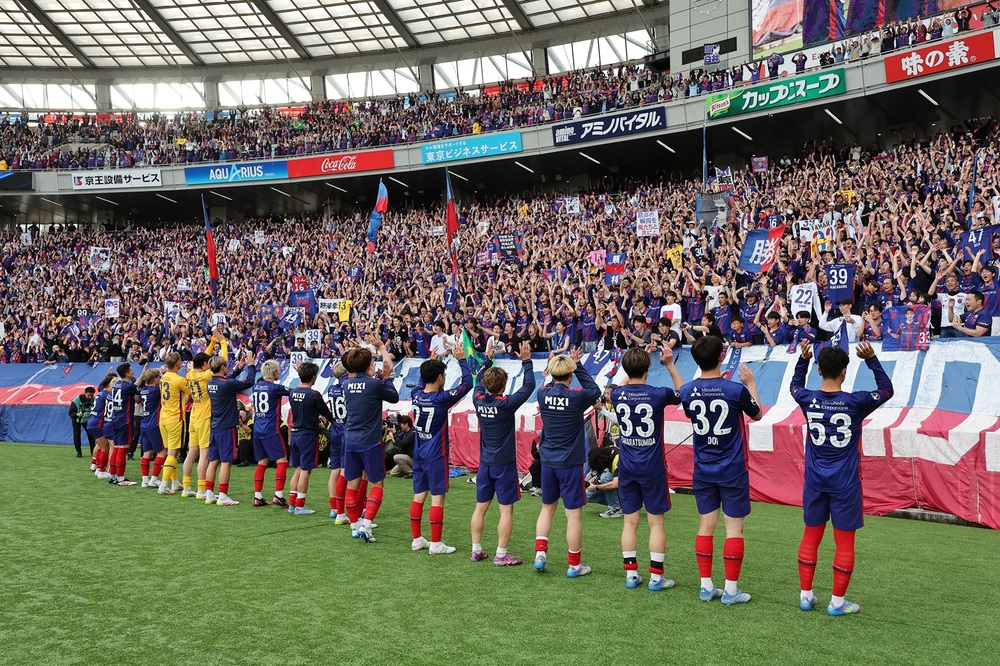
Thanks to everyone's support, approximately 630,000 people visited the stadium during the 2024 season. There are various opinions, but we held four home games at Japan National Stadium, with a total attendance of about 210,000 people. Some attendees were invited guests, but we believe that through such "seeding," many people ended up purchasing tickets. The fact that we were able to properly control the invitation ratio also contributed to these positive results.
──The 2024 season also saw the introduction of U-12 tickets. How effective was this measure?
Our customer attraction analysis shows an increase in family segments. As a club, we have focused on developing the family segment, and we see this as a certain achievement. Additionally, we have also put effort into attracting inbound customers as a club. We set a goal to aim for being number one in inbound customer attraction. That is why we provide information in multiple languages, including English, Portuguese, Traditional and Simplified Chinese. This year, we added German and Korean as well. In cooperation with the J.League, we distribute flyers to foreigners around Senso-ji Temple, place English flyers in hotels in Tokyo and the British-style pub 'HUB,' and while steadily pursuing these approaches, we combine creating touchpoints both online and offline.
This is something I heard within the scope of exchanging opinions with the J.League, but at this point, FC Tokyo is probably number one in inbound customer attraction. The numbers themselves continue to rise, but we still want to increase them further. We believe it will become an even more important source of revenue in the future, and we want to use FC Tokyo as a foothold to become a global presence.
──How about the merchandise revenue, which saw significant growth in the 2023 season? It increased by 150 million yen compared to the previous year, reaching 760 million yen, the highest sales ever.
As I mentioned at the end of last year, there was an effect from changing the emblem. I believe many people purchased items with the new emblem. However, the biggest impact was on the uniforms. The number of fans and supporters buying them has been increasing year by year, and as I mentioned in an interview exactly one year ago, we were able to put into practice the idea of "being aggressive with inventory."
It is truly unfortunate when items are out of stock at the stadium's concession stands. Last year, some sizes like large and long-sleeved were out of stock at times, but we were able to sell almost throughout the entire year. We did have some inventory left, but the numbers were solid. Having uniforms displayed at the stadium's concession stands is truly a spectacular sight and visually appealing; it surely excites first-time visitors as well. In fact, many visitors from inbound tourism and foreigners have been buying uniforms. It seems that, as part of overseas soccer culture, purchasing a uniform as a souvenir of attending a match is common, and I witnessed such scenes multiple times. The demand from these customers is often for larger sizes, which sometimes led to a slight shortage of large size inventory. Having obtained new data, we are paying attention to these points this season.
── So you were able to actually feel the customer attraction effect of inbound from the demand for large sizes as well.
If we run out of stock midway through the season, we lose the ability to measure our true potential in terms of what and how much can be sold. However, by maintaining inventory and selling throughout the season, various insights have emerged. I believe this is an extremely significant achievement.
──Advertising revenue is also increasing. 2.98 billion yen is the highest figure ever. What kind of efforts have borne fruit to achieve this?
Advertising revenue has grown to approximately 3 billion yen. I believe this is an area where we have steadily grown while establishing a solid sales structure. Behind the scenes, we have also been thoroughly committed to providing “hospitality” to our partners. When compared side by side with other clubs, we still feel there are many areas lacking, but we are striving to enhance each aspect and improve satisfaction.
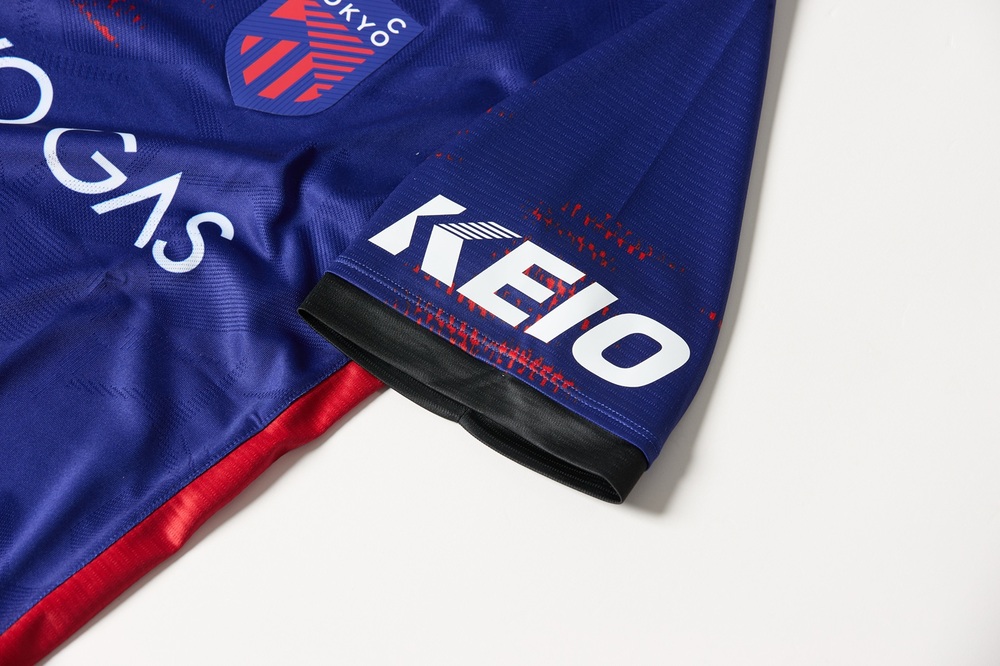
As the first announcement of the 2025 season, we are pleased to announce that Keio Electric Railway has become our uniform partner, and we have signed a long-term contract with New Balance as our supplier. This is the result of the efforts made during the 2024 season leading into this season. Additionally, we have newly signed an official partner contract with Japan Airlines. We believe this will enable various initiatives moving forward.
──I believe that 2024 was also a year in which we deepened our relationship with the community even further.
That's right. Although it is difficult to see in numbers, we have been actively advancing activities in our hometown. We have a comprehensive partnership agreement with the Tokyo Metropolitan Government called the "Wide Collaboration Agreement," through which we are engaged in various initiatives beyond the sports field. If you come to the stadium, you will notice that at every match, we carry out some form of collaboration with the Tokyo Metropolitan Government. Additionally, it is important to firmly maintain the areas connected along the Keio Line, so we have been able to deepen our relationships with Shinjuku Ward, Shibuya Ward, and Setagaya Ward even more than before.
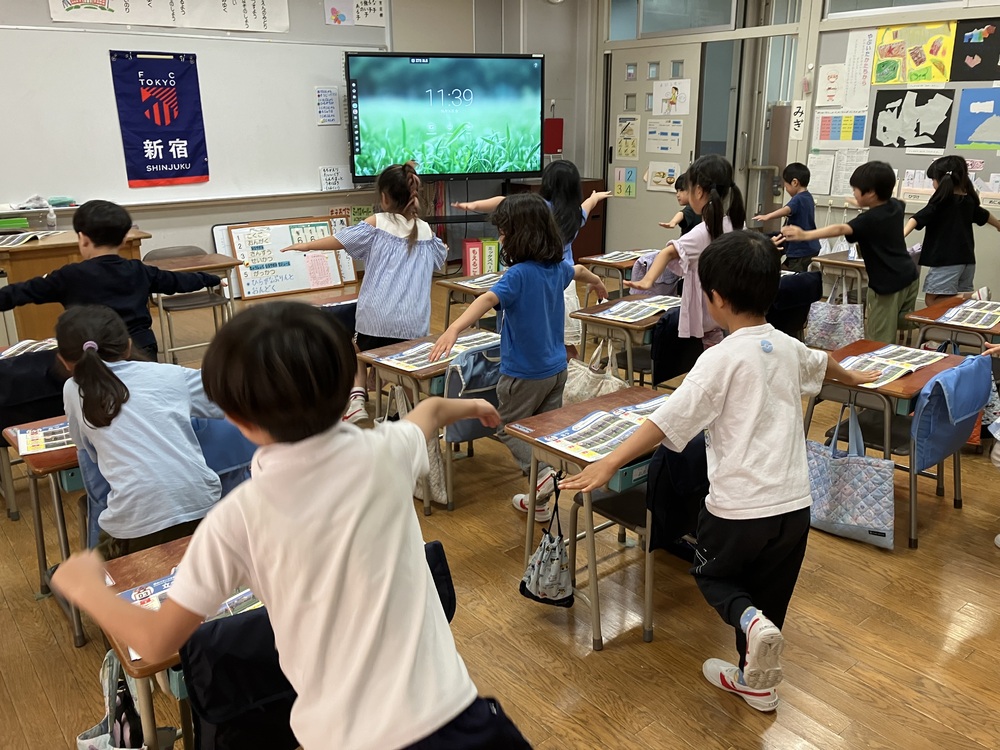
To let local children experience the joy of physical activity, we distribute the "Aoaaka Drill" as a supplementary teaching material for elementary school physical education. Starting this year, Shinjuku Ward has also been included, and thanks to the support from six cities (Koganei City, Kodaira City, Chofu City, Nishitokyo City, Fuchu City, Mitaka City), Suginami Ward, and also Shibuya Ward, we were able to distribute it to about 19,000 first-grade elementary school children. While it is something necessary in the educational field, we are also actively promoting it as an initiative for children to engage with FC Tokyo. I think it is very good that Shinjuku Ward has joined.
──Schools are also considered an important aspect.
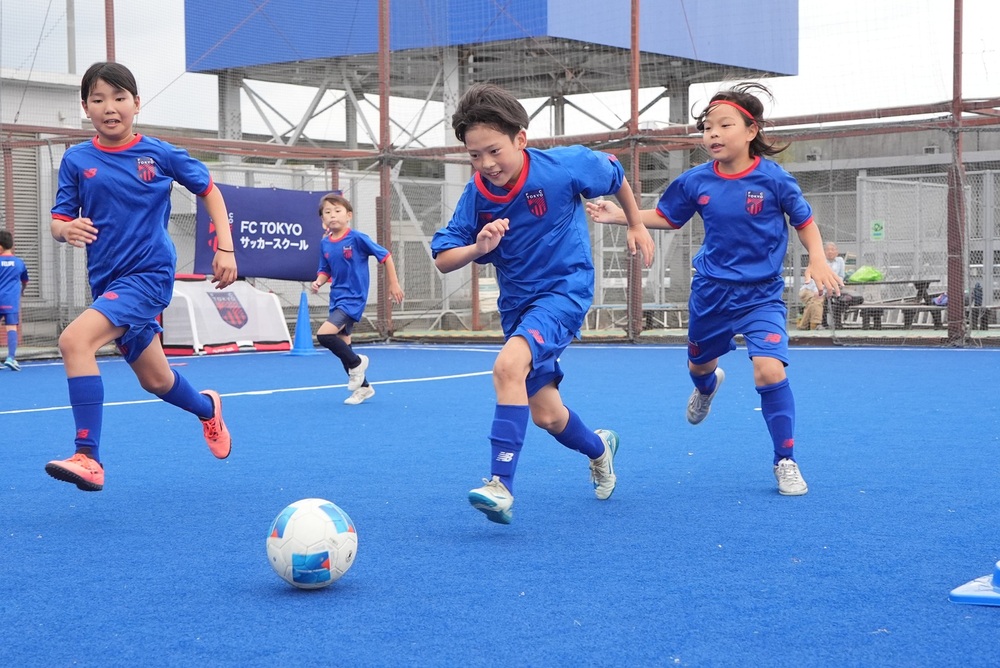
As you said, this is one of the points I have placed great importance on. Regarding the school students, we consider not only the parents but also the grandparents as part of the Aoaka family, the FC Tokyo family. For one school student, there is a relationship with multiple people, at least the parents and their family members, so this is truly a club-wide outreach activity, and we want to continue expanding the school business going forward. Following Minamiosawa in 2023 and Nishitokyo in 2024, in 2025 we were able to newly open schools in Karasuyama and National. Although we are feeling the impact of the declining birthrate, we intend to keep searching for locations where we can open schools and steadily increase the number of boys and girls playing soccer.
──Financial Reports of J.League Clubs now include transfer-related expenses starting from the 2024 season. FC Tokyo's transfer income is approximately 630 million yen.
I believe the background behind the J.League's decision to disclose transfer income includes the season transition and the start of the U-21 League. There is likely a mindset that each club should properly secure transfer income. By visualizing these, it has become clear how each club is approaching this. In our case, Kuryu MATSUKI transferred overseas last summer, which accounts for a large portion of our transfer income.
──Regarding related items, how do you view the personnel expenses of the top team? FC Tokyo was about 2.7 billion yen.
I believe this is common to all clubs, but the budget, including personnel expenses, is composed by adding the basic part of the remuneration paid to players and the so-called transfer fees = penalty fees required to acquire players. It is important where and how to allocate that ratio, and finding the optimal solution is truly difficult. However, our fundamental belief is that FC Tokyo is a club that can promote academy players to the top team. In other words, by properly developing players, the team can be strengthened without spending on transfer fees.
Of course, this is because the academy invests properly in developing players, but in that sense, compared to other clubs, I think the amount spent on transfer fees within the overall personnel expenses is low. That is also the club's policy.
──Regarding transfers, does this mean the club will become a player-supplying type?
I think it will be somewhat different from the image of a player-supplying club. A player-supplying club is one that actively sells players domestically and internationally, but our approach is not like that. In organizing the top team, we place importance on promoting players developed within our own club. We prioritize promotions from the academy while filling the gaps by acquiring players from outside, forming the team with that image in mind. Of course, it is precisely because of the significant presence of FC Tokyo’s academy that this option is available to us.
However, as I mentioned earlier, many players wish to transfer overseas, so when that happens, I hope they leave behind a good amount of money.
──On the other hand, there is also the view that in order to improve performance, it is necessary to increase the personnel expenses of the top team itself. In fact, a correlation can be seen between personnel expenses and league standings.
I think that is exactly right. Last year, I also talked about the correlation between league standings and personnel expenses, and I accept that as an undeniable fact. From that perspective, when we consider our current position, it means that in terms of personnel expenses, we are slightly lacking the capability to win the championship. I believe we must accept this reality.
The absolute value of personnel expenses has been increasing year by year, and the question is whether the club can keep up with that pace. Last year, seven teams exceeded 3 billion yen in team personnel expenses, including transfer-related costs. In contrast, Tokyo was at 2.71 billion yen. It may be required to raise that by one or two more levels. In that case, although we have been gradually increasing at a pace of about 50 to 100 million yen on average since I took office in 2022, that speed is not enough.
──Considering the current situation where personnel costs are rising, what direction will the club take moving forward?
I believe it is necessary to gradually shift gears. Over the past three years, we have operated with the idea of allocating the growth from the business side to personnel expenses, but since the business aspect has already been refined considerably, it is hard to imagine a significant further increase from here. Last year's sales were about 7 billion yen, but that figure included around 600 million yen in transfer income. Based on the current actual capabilities, sales are probably around the mid-6 billion yen range.
To further expand from there, whether it be ticket revenue or advertising revenue, we must have support from more people. For that, it is necessary to show the team competing at the top and striving to win the league championship to many people. Without doing so, it is hard to imagine a scenario where the number of fans and supporters continues to grow, and in such a situation, partner companies will also take greater interest.
Continuing to refine the business as before and then reinvesting in the team would take too much time. To increase speed, we need to shift to a phase where investments in the so-called football aspects take priority. That is my personal belief. I want to consider how to proceed while gaining understanding from various parties, including MIXI, Inc., and Tokyo Gas, who are involved in management. Ideally, we want to enhance player development, strengthen the team with the right personnel in the right positions, and consistently show a team that competes at the top level.
──The first half of the 2025 season has already ended. Please tell us what your outlook is on this year's sales.
The surplus from last year was due to transfer fee income. As I mentioned earlier, this year the club’s performance is expected to be flat or possibly slightly down, reflecting the current capabilities of the club. However, the path to further growth from here is clear, so from a management perspective, we see this year as a plateau before moving higher. By increasing investment in the football side while improving results and expanding revenue, both elements will align to allow us to advance to the next phase. We want to approach this with a sense of urgency.
The first part is here
♢Previous Management Reports are here
2024 Season Summary: Business and Football (Part 1)
2024 Season Summary: Business and Football (Part 2)
2023 Fiscal Year Financial Report and Club Status (Part 1)
2023 Fiscal Year Financial Report and Club Status (Part 2)