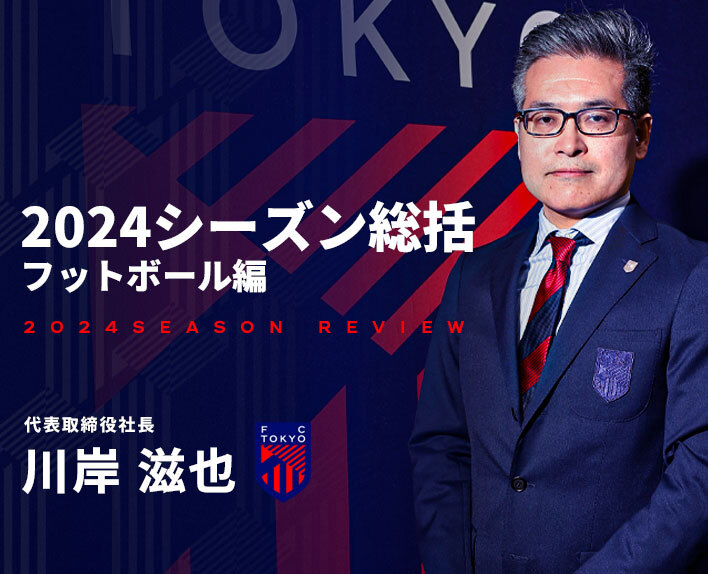


FC Tokyo finished the 2024 season. While it was a year that saw numerous record-breaking figures in business aspects such as average attendance and annual revenue, the team also faced the reality of not being able to compete for titles. We interviewed President Shigeya Kawagishi to reflect on the year-long battle from both business and football perspectives regarding the club's current position. In the first part, we asked about the positive reception of the strong business performance. There were efforts towards the future that were not visible through the strong numbers alone.
Coverage and Composition = Kei Sato (Freelance Writer)
The highest numbers in history and efforts for the future
──How are the business and football aspects of the 2024 season being summarized? First, let me ask about the business aspect.
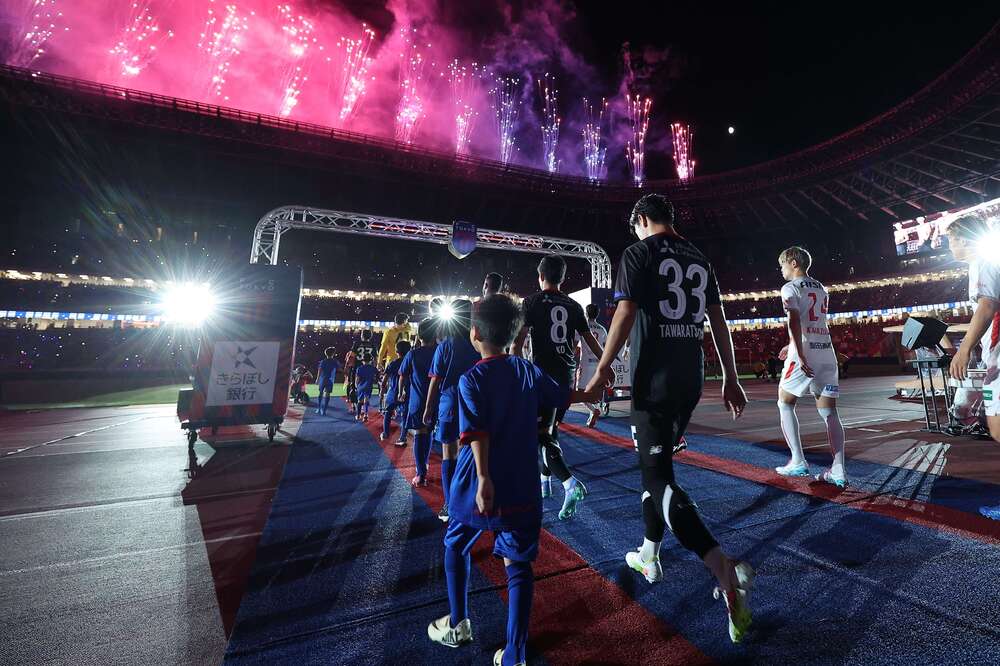
A clear indicator is the league match attendance. For FC Tokyo, the highest number was 31,540 in the 2019 season. And in the 2024 season, we were able to surpass that number. We exceeded an average of 33,000 per match, with a total of 630,000 people attending. Although it was difficult to win at our home ground, Ajinomoto Stadium, we are truly grateful that many fans and supporters came and cheered us on until the very end. We were able to win all four home games held at the Japan National Stadium, but it is very frustrating and we feel deeply sorry that we could not deliver many victories at Ajinomoto Stadium.
──How do you perceive the factors that contributed to the increase in spectator attendance?
1The 2019 season, where the average attendance exceeded 30,000, was a season of championship contention. The goal of surpassing that number was challenging for the club, and we did not think it could be achieved quickly. However, in the 2024 season, we were able to have many people come and succeed in that challenge. Of course, unlike the 2019 season, where all matches were held at Ajinomoto, the 2024 season saw four matches held at Japan National Stadium, with a total attendance of 210,000. Since the number of home league games has increased by two, we cannot simply compare the figures, but I believe it is significant that we were able to exceed the large target we set.
The advantage of holding matches at Japan National Stadium, as explained so far, is that it allows us to reach a wider audience who cannot be reached by Ajinomoto Stadium alone. While keeping Ajinomoto as our main venue, we plan to continue strategically utilizing the National Stadium. The J.League is also promoting it under the name 'THE National DAY,' and since the club and the J.League share the same intentions, we want to work together to attract even more fans and supporters.
──It was mentioned that merchandise sales are also steadily increasing. What are your thoughts on this?
This season was truly strong. The introduction of the new emblem may have brought about a positive effect. Of course, I do not believe that the new emblem itself was accepted by everyone, but looking at the numbers, they have improved compared to last season, and I feel that many people have picked up the items. Usually, merchandise is purchased by existing fans and supporters. From that perspective, I think there was significant demand for replacing items with the new emblem. In addition, preparing reasonably priced goods such as towel scarves, which are easy for casual fans to pick up, was also a major factor. As I mentioned in the previous interview, expanding the number of stores and maintaining sufficient stock for stadium sales has brought about good results.
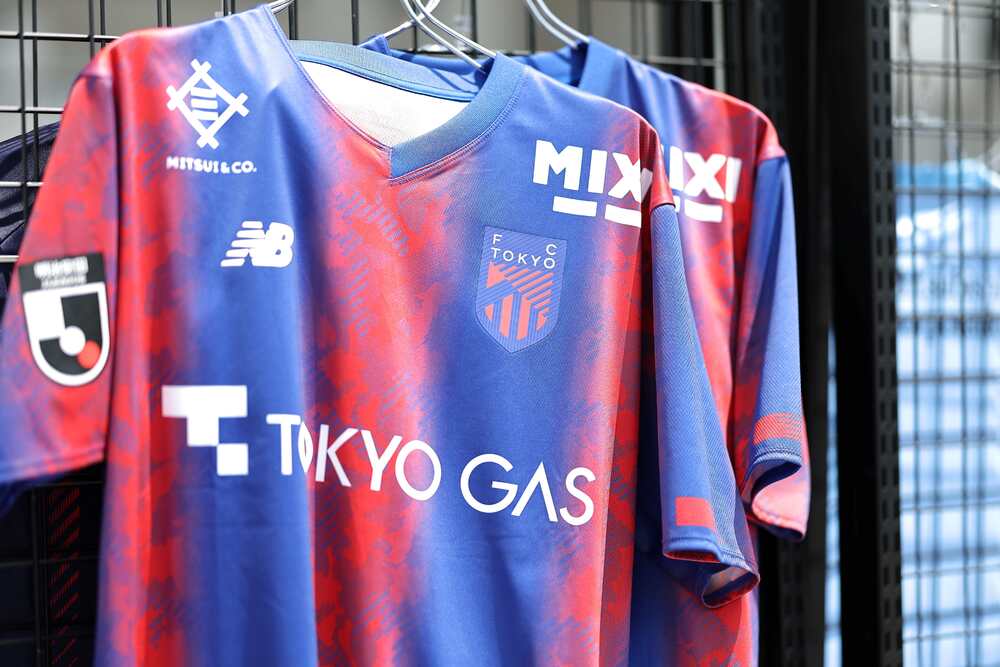
Looking at the numbers from the past two years, merchandise sales increased from 400 million yen to 600 million yen. How are merchandise sales for the 2024 season?
This year, sales are expected to exceed 700 million yen. The approach of not fearing inventory risks, which I also mentioned in the previous interview, has contributed to these results. We intend to continue building on this going forward.
──As a new initiative, there was the sale of U-12 tickets. Please tell us again about its purpose and effects.
From this season, we introduced a U-12 ticket category for certain seating sections. Analyzing the “customer base” for these sections, we found that ticket sales targeted at adults in these areas have also increased. In other words, the U-12 tickets have encouraged families to attend together. Although this analysis is based on data as of summer, a closer look reveals that the average age of attendees has decreased by about one year. This is likely related not only to the U-12 attendees themselves but also to the relatively younger age of the families accompanying these elementary school children. With the J.League having started 30 years ago and the average age of spectators rising, both the league and clubs have faced the challenge of rejuvenating their fan base. From that perspective, I believe this initiative has produced a certain degree of positive effect.
This initiative was undertaken from a fairly mid- to long-term perspective. When considering which club children will support, the influence of their parents is significant. From that standpoint, I believe it is important to create experiences where children think, "I came to like FC Tokyo because my parents took me to the stadium." By continuing such initiatives, we want to create an environment where FC Tokyo’s fans and supporters can continue through generational changes over 10, 20 years. If we only consider immediate profits, increasing the number of elementary school customers by one and increasing the number of adult customers by one differ in so-called "spending per customer," so the focus would naturally be on adults. However, a mid- to long-term perspective is absolutely necessary, and looking ahead 10, 20, or 30 years, we want to create a cycle where fandom is passed from parents to children, and from children to grandchildren. In that sense, we want to continue our approach toward family segments going forward as well.
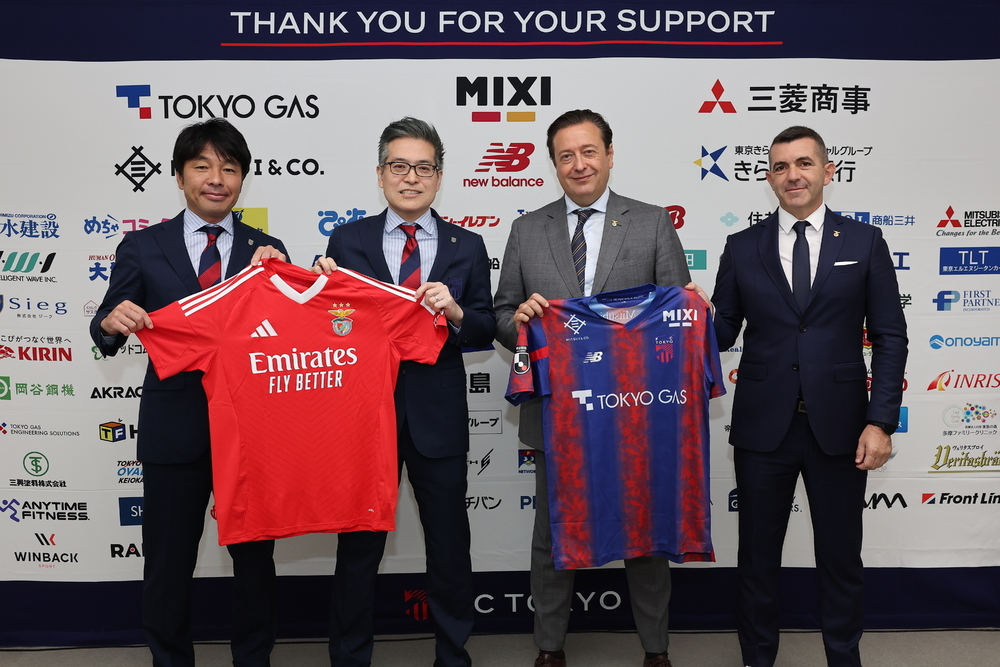
──As another initiative, there was a partnership with overseas clubs for the 2024 fiscal year. Could you explain the partnership with Legia Warsaw (Poland) and SL Benfica (Portugal)?
When it comes to partnerships with overseas clubs, it is often assumed that there is player exchange between clubs, but in reality, the type of players sought by each league and team differs, so it is not such a simple matter. Legia Warsaw's partnership is centered on scouting, where both sides exchange scouting information they possess. We seek a second opinion evaluation on EU players we are considering acquiring, and in return, we provide information on Japanese players they are paying attention to. This partnership was realized because both sides' needs aligned.
The partnership with SL Benfica is related to player development. I believe the academy is one of FC Tokyo’s strengths, but how to properly create a career path for players is a challenge not only for FC Tokyo but also for the Japanese soccer world in the age group referred to as “post-youth.” Whether to go on to university or play in the J.League, even players promoted to the top team sometimes choose to change categories. Securing the number of matches played for that generation is quite difficult. Sometimes, playing opportunities are created through loan transfers to J2 clubs, but that alone is not enough. We wanted to expand various possibilities to enhance the value of players. Among those options, we came to the idea that being developed overseas could be one choice, and since SL Benfica is one of the world’s leading clubs in maximizing player value, our intentions aligned, leading to this partnership.
──What kind of results do you expect for the 2024 fiscal year's sales? It's before the financial results, but please share your current impressions.
Last fiscal year's sales were 5.929 billion yen, but this fiscal year we expect to significantly exceed that, and thanks to everyone, each business segment is likely to achieve record-high figures. The details have not yet been finalized, so we plan to report this again as a management report after the financial results are announced.
The second part is here