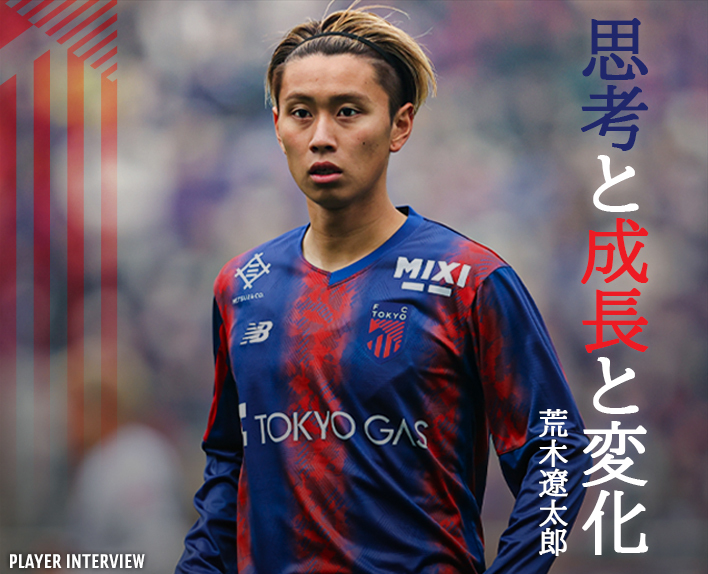


"I have confidence in producing results if I am used in the game."
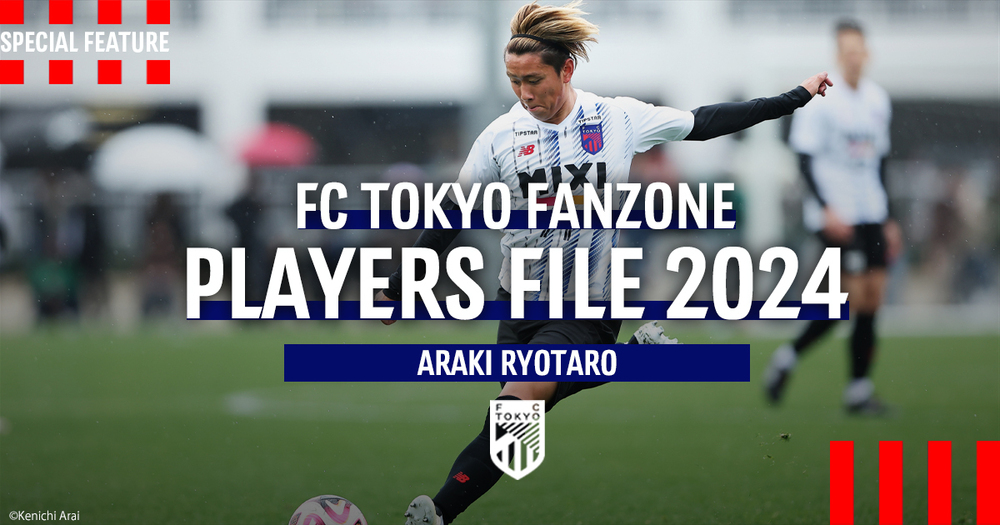
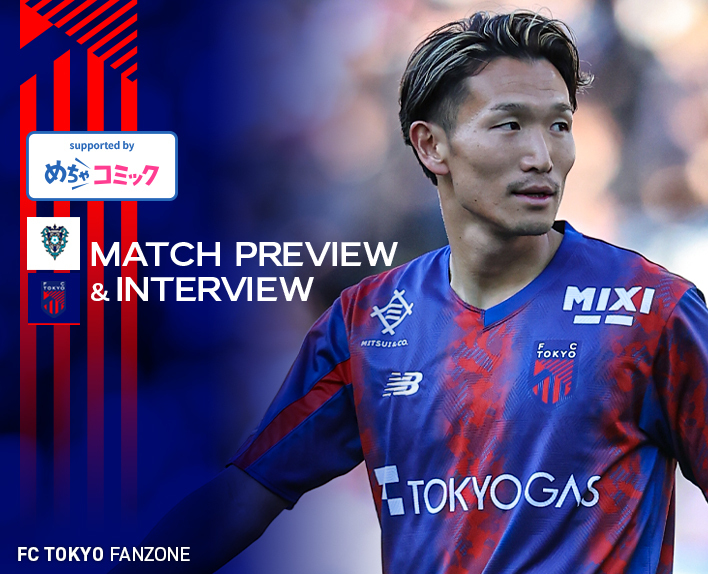
After joining Tokyo, Ryotaro ARAKI, who has been saying so for a long time, has made a great performance with 3 goals in the first 2 games of the season. The game maker of the Paris Olympics generation, who has a fixed position as an attacking midfielder, is quickly becoming the "face" of the team.
After making a big impact as an individual player from the beginning of the season and gaining attention for being selected for the U-23 Japan national team, he has been shining. However, the team has been struggling with 3 winless games. Entrusted with the role of "number 10", he has taken on the position of leading the blue and red army from the front in both offense and defense. How does he see his own and the team's current situation?
Let's unravel Ryotaro Araki's thoughts, growth, and changes on and off the pitch.
──In the opening match against Cerezo Osaka, after scoring, you jumped towards the goal stand to express your joy while tapping the emblem on your chest. It was even illustrated in the opening match's Mecha Koma Review, but are you the type to think a lot about your goal celebrations?
No, no, I wasn’t thinking about it at all. Especially in the opening match, I wanted to score a goal, but I really didn’t expect to actually score, so I didn’t think about any performance at all (laughs). So the celebration in the opening match just came out spontaneously. Since I was able to score there, I thought, "Maybe there will be another chance," and I prepared a "bowing pose" to greet the fans and supporters at Ajinomoto Stadium if I scored again, and I was able to score properly (laughs).
──Have you had a signature goal celebration until now?
Not really. At Kashima Antlers, when I scored a goal, I would go to the bench and celebrate with everyone. I think that helps boost the team's morale, and I’m thinking of doing the same here in Tokyo from now on.
──In the first two matches from the opening, against Cerezo Osaka and Sanfrecce Hiroshima, we both fell behind but tenaciously caught up to draw. The third match against Vissel Kobe was a frustrating come-from-behind loss after taking the lead for the first time. Personally, while I have been able to deliver results, I also feel the frustration of the team still being winless. First, how do you look back on the battles since the opening?
This is something I often tell the media as well, but both our offense and defense as a team are steadily improving, and I see that as a positive. However, our game management is still lacking.
──Regarding game management, what specific aspects do you see as challenges? The Kashima Antlers, where Araki played until last season, have a strong image of being 'masters of game management.'
For example, in the match against Kobe, the 5 to 10 minutes after scoring the opening goal become crucial, so we absolutely must not concede during that time. We talked about not just sitting back to defend but pushing forward more aggressively, but we couldn’t execute that well and failed to express it on the pitch. That is an area that needs improvement.
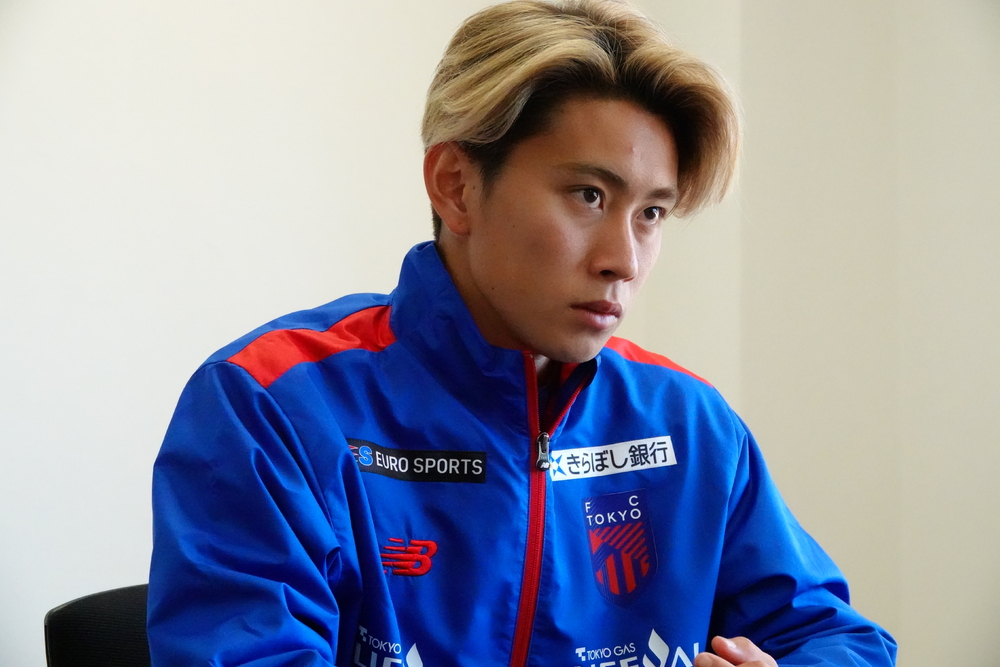
──How can this be improved?
First, I think playing higher up the pitch as a team is one strategy. Since the opponents often push forward after conceding the first goal, Tokyo should avoid simply kicking the ball long and instead build up play confidently while connecting passes properly. If we can bypass one or two lines there, the opponents will be forced to drop back a bit. I believe such courageous play is necessary.
But...this season, there was no lead from the opening, so honestly, I thought it would be a little difficult. However, if you look at it in a positive way, I think it was a good learning experience for the team. In the first three games, we were tied while being behind, and we lost after taking the lead, but from here on, it is absolutely necessary for the team to have the power to win. Among various elements, I want to firmly grasp that power.
──To secure victories, it will be necessary for the attacking players, including Araki, to increase their involvement in goal-scoring opportunities while also demonstrating well-coordinated defensive play.
First of all, regarding the attacking players, we truly have an amazing lineup. Each player has their own individuality, and I believe there will be no problem as long as the attacking coordination clicks. However, the issue is that we have been conceding too many goals since the start of the season. It is important for the entire team to defend together, and of course, defending from the front line as well. If the team can share awareness of the critical periods when conceding goals must be absolutely avoided and defend firmly, we should be able to get closer to victory.
──Does that mean it is necessary to align awareness of the timing and defensive approach?
Yes, I think if everyone properly aligns their thoughts about the timing and fights together, the number of goals conceded will decrease.
──As an individual, you have scored 3 goals in the first two matches of the season. How do you evaluate yourself so far?
The numbers might look good, but I think my overall play throughout the full 90 minutes in the opening match, where I scored two goals, was not good at all. My performance has been improving with each game, and I have a strong desire to help the team win with my goals. I want to contribute much more with the mindset of scoring goals myself and defending myself as well.
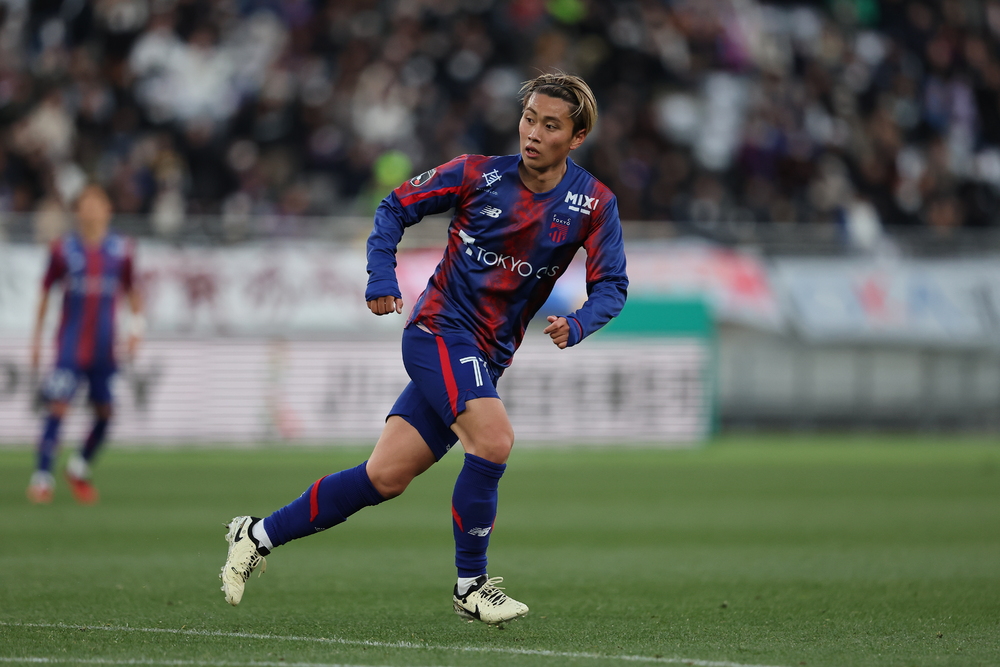
──After the opening match, you said, "I was confident I could deliver results if given the chance. I'm grateful to Coach Peter for calling me to Tokyo and giving me that opportunity." Now that you have actually joined, in what specific ways do you feel you fit in?
First of all, having the “number 10” (attacking midfielder) in the formation was a big deal for me. The style of play where the attack progresses through me on the pitch really suits me. After finishing the camp and continuing daily practice, I gradually gained trust from those around me, passes started coming my way, and I was able to help create attacks, so I truly feel that it fits me well.
──By the way, when you decided to transfer to Tokyo, I imagine you had various options. Was there a particular persuasive phrase from Coach Peter CKLAMOVSKI that became the deciding factor?
First of all, I truly felt that the coach’s style suits me well. Also, he has been telling me all along, "I love your style of play" (laughs). Since I am able to bring out my strengths here, I really feel glad that I came to Coach Peter’s team.
──From the start of the season, you’ve given the impression of being a complete linkman in attack. I think a big part of that is because you’ve gained the trust of those around you, but what kind of efforts are you making on the pitch?
I constantly show my face to the ball holder, signaling with my movements and voice, "I’m here," and that’s led to passes coming my way. There are many players up front whose runs are easy to read, so I want to draw out the ball a lot and increase passes that make the most of the forwards. Overall, there are many players who are easy to play with. Players in the back positions look at me and keep passing the ball to me. Personally, I’m the type to create rhythm while touching the ball, so it’s become easier for me to play.
──To be blunt, what kind of player are you when you’re performing well?
It’s definitely when I’m touching the ball a lot. When I have the ball, I can create chances, and I also think that by having the ball, I can set the team’s rhythm.
──On the other hand, I’m sure there are times during matches when both the team and you personally face difficult situations. How do you solve those?
That’s something I want to resolve by gaining more match experience. Until now, I was the younger player, and the seniors led the way, so I hadn’t really been conscious of such things. But I’m no longer a young player, and how I conduct myself… it’s difficult, and honestly, I’m still exploring that.

──From here, as the team rebuilds, what kind of things do you want to work on?
First of all, calling out to those around you is absolutely necessary. Also, as a player, I want to become someone who can break through difficult situations on my own. That’s the simplest way.
──Has your position within the team, your mindset, and the situation you find yourself in gradually changed?
Yes, that's right. Both my age and other factors have made me feel that things have changed. Since this team has many young players, I think that aspect has also contributed to the shift in awareness.
──Since transferring to Tokyo, have you also felt a sense of responsibility to meet expectations and deliver results?
No... I don't really feel that way (laughs). First, I want to work hard to shine properly as a soccer player.
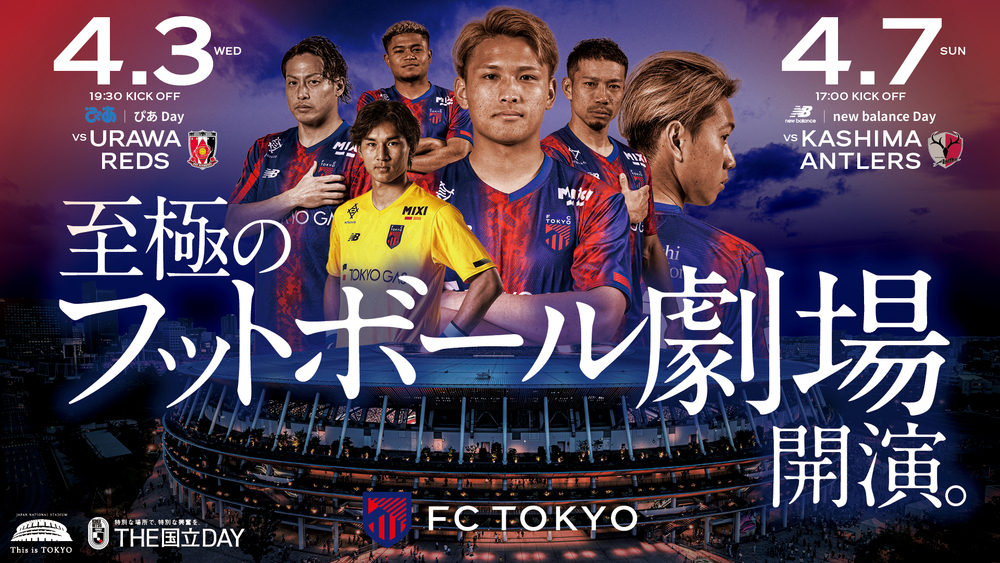
──In April, there will be two consecutive matches at the Japan National Stadium against the Urawa Reds and Kashima Antlers. First, what is your impression of the Urawa Reds?
We had a practice match just before the season opener, and I thought they were quite a good team. I also watched their league matches, and I have the impression that once they are fully settled, they will be a scary team.
──From this season, Swedish national team player Gustafsson has joined as the anchor. Position-wise, he will be the direct opponent matched up against Araki.
We struggled quite a bit even in practice matches. Gustafsson is good at positioning himself, and the triangle formed with the two center backs has high technical skill on the ball, so it gives the impression that it won't be easy to take the ball from them. How we respond to that will be a key point. I think Urawa will also devise various countermeasures, and once the match starts, we will need to adapt flexibly while observing how the opponent plays.
──You won’t be able to play in the Kashima match due to the terms of your loan contract, but what is your impression of Kashima this season?
The coach has changed, so it’s a different team from when I was there, but I thought their fighting spirit was very much Kashima-like when they came from behind at the last moment to earn a point in Sec. 2 against Cerezo Osaka. When facing them, it is absolutely essential to stay focused for the full 90 minutes.
──Is there any information you would like to share with the Tokyo players?
Since their style has changed, there isn’t much information about the team as a whole. However, I think I can talk about the individual characteristics of the players and some finer details.
──Lastly, what are your thoughts about playing at the National Stadium?
I want to play an intense match on the pitch and celebrate the victory together with everyone. Personally, I enjoy playing in front of a large crowd, so it really lifts my spirits.
If we can win these two games, I think it will give us momentum and confidence as a team and as players, and I want to focus on winning with all my might. It would be great if I could show off with a goal, but I also want to showcase my strengths in other areas, so I hope people will see that. I want to take this opportunity to make my play known to many people, and for the team, these two important consecutive games will be crucial for our comeback, so I just want to fight with a strong determination for results.
Text by Ikiru AOYAMA
An interview with player Araki is now available on SportsNavi.
Article is here