

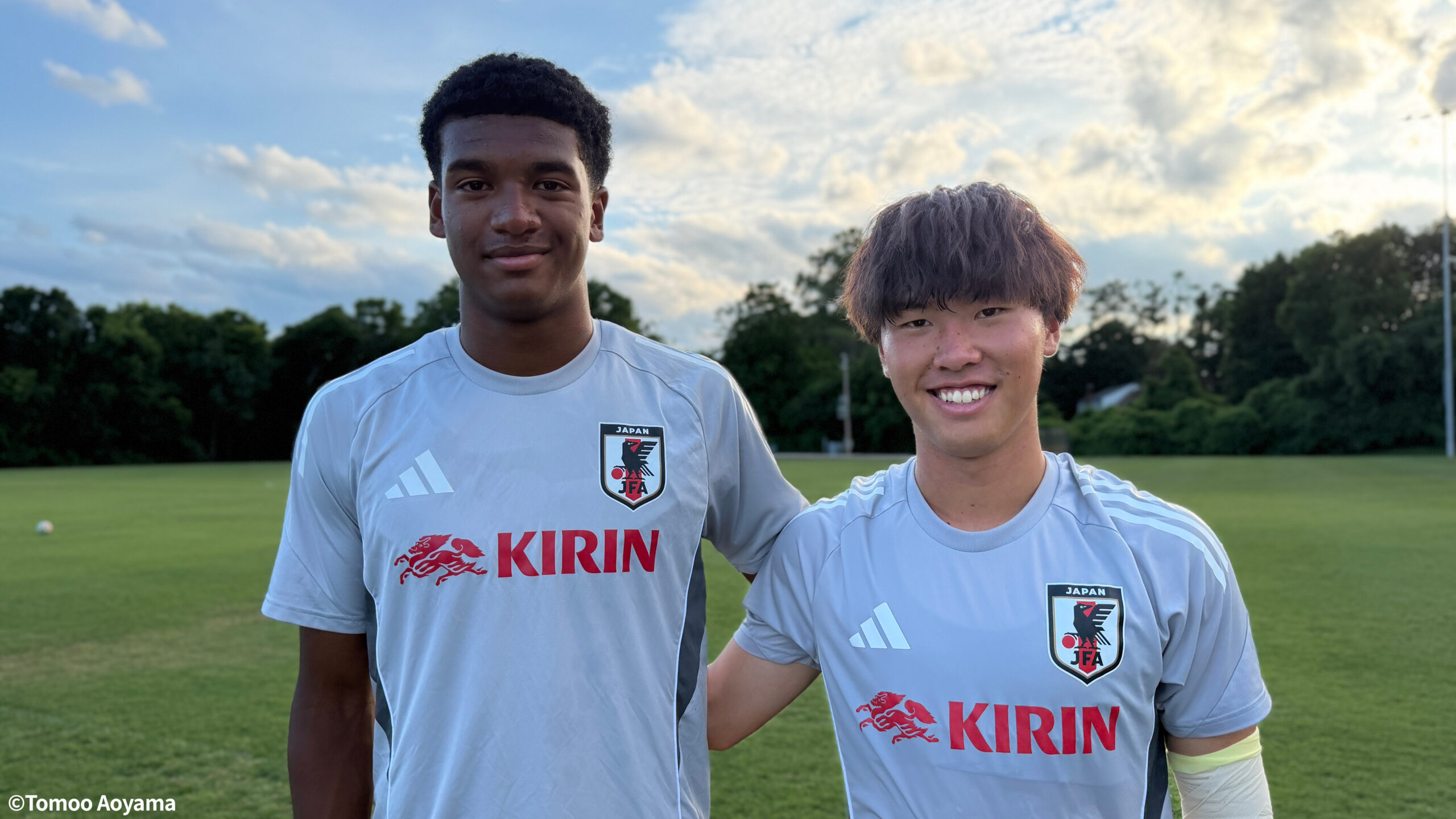
The SAMURAI BLUE (Japan national team) is making great strides in the North and Central American region. While Yuto NAGATOMO’s fifth appearance in this tournament has attracted attention, Divine OTANI and Kaede SUZUKI from FC Tokyo participated in the U-19 Japan national team’s North and Central America expedition. They are also acting as training partners for the Japan national team competing in the FIFA World Cup 2026. Responding to requests, they joined training sessions and watched the Japan national team’s group stage matches on site. They even boarded the national team’s charter flight, experiencing firsthand the atmosphere of a tournament competing for the world’s top spot. This time, we caught up with these two young warriors, who have been working hard for an extended period at the base camp in Nashville, USA, to hear about what they have felt through this valuable experience.
(Interview conducted on June 21, 2026. It was announced on the 24th that Otani would withdraw from the U-19 Japan national team due to injury.)
──This time, including support for SAMURAI BLUE (Japan national team), it has been a very long period of national team activities in North and Central America. Could you briefly look back on your activities so far?
Kaede SUZUKI (hereafter, Suzuki) It's simply tough. It's a very demanding training camp.
Divine OTANI (hereafter, Otani) It's really tough (laughs). There are normally two training sessions every day, and above all, there are many matches. Today, we moved together with the Japan national team from Monterrey and had afternoon practice despite being tired. I'm not used to this kind of schedule, so it's quite tough.
Suzuki Amidst the repeated travel and training, I believe I have learned and developed quite a bit of "toughness" through this expedition. When the team faces tough times next season in Tokyo, this experience will definitely come in handy, so I want to bring that back and contribute to the team.
──This North and Central America expedition serves not only as activities for the U-19 Japan national team but also as a training partner role for the Japan national team preparing for the FIFA World Cup 2026. What specific actions have you taken so far?
Suzuki Basically, we proceed with the U-19 activities, and amid many practices and practice matches, we play practice matches against the Japan national team’s backup squad, and before the matches against the Netherlands and Tunisia, we do training and practice matches simulating the opponents. Sometimes we are called up when the Japan national team is short on players. Basically, the U-19 team is the base, but we also participate in the Japan national team’s training as well, something like that.
Otani Some players are called up to the Japan national team’s training, and among them, there are those who go to support and those who stay with the U-19 team. I think everyone wants to join the Japan national team’s training, so I believe this creates a competitive atmosphere even during the daily U-19 practices.
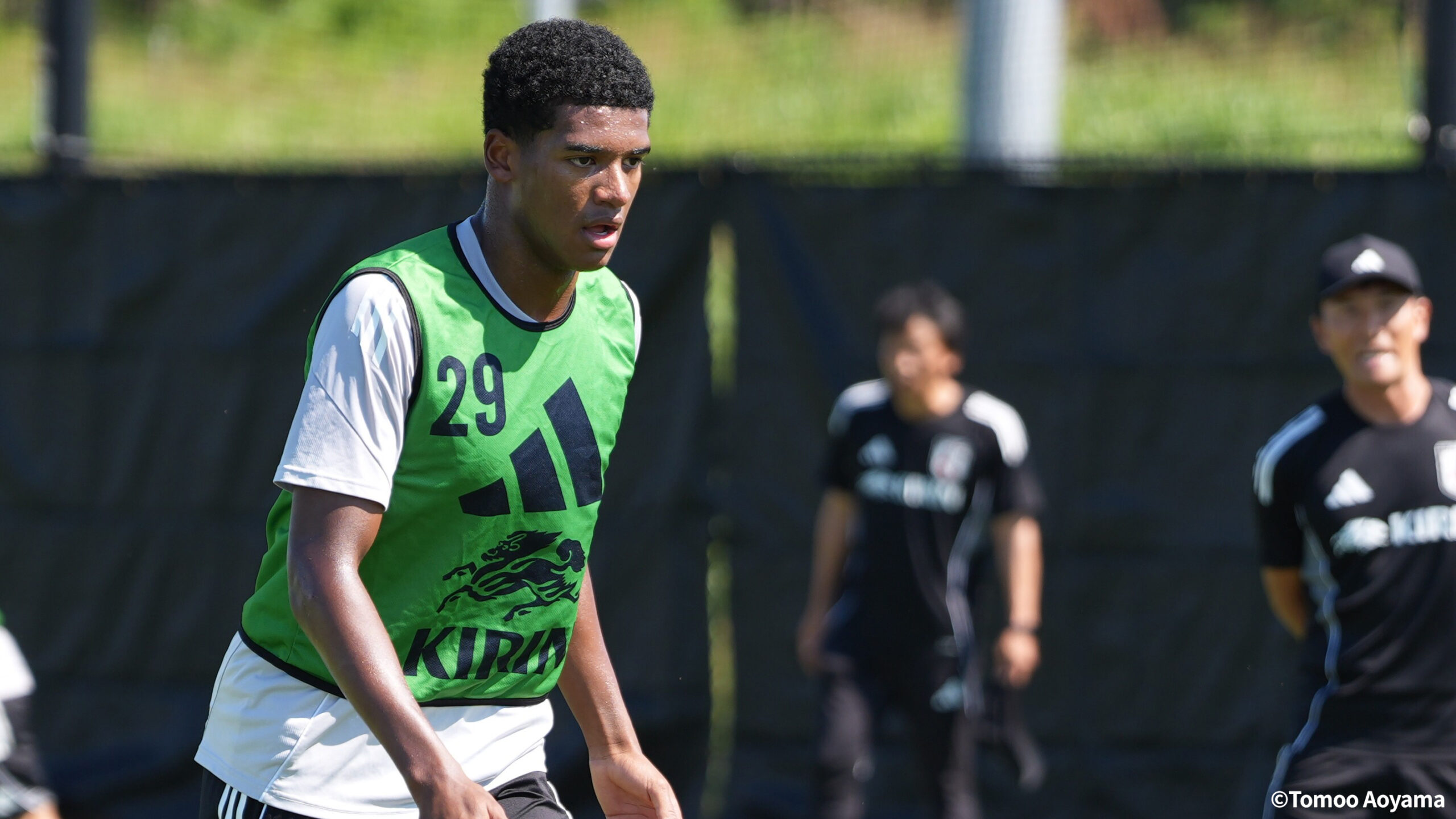
──It was announced that Otani scored a goal against the Japan national team in a closed practice match held at the pre-camp site in Monterrey.
Otani At that time, during the pre-camp, the Japan national team wasn’t in top condition, but I think it was a match that clearly showed what I could do even against the Japan national team.
──What kind of goal was it?
Oya I received a through pass from Minato Yoshida (Kashima Antlers), cut back, dribbled past about two opposing players, and scored.
Suzuki That was superb. Amazing.
Oya It felt really great and gave me a lot of confidence. I kept dribbling past players and then just fired it in.
Suzuki That really showed Diva’s strengths, didn’t it?
──On the other hand, while bringing out your own strengths, you also need to respond to the requests of the national team. It seems there is a difficulty in having to deliver results in both areas, but what kind of mindset did you have while playing?
Otani In U-19 activities, we usually play with a three-back formation, but the Japan national team requested us to play with a four-back formation assuming we would face the Netherlands. I played as one of the two forwards in a 4-4-2. There were no particular restrictions on my playing style, so I think I was able to play as usual.
Suzuki I played as a center back, and I was expected to fulfill the basic role of the 4-4-2 formation, building play by using the center and switching the ball to the outside.
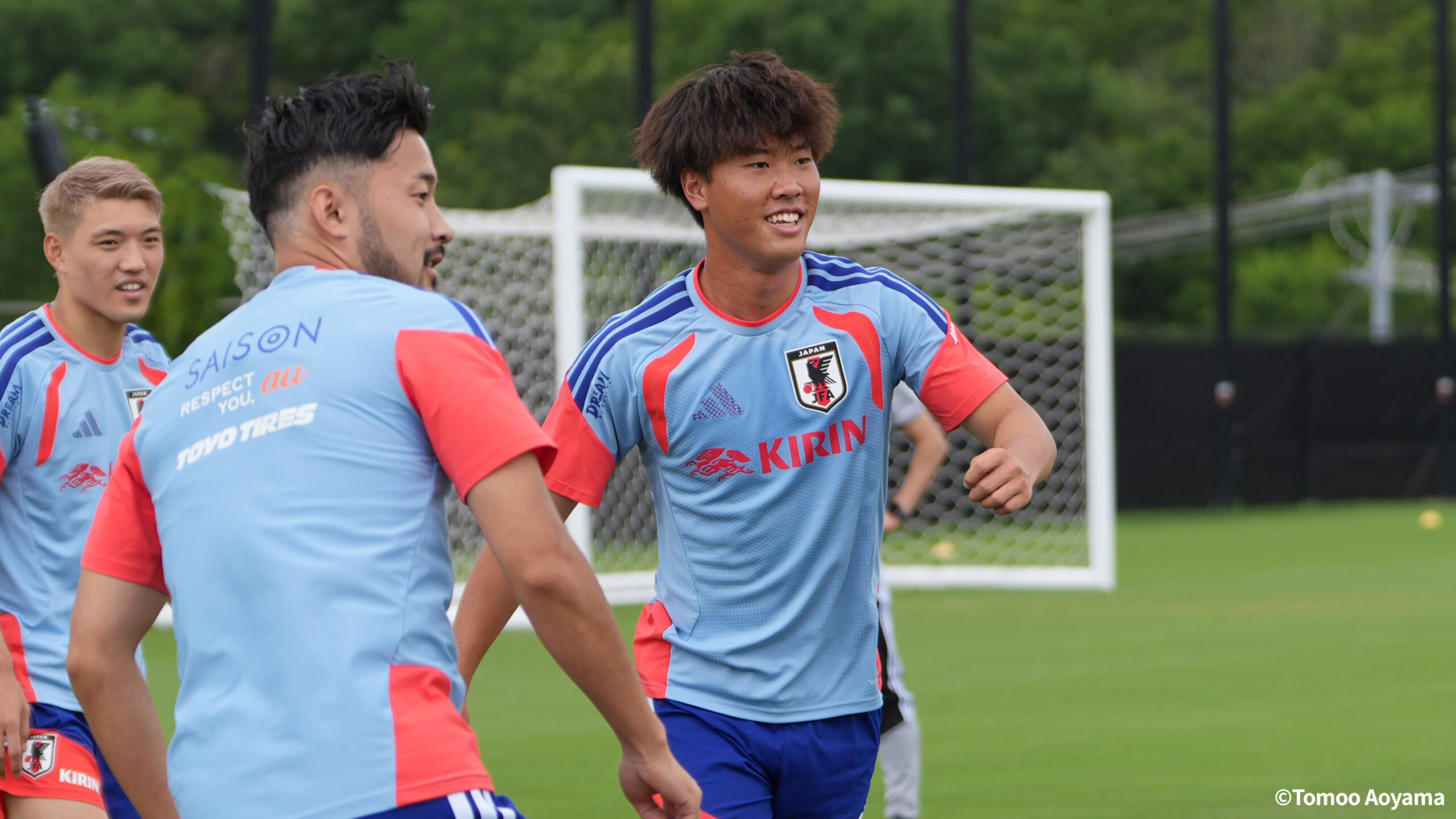
──What did you actually feel when you experienced the activities of the Japan national team?
Otani I really felt that the quality was completely different. Including the sense of speed, the quality of the passes and the amount of communication were amazing. I realized that this kind of fine-tuning is extremely important to compete on the world stage.
Suzuki What I personally felt was that the center backs and defensive midfielders are incredibly skilled at "controlling and kicking" the ball. Even when we pressed, they easily got past us, so I thought, as expected, they are really good.
──What was your personal sense of accomplishment after watching, learning, and playing together?
Otani Scoring a goal definitely gave me a sense of accomplishment, and there were also moments where my ability to hold up the ball was effective, so I felt confident about those aspects as well. Regarding the hold-up play, I have always spent long hours practicing with the staff and center backs after training in Tokyo, so the fact that this skill was effective even against Japan national team players based overseas gave me quite a bit of confidence.
Suzuki At Tokyo, I played as a fullback in a four-back formation; for the U-19 Japan national team, I was a stopper in a three-back; and in practice matches against the Japan national team, I played as a center back in a four-back. I have also played as an anchor in practice matches. This versatility is one of my strengths, and I believe it is something I can utilize wherever I go. What is further demanded in these roles is, of course, technique. The higher the level, the more intense the pressing becomes, so I realized that I must continue to express myself through my technique even after returning to my team.
──Also, what challenges did you identify?
Otani Rather than challenges, these are positive challenges in the sense of 'things we need to be able to do.' Regarding this activity, the movements and positioning when not in possession of the ball were repeatedly emphasized by Satoshi-san (Coach Satoshi YAMAGUCHI), and the same things that Rikizo-san (Coach Rikizo MATSUHASHI) points out in Tokyo are also constantly expected here. My bad habit is that my thinking stops while playing, so I want to make an effort to look around as much as possible and communicate with others.
Suzuki I was watching the Japan national team’s matches, and I especially thought that players like Ko Itakura and Takehiro Tomiyasu (both at Ajax/Netherlands) have outstanding defensive anticipation. In terms of risk management, dealing with vertical passes, and covering behind, they constantly watch the opponent’s position and adjust by one or two steps, just a few meters of line control, deciding whether to keep the opponent in front or behind. Since I don’t have particular strengths in speed or physicality, I believe it’s all the more important to use my head well and develop the intelligence to decide where to position the opponent.
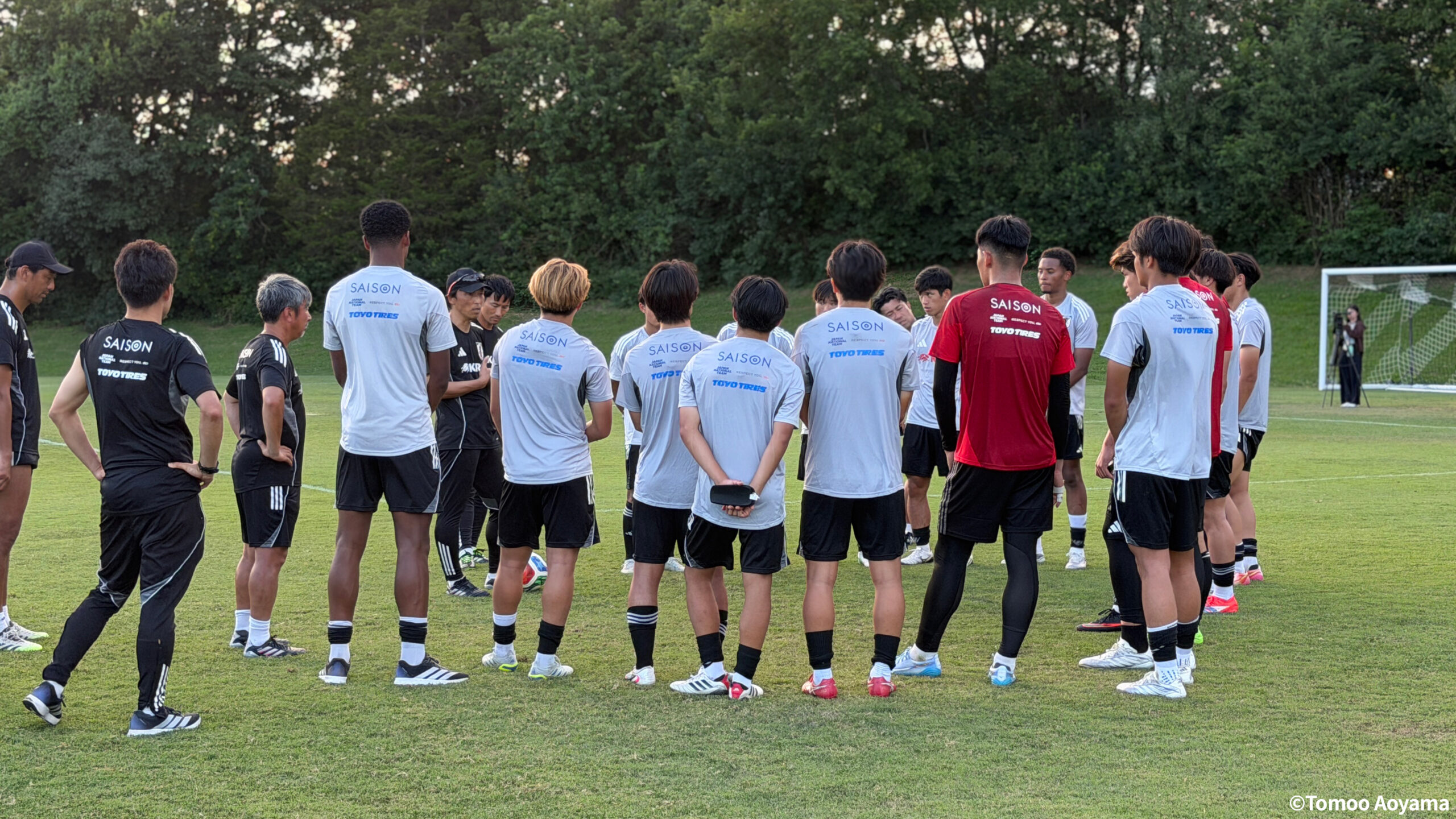
──Having actually experienced the stage of the World Cup firsthand, what are your thoughts?
Otani I felt once again that I want to stand on that stage myself. Until now, it was a vague feeling like "It would be nice if I could stand there," but this time, seeing the Japan national team play in the World Cup with my own eyes on site, I absolutely want to stand on this pitch.
Suzuki What I thought while watching the match was, first of all, that I want to experience the joy and fun of playing soccer in that kind of atmosphere myself. The pride and responsibility of fighting for Japan are incredible, and it’s truly cool. I want to stand on that stage and make the Japanese fans and supporters happy.
── This time, Yuto NAGATOMO, a teammate, is with the Japan national team. Did you have any impressions watching NAGATOMO play for the national team?
Suzuki Even though he doesn’t get to play in the matches, he is the loudest voice on the sidelines. During the game, he quickly hands out water bottles and steps forward to speak up even more than the coach. This attitude of fighting together as a team is something we should all learn from NAGATOMO.
Otani I was able to watch the Tunisia match from behind the Japan national team’s bench, and I could see Nagatomo standing in front of the bench the whole time. Once again, I thought that aspect of him is truly amazing.
Suzuki Since all the players on the opposing team’s bench were sitting down, I could tell just by looking that the Japan national team was fighting together as one. I also have the FIFA U-20 World Cup and other big matches ahead, so I want to be able to express that sense of unity in those important games.
Oya I think there are times when the team comes together precisely because Nagatomo speaks up. Such a presence is reassuring for the Japan national team, and above all, having a player like that at FC Tokyo is truly a support. I want to firmly absorb those qualities and become that kind of presence myself in the future.
──Do you think there are any parts of yourself that have changed through this national team training camp?
Suzuki It would be the “toughness” I mentioned at the beginning. No matter how tough the situation is, I’ve learned not to make excuses and to be able to get myself into the best possible condition. I’ve come to think for myself that even in difficult situations, I have to push through, so I want to continue doing that even after returning to the team.
Otani I hadn’t really experienced such intense training like double sessions every day before, so my body is definitely feeling the strain. But since everyone is in the same situation, I think being able to push through without making excuses is a sign of growth.
──Now, please give a message to the Tokyo fans and supporters.
Suzuki I played soccer in the United States for about a month, and I believe I have grown in many ways, so I will do my best to fully demonstrate that in front of everyone next season.
Oya I was able to truly feel what it means to be part of the Japan national team, which is my personal goal, while in the United States. I will continue to maintain this standard after returning to Japan, play in J.League matches, and do my best to bring joy to the fans and supporters of Tokyo.
Text and Photos by Tomoo Aoyama