

Match Review & Preview
Review of the Previous Match vs. Kashima Antlers
In snowy conditions at Ajinomoto Stadium, FC Tokyo faced the 2025 season league champions Kashima Antlers in the Meiji Yasuda J1 Century Vision League opening match. Due to the bad weather, an orange ball was used to ensure visibility.
Tokyo showed an aggressive attitude from the start. At 2 minutes into the first half, Marcelo RYAN boldly pressed to take away the opponent's freedom, and at 10 minutes, Keito Sato quickly closed in, intercepted the ball, broke through the right side, and created a chance.
While advocating a style of soccer that connects passes, “Rikizo Tokyo” has also embraced adaptability by incorporating sharp attacks. Even in situations where possession is not as desired, they aim to break through with fast-paced attacks.
The player who showed a strong performance from the first half was Kouta Tokiwa, who earned a starting spot for the opener. Not only did he contribute defensively from the holding midfielder position, but he also made incursions near the opponent’s goal to take shots, and turned his first touch after ball recovery into passes that led to quick counterattacks, demonstrating his presence box-to-box in both offense and defense.
The game changed in the 41st minute of the first half. Lukian, who was targeting Kashima’s build-up, made a precise interception high up the pitch to steal the ball. In response, Kashima’s Misao, having lost possession, pulled Lukian back to stop a clear scoring opportunity and was sent off with a straight red card. This gave Tokyo a numerical advantage. Taking advantage of the direct free kick awarded from this foul, Keita ENDO sharply struck the ball with his right foot into the lower right corner of the goal, allowing Tokyo to score the opening goal in the 44th minute of the first half.
However, just after entering first-half stoppage time, they conceded a goal after a scramble from a corner kick. At a time when they needed to be careful right after scoring, they unfortunately allowed a crucial equalizer from a set piece.
In the second half, Tokyo, with a one-player advantage, dominated Kashima, but time passed without shaking the net despite creating many chances. New players who came on as substitutes, including Ryunosuke SATO, Fuki YAMADA, and Kento HASHIMOTO, showed their strengths on the pitch, but they could not break down Kashima’s resilient defense, and the match ended 1-1. Due to the special tournament regulations, the game proceeded to a penalty shootout.
After each team’s first three players scored, Kashima’s fourth kicker, Koike, was denied by the Blue-Red guardian Kim Seung-gyu. Tokyo took the lead when Kento HASHIMOTO scored, and finally Ryunosuke SATO powerfully struck straight down the middle to secure the victory. Although issues such as the timing of conceding goals, the flow of the game, and lack of finishing remained, Tokyo first defeated the reigning champions Kashima in the opening match to earn 2 points. Tokyo got off to a good start at Ajinomoto Stadium toward the major goal of winning the championship.
This Week's Preview
They were unable to secure 3 points. Issues also became clear. However, it was a game where steady progress could be felt. Taking positively the fact that they earned 2 points from the Kashima Antlers in the opening match, the Blue-Red Army faces the Urawa Reds in Sec. 2 of the Meiji Yasuda J1 Century Vision League.
Possession soccer and short counters from high pressing, which have been worked on since camp. The awareness of pursuing a flexible style that requires situational judgment was clearly felt from the players who took the pitch in the opening match. Coach Rikizo MATSUHASHI also expressed his confidence, saying, "It’s not about thoroughly connecting passes, but about making decisions according to the situation. Since camp, we have built up training to align our perspectives by anticipating various scenarios, so while the final judgment is up to the players, there were parts that could be expressed as the 'picture' the team envisions to some extent."
First, the awareness of high pressing led to the season's first goal. From the start, the forward players pressed hard, and Marcelo RYAN's sharp closing down provoked a red card for the opposing player. Building on the intense battles for the ball, they were able to connect this to a positive result. Captain Sei MUROYA said, "We are challengers, so if we truly aim for the title, that fighting spirit is necessary in every match. While we can see some issues, it is important to correct them while winning," he said, tightening his focus and looking ahead.
The fighting spirit shown by the entire team, the scene that led to the sending off, and taking the lead were all good. However, conceding a corner kick immediately afterward and allowing the equalizing goal is a major point for reflection. It was also a moment where we truly felt Kashima’s tenacity. Avoiding such lapses will likely determine whether the team can become strong and resilient enough to win crucial matches.
And one more thing, there remains an issue with finishing in the second half when attacking with a numerical advantage. If we don’t firmly convert our chances, we risk ending up with disappointing results like before. Of course, breaking down Kashima, who raised their defensive awareness after going down a player, was not easy, but we still created many opportunities. Regarding this, the coach said, "There were moments when we couldn’t finish decisively and when we failed to connect properly, handing the ball back to the opponent. We have worked hard on these aspects in training this week." Having faced these challenges together with the team, we want to pay close attention to the team’s growth as they aim to develop a winning mentality.
On the other hand, Urawa secured a 2-0 victory over JEF Chiba in their opening match. They made a strong start by showcasing aggressive play, utilizing the speed of their forwards in attack and a more proactive defense from the front line than before, and are coming to Ajinomoto Stadium. For Tokyo, the key to victory lies in how to break through Urawa’s traditionally strong defense and exploit their weak points while observing the opponent’s approach.
The key point is surely the opening goal. Motoki NAGAKURA, who officially joined the Blue-Red this season on a permanent transfer from Urawa, said, "I experienced Urawa's solid defense firsthand, so I understand it well. I think scoring the first goal will be crucial, so I want to aim for the goal while being mindful of both possession and the space behind the defense. This club took care of me during my junior and senior high school academy days, and since I wasn't able to fully show my play at Urawa, this will be an opportunity to demonstrate my abilities." He is fired up to repay the club with a goal.
Also, being able to play at home again following the Kashima match is a great boost for the team. Player Muroya said with a smile, "Everyone is highly motivated, and I think we can approach this match with the same mindset as we did against Kashima. The atmosphere at Ajinomoto Stadium gives the team confidence. I'm looking forward to it."
Win and tighten your helmet straps──. Coach Matsuhashi emphasizes, "If we truly want to be at the very top, it is important not to be swayed by wins and losses, but to dedicate ourselves to the match right in front of us." Backed by the loud cheers of the stadium and drawing strength from all their experiences, the blue-red squad vows to secure victory in every match as they aim for consecutive wins at the season opener.
Interview with Coach Rikizo MATSUHASHI
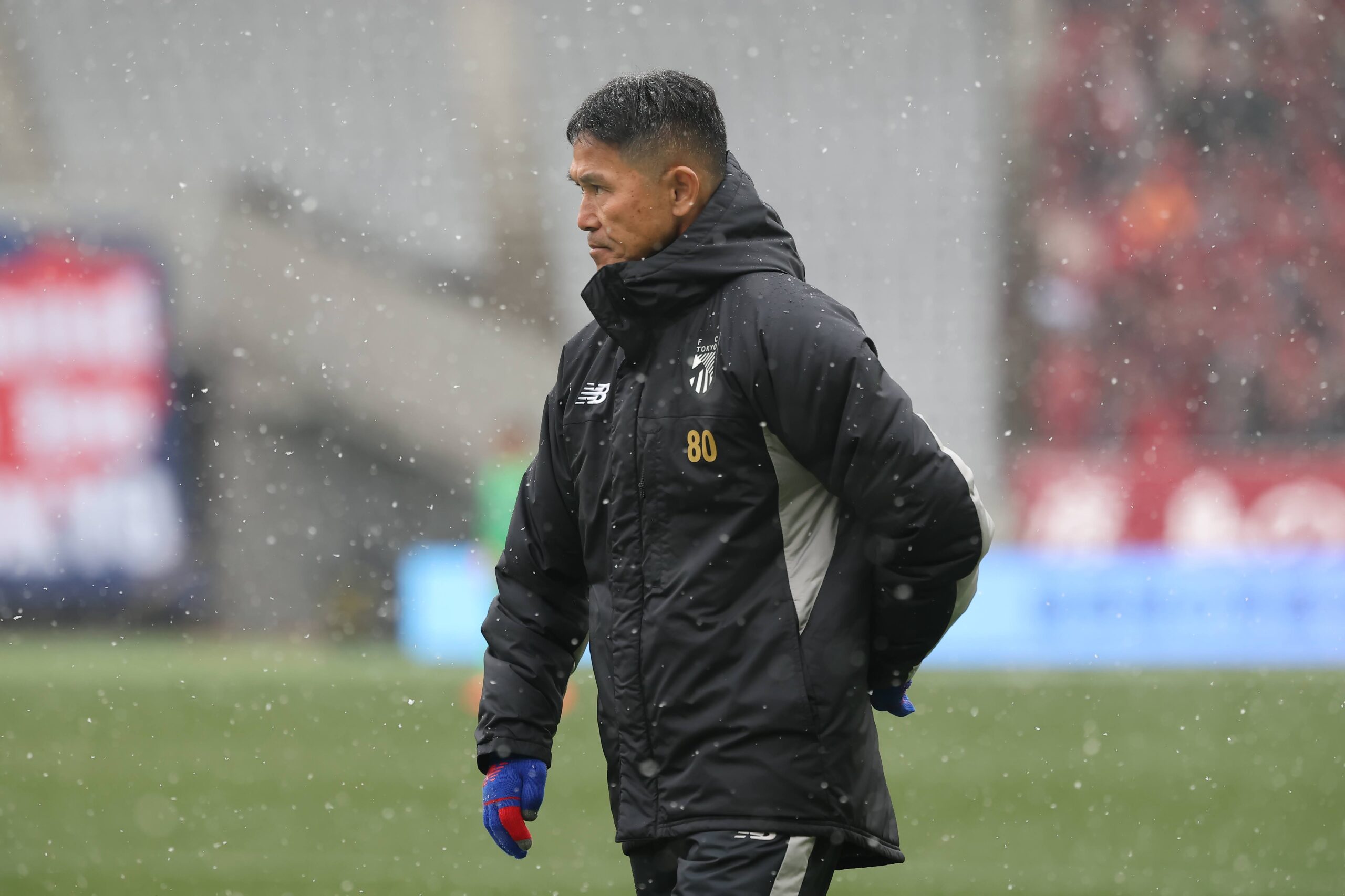 Q. I think the high press we worked on during the camp functioned quite well in the match against Kashima Antlers. A. That was really excellent, but the problem is that we haven’t been able to score from it. It’s not enough to just win the ball through pressing; what’s important is how we convert that into goals. If we can link it to scoring, the possibility of accumulating points increases significantly. Also, as the number of goals increases, I believe our standing will change accordingly. This season is a short-term competition, so being able to finish decisively is even more important.
Q. There were both scenes of connecting passes and simply targeting the space behind. I think what we are trying to do was clearly shown.
A. It is not about strictly connecting passes, but about making decisions according to the situation. Since the camp, we have continuously trained to align our perspectives by anticipating various scenarios. We want to reduce situations like those from last season.
Q. What is your impression of the Urawa Reds?
A They have some speedy players up front and took an early 2-goal lead to win against JEF United Ichihara Chiba. I get the impression they have a very talented squad. However, how they will approach tomorrow’s match against us is a different matter, and I don’t necessarily think the Chiba game is a reliable reference. Nothing major has changed, but I expect them to come at us aggressively.
Q. What have you been focusing on in preparation for this week’s match against Urawa?
A. First, we focused on preventing goals. One factor that led to conceding was that right after scoring, we failed to fully restore our balance and gave the opponent an opportunity to earn a corner kick on the very next play. While set-piece defense is also important, it is crucial not to show any gaps. Keeping that in mind, we have been preparing for the match against Urawa.
Player Interview
Motoki NAGAKURA
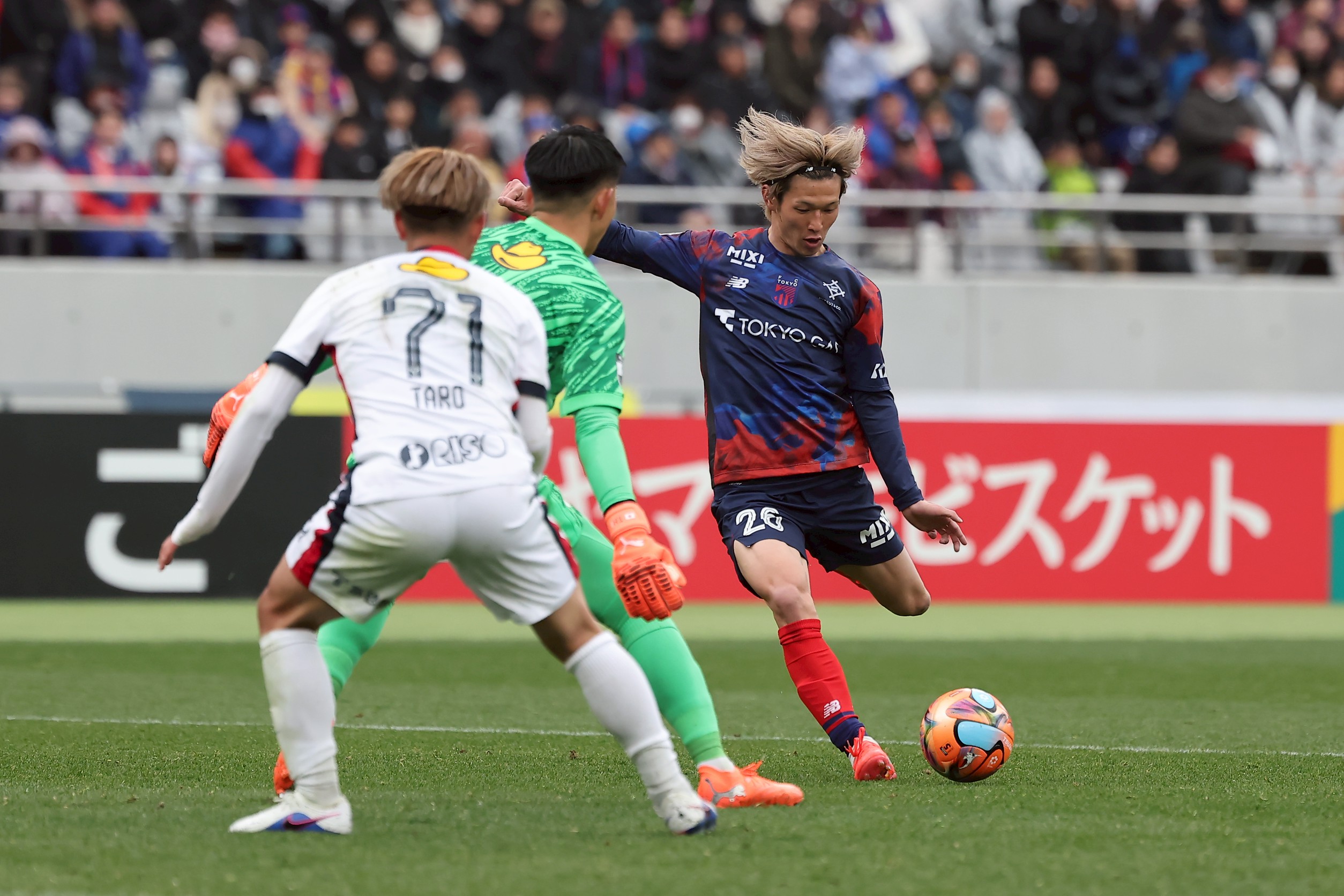 Q. You secured victory in the penalty shootout against the Kashima Antlers.
A, to be honest, I wanted to win within the 90 minutes. There were few clear chances to break through, and even when we did, we couldn’t finish decisively, which is something I regret. It’s not about forcing shots, but even if you’re far from the goal, if you have the chance to shoot, you should have the mindset to take it. After watching the footage post-match, there were moments where I thought the outcome might have changed if I had taken a shot.
Q. How do you feel about your combination with Marcelo RYAN?
A, Although the number of opportunities was not many, we have played together since last season, so I don't think our combination is bad. However, in the match against Kashima, neither of the two forwards was able to score, so I believe that if one of us doesn't score, victory will become distant. If we play together, I want to work together to score goals. Marcelo RYAN defends selflessly and is a player capable of scoring many goals, so I think one of my roles is to help bring out his strengths more effectively. I want to make sure to do what I need to do in that regard as well.
Q. Urawa is a team with a strong defense. What do you think is important to score against such a team?
A. If we can successfully break their press, I believe we can control the game both mentally and physically. Therefore, how we manage to break their press will be a crucial factor that influences the outcome of the match. I think involving multiple players makes it easier to break the press, so I want to be mindful of the movement of the third player, including myself.
Q. How do you feel about being able to play two consecutive matches at Ajinomoto Stadium from the opening game?
A. Since this is a short-term tournament, I thought it was important to build momentum from the very beginning in order to win the championship. I’m happy that we can play consecutive home games starting from the opener. When we play at Ajinomoto Stadium, we have strong support behind us, so being able to play consecutive matches in that environment is something I’m grateful for, and I want to firmly turn that support into our strength and secure the win. Last time, we won in a penalty shootout, so I couldn’t truly celebrate from the heart. I think the fans and supporters also couldn’t fully rejoice, so tomorrow I want us to win decisively within 90 minutes and celebrate together.
Kota Tokiwa
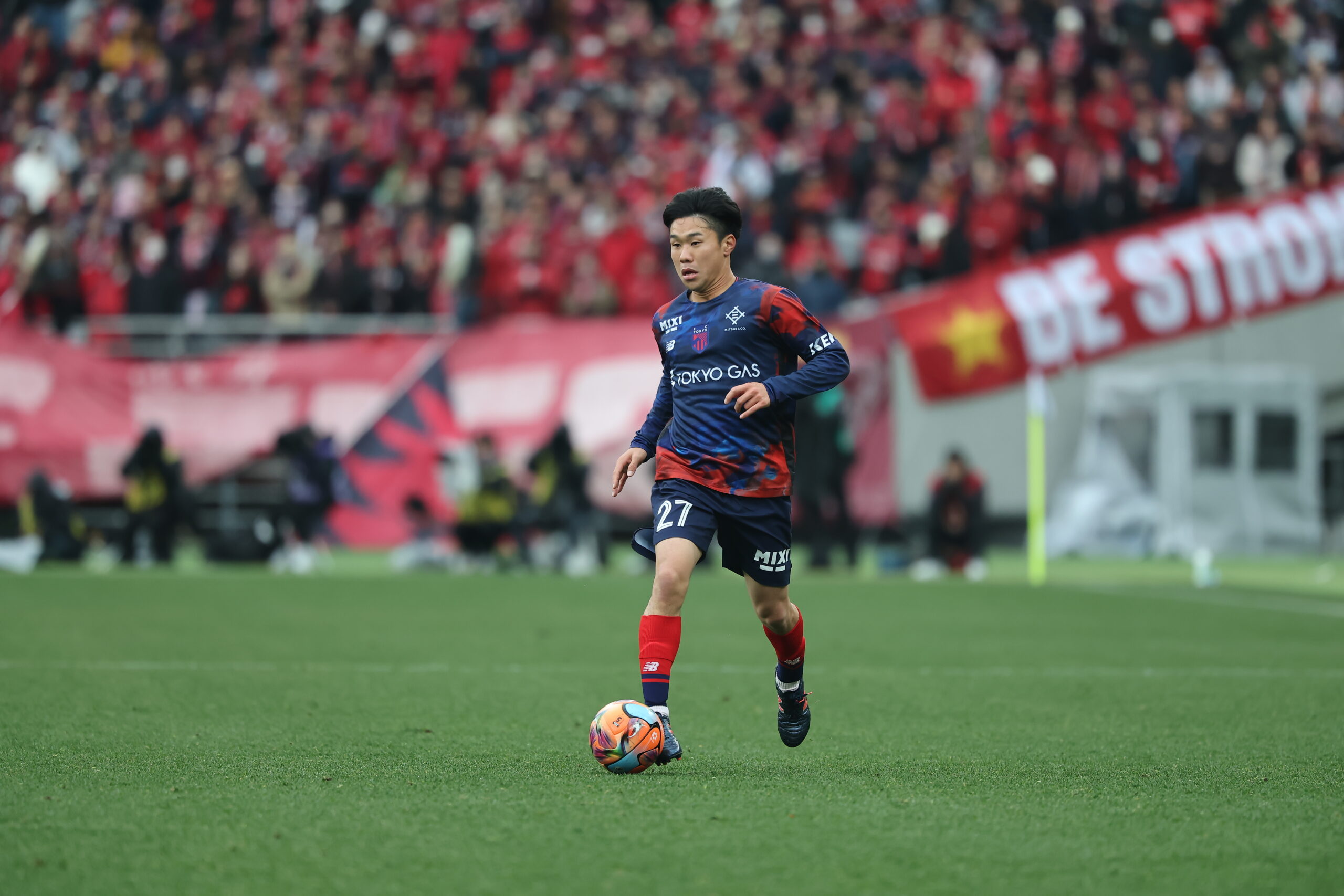 Q. I believe it was your first time starting in a professional opening match, but were you prepared from the preseason?
A. I was quite frustrated with last season, and the moment it ended, I set a goal for myself to definitely start in the opening lineup for the 2026 season. During the off-season, I kept thinking about what I could do to achieve that, dedicating myself to soccer even more than during the season. If playing in the opening match was the initial goal, I set about three smaller goals to clear before reaching that point. By gradually achieving those, I was able to get into good condition before the season and gained a good feeling and confidence during the training camp. I truly feel that by steadily clearing the goals I set, I was able to step up and start in the opening lineup.
Q. At the time the team started up, you had your priorities clearly organized in your mind, right?
A, I clearly and specifically identified what I needed to do, what my challenges were, and what was expected of me. Last season, I mainly played in practice matches, so I reviewed footage from those games and training sessions. It wasn’t exactly a return to basics, but I reanalyzed my strengths. Then, I prioritized what I was lacking and what I needed to do to get game time. Once I organized those thoughts, everything just clicked. Once your thinking is clear, all that’s left is to act.
Q. Having actually played in the opening match against the Kashima Antlers, how much of what you prepared were you able to show?
A. On the contrary, I think last season’s experience really helped me. In last season’s Emperor's Cup match against the Urawa Reds, I suddenly played in the quarterfinals, and the first half was terrible—I was too tense at the start of the match and overly focused on what was right in front of me. However, in the next league match against Nagoya Grampus, I was able to perform well and felt a real sense of confidence. It’s not exactly a success story, but by comparing what didn’t go well in the Urawa match with the success in the Nagoya match, I gained a sense of when I am at my best. For the opening match, I was able to bring myself into that state, so I really entered the game well. I also have confidence that I was able to show my play. That said, honestly, I felt I played better in the preseason. There was the unique tension of an official match and the fact that the opponent was last season’s league champion, but I still felt I could do more.
Q. On the other hand, looking ahead, do you think that by letting go of unnecessary tension, you might gain new insights or feel more at ease?
A. Actually, that’s the difficult part for me. If I relax too much, it’s no good, and if I change something, I think things will go wrong. Some people might perform better that way, but for me, it can make me too nervous, so I think it’s best to stay calm and composed. Also, in the second match, the opponent will have watched footage of me and analyzed it. Honestly, I don’t think Kashima expected me to play, and because they didn’t understand my strengths, I was able to show my best. The real test in the second match will be what I can do when the opponent fully understands my strengths and tries to neutralize them. In that sense, I feel like I’ve finally entered the professional world. In some ways, I think the match against Urawa will be tougher than the one against Kashima. In the opening match, I had nothing to lose and was able to play boldly. But in the second match, when they think things through and counter my strengths, what I can do in response becomes crucial. If I overthink it, I’ll definitely freeze up, so it will be more difficult, but I also think that’s part of the fun of football. How I can express myself authentically in that situation is what matters most.
Q. Considering that you played in last season's match against Urawa, how do you view the key points for tomorrow's game?
A. Urawa pressed quite high from the front in the opening match, so they might be aiming for a high press. In response to that, rather than kicking the ball away easily during build-up, if we can overturn the pressing opponents, I think there will be vast space behind them, so the build-up phase is where I am expected to contribute. Also, Urawa’s forwards are fast and many of them have the ability to beat opponents individually with dribbling. How much I can shut down the opponent defensively in that area is important. I think the opponents will have the ball individually for longer periods than in the Kashima match, so completely stopping them and not just stopping but also linking that to our attack will be key. Their fullbacks also join the attack, so shutting down the opponents completely, moving the ball forward, and then going out to finish the play—that’s what I think are the two main points.