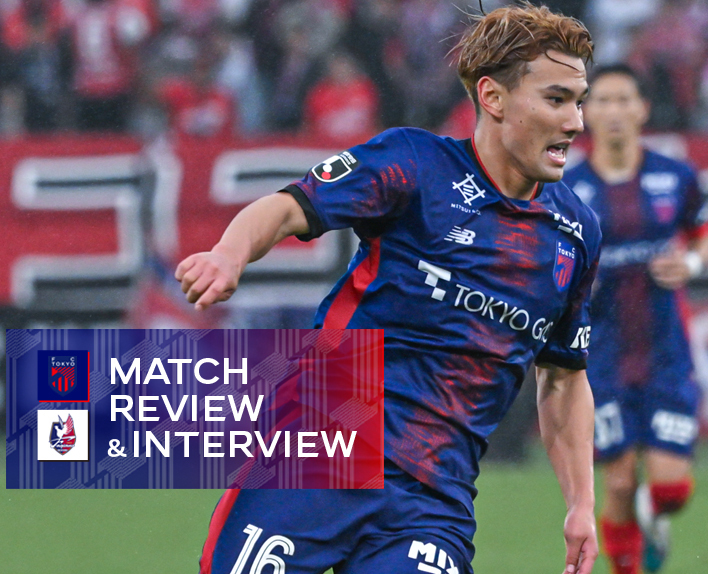


<Match Review>
While centering on the solid defense that has been established as the base, how can we develop a powerful attack? Tokyo, setting the challenge on the offensive front as the key to victory, faced Fagiano Okayama at Ajinomoto Stadium aiming for their first league win in about a month.
Okayama is a team that has achieved results since their first year after promotion, relying on a solid defense composed of a five-back line plus four midfielders. With players possessing tremendous power up front and others capable of adding variety to their attack, coach Rikizo MATSUHASHI emphasized, "We must remain fully vigilant."
Tokyo's starting eleven featured goalkeeper Kim Seung-gyu, with a back four composed from right to left of Yuto NAGATOMO, Alexander Scholz, Masato MORISHIGE, and Sei MUROYA. The double pivot in midfield consisted of Takahiro KO and Kei KOIZUMI, while the attackers were Keita ENDO on the right and Marcos GUILHERME on the left. The two forwards were Keiya SATO and Teruhito NAKAGAWA. Additionally, Taiyo YAMAGUCHI, who made his J1 League debut in the previous match, was included on the bench. He aimed to make his Ajinomoto Stadium debut in this match against Okayama.
Ryunosuke SATO, who is on a developmental loan from Tokyo to Okayama, did not play due to contractual reasons, but Suzuki, who was raised in the Aoaka Academy, was in the starting lineup. Since neither was in the lineup in the previous match in April, this was their first match against their former club and their first return to Ajinomoto Stadium for a Tokyo match. Additionally, Yanagi, also raised in Aoaka, made the bench, and both players received applause from the crowd during the pre-match player introductions.
Also, before kickoff, as part of the "JFA Respect Fair Play Days 2025" initiative, team captain Koizumi read aloud the declaration to eradicate discrimination and violence. Through the microphone, he conveyed the spirit of respect.
1st HALF—Seizing control with high concentration and searching for a breakthrough
The match started with Tokyo taking control. While holding the ball, they searched for attacking opportunities, not only building up play but also using passes targeting the space behind the defense to regain possession in an advanced position and launch secondary and tertiary attacks. They brought the game into the situation they had intended before the match, aiming to create scoring chances by targeting both sides of the three-back defense. If they could not immediately recover the ball high up, they quickly retreated to build their defensive line, while their negative transition and coordinated pressing from the front line functioned effectively, resulting in a period where Okayama was denied attacking opportunities.
Tokyo seamlessly transitions from attack to defense and defense to attack with high defensive awareness and outstanding concentration. However, Okayama also shows solid defense centered on their tall defenders, making it difficult to create clear scoring chances.
In the 20th minute of the first half, from a set piece conceded on Okayama's left side, Esaka skillfully connected with his right foot, but Sung-gyu made a desperate flying save to clear the ball. Thanks to the goalkeeper's sharp reaction, Tokyo managed to narrowly avoid danger.
Tokyo wants to create dangerous attacks from solid defense. In the 26th minute of the first half, Muroya broke through on the left side, entered up to the edge of the penalty area, and crossed the ball back. However, this was cleared by an opposing player in front of the onrushing Marcos, and did not lead to a shot. Then, in the 28th minute, Takah tried to break through using one-touch plays, but Okayama responded by solidifying the center with a five-back defense. Although this situation was anticipated before the match, it became clear that simple vertical passes or crosses could not break through, so attention turned once again to how Tokyo would change their attacking approach.
Where and how to switch on the attack? One answer was drawn out by a sharp vertical pass from the back line. In the 33rd minute of the first half, Endo, receiving a wedge pass from Scholz, made a flowing turn and played a through ball forward. Nakagawa broke through, overlapping with Marcos, causing a delay in the shot, and the rebound was then played from Marcos to Sato. Although the shot was blocked by a deep tackle from the opponent and could not be completed, it was an attack that showed potential with sharp vertical coordination involving multiple players, a run behind the defense, and an attack targeting the sides of the three-back defense.
Just before the end of the first half, Nagatomo ran up the right side on a counterattack and crossed the ball. Endo, who ran into the far side, skillfully connected with the outside of his right foot, but Kawunami tipped the softly arcing ball, which seemed to be going over the goalkeeper's head, away, and the whistle blew. The match went into halftime with the score still goalless.
2nd HALF—A decisive 3-goal victory at home Ajinomoto Stadium sparked by Kane's goal
The first half saw overwhelming ball possession. How to directly convert this into goals became the key point for the second half.
The match flow did not change after halftime. From the start, Tokyo held the ball and searched for attacking opportunities. In that moment, Tokyo's vertical line sharply exploited a brief lapse by Okayama.
In the 3rd minute of the second half, Takahashi, who had the ball in an advanced position, delivered a perfectly aimed through pass with his right foot. Sato received it with a soft trap using the outside of his right foot and quickly shot through the legs of the opposing defender with his right foot, slotting the ball into the goal to give Tokyo their long-awaited opening goal. Sato, who had been actively dropping into midfield to participate in the build-up and had become the starting point of the attack since the first half, had said the day before the match, "As an attacking player, I have been entrusted with a big responsibility. I want to score and win." Wearing number 16, he truly accomplished a big task at home. This was his first goal at Ajinomoto since the Emperor's Cup 2nd Round match against Zweigen Kanazawa on June 18. Immediately after shaking the net, he dashed straight toward the goal behind and shared the joy with the fans and supporters who had come out in the rain for the game.
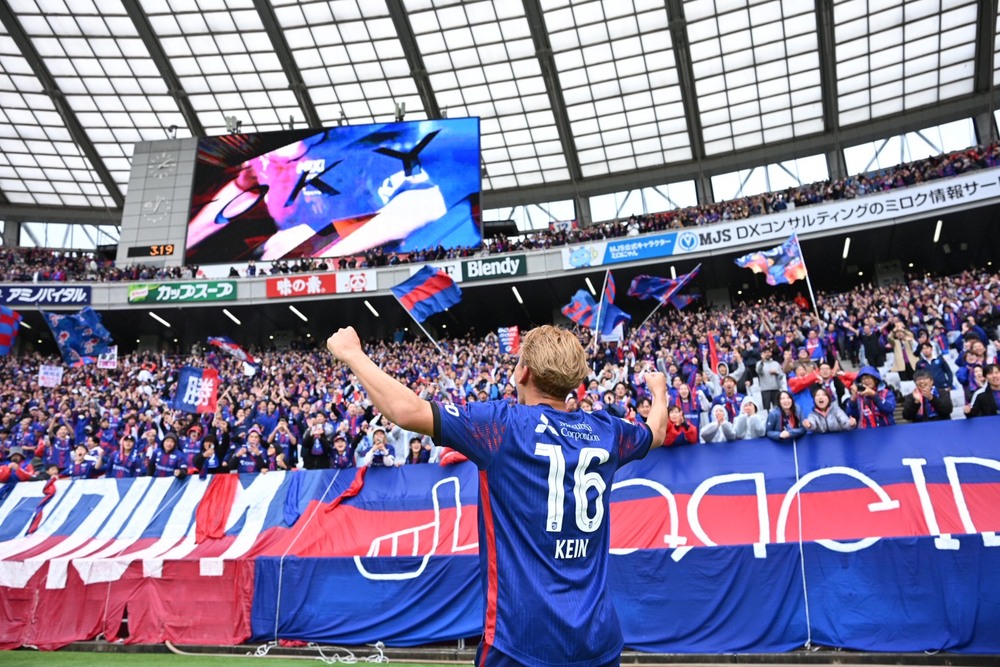
In response to the attacking unit's hard work in finally scoring the opening goal, the defensive unit also protected the goal with focused defense. At the 15th minute of the second half, a counterattack led to a dangerous situation, but Sungyu once again made an outstanding save against a shot from Kimura taken from close range. He firmly deflected it, preventing the equalizer.
In the 23rd minute of the second half, the first substitution of the match took place. Soma ANZAI and Leon NOZAWA were sent onto the pitch, replacing Endo and Nakagawa. ANZAI took the right attacker position, while NOZAWA joined as one of the two forwards.
This change immediately created a good opportunity. Just a minute later, in the 24th minute, after connecting passes from their own half, Nagatomo made a full-speed overlapping run down the right side and crossed with his right foot. NOZAWA met it with a header in the center, but unfortunately, the shot went just wide to the left of the goal.
Tokyo had been maintaining the upper hand since the first half, but here they were caught off guard for a moment. It was the 28th minute of the second half. From Okayama’s left corner kick, Esaka connected with a header at the near post, resulting in a goal. The match was brought back to square one.
Tokyo, aiming to take the lead, immediately made a substitution following the equalizing goal. Kota TAWARATSUMIDA was brought on as the left attacker, replacing Marcos. Then, TAWARATSUMIDA quickly excited the stadium with plays such as dribbling through the opposing defenders to attempt an intrusion into the penalty area.
In a situation where the cold rain continues to fall, the Blue-Red family keeps cheering passionately, and the team is determined to respond with results at all costs. The players continue to try to break down Okayama's defensive line with an aggressive attitude in both offense and defense, aiming for the go-ahead goal.
And finally, that desire bears fruit. In the 43rd minute of the second half, Takao’s lofted pass was met by Sato coming in from the right, who, with his first touch, got past the goalkeeper. Then, from the opposite side, Tawaratsumida ran in and kicked the ball into the unguarded goal to take the lead. The decisive moment came from the same number 8’s pass as the opening goal, with Sato’s breakaway. Furthermore, Tokyo took the long-awaited lead with a good combination play where a player from the opposite side joined the attack from the flank.
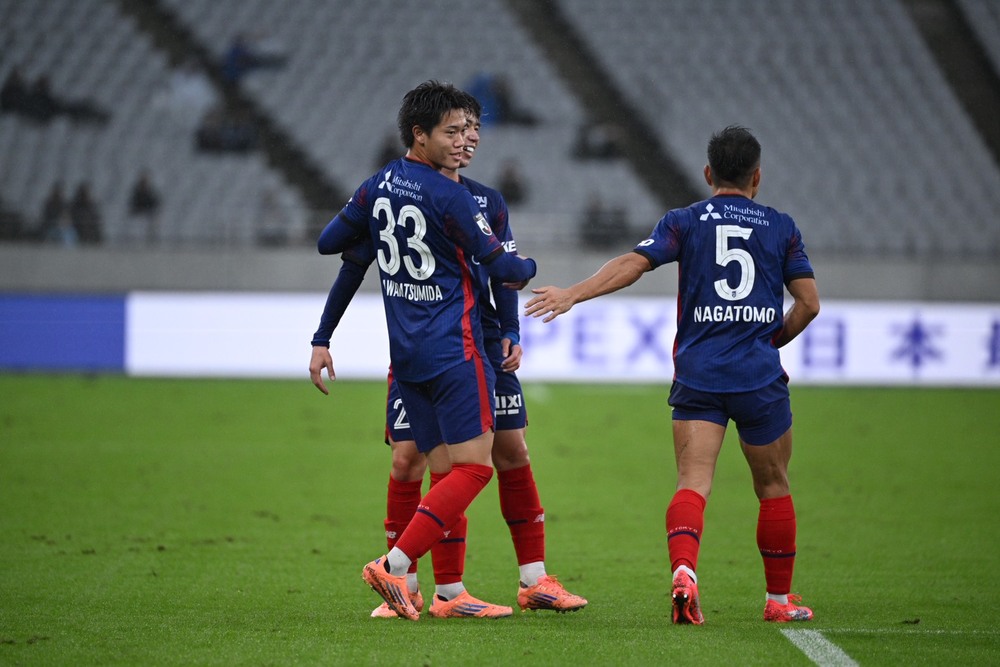
The stadium's energy reached its peak with the go-ahead goal after being caught up. Once this happened, the momentum of the blue and red did not stop. In the 45th minute of the second half, starting from the left side, Sato received a horizontal pass from Takao, who had pushed forward, and curled a grounded mid-range shot to add another goal. The striker, who was active both offensively and defensively, delivered his second goal of the day, extending Tokyo's lead to two.
Turning around from a first half where they struggled to find a breakthrough, the second half saw Takao’s decisive passes shine, resulting in three goals. Sato, with his sharpened scoring sense, delivered a performance that could be called “almost a hat-trick,” while Tawara Tsukida scored his first goal since Sec. 12 against Gamba Osaka on April 25, leading to a comfortable victory. Based on strong duels and quick transitions, they scored three goals and impressively secured 3 points at home.
MATCH DETAILS
<FC Tokyo>
STARTING Ⅺ
GK Kim Seung-gyu
DF Sei MUROYA / Masato MORISHIGE / Yuto NAGATOMO (45+2 min 2nd half: Teppei OKA) / Alexander Scholz
MF Takahiro KO / Keita ENDO (23 min 2nd half: Soma ANZAI) / Kei Koizumi / Marcos Guilherme (32 min 2nd half: Kota TAWARATSUMIDA)
FW Megumu Sato / Teruhito NAKAGAWA (23 min 2nd half: Leon NOZAWA)
SUBS
GK Go HATANO
DF Kanta DOI / Kosuke SHIRAI
FW Keita YAMASHITA / Taiyo YAMAGUCHI
MANAGER
Rikizo MATSUHASHI
GOAL
3rd minute of the second half: Keisuke SATO / 43rd minute of the second half: Kota TAWARATSUMIDA / 45th minute of the second half: Keisuke SATO
<Fagiano Okayama>
STARTING XI
GK Goro KAWANAMI
DF Yugo TATSUTA / Daichi TAGAMI / Yoshitake SUZUKI
MF Haruka MOTOYAMA / Eiji MIYAMOTO / Ryo TABEI (26th minute of the second half: Yuta KAMIYA) / Sei KATO (26th minute of the second half: Takahiro YANAGI)
FW Hiroto IWABUCHI (14th minute of the second half: Takaya KIMURA) / Kazunari ICHIMI (14th minute of the second half: Lucao) / Nin ESACA (44th minute of the second half: Welick Popo)
SUBS
GK Kohei KAWAKAMI
DF Kota KUDO
MF Masaya MATSUMOTO / Ryo TAKEUCHI
MANAGER
Takashi KIYAMA
GOAL
28th minute of the second half: Nin Esaka
[Interview with Coach Rikizo MATSUHASHI]
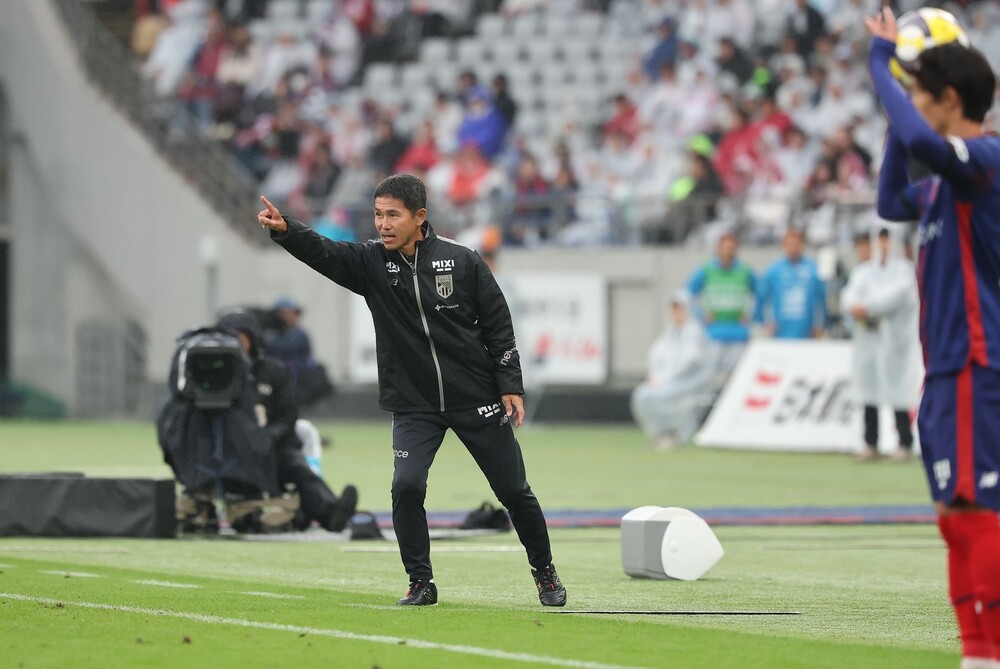
Q. First, please give us an overall summary of the match.
A. Looking at the full 90 minutes, it was a match with very difficult moments as well as good periods, but with the score at 3-1, I believe the result of this game came from firmly closing down key moments and scoring as a result.
Q. With several attacking players absent, Keito Sato was outstanding today. Could you please share your evaluation as the coach?
A. Of course, I think he has truly performed wonderfully. There are certainly players who are injured, but the players currently on the field have seized their chances and performed well, guiding the game in a positive direction. It was the same in the previous match; because each player who appeared did their job properly, this kind of connection was born. For me, there is absolutely no feeling of 'because someone is missing.' I am very happy that the victory is the result of the players present delivering their performances firmly.
Q. Apart from scoring, Sato's aggressive play stood out today as well.
A. Even in the first half of the league, there were several matches where he helped the team with his scoring ability. He may currently be playing in a role that is not his usual position, but his eagerness to learn and expand the range of his play, striving to broaden his capabilities in any position, makes him a truly remarkable player. I believe that this dedication to fully mastering those aspects is reflected in the results.
Q. In the second half, multiple players increased their awareness of line breaks and the space behind the opponent, leading to a series of rapid goals. What kind of adjustments or instructions were given at halftime?
A. In the first half, although we had possession of the ball for a very long time, we struggled to find effective attacking options. However, I believe that if we continue rehearsing properly and build stronger relationships on the field, it will lead to even better attacks. Therefore, we decided to stop doubting ourselves or feeling stuck just because we had the ball but no clear attacking moves. By moving the ball steadily, the opponent will inevitably create spaces somewhere, and within those relationships, the chances will increase. I think we were able to demonstrate that to some extent.
In the second half, I believed that an open play would inevitably emerge at some point, and the precision of transitions and the quality of play within that open play overlapped, leading to very good goals. Additionally, bold shots and the ball entering dangerous areas for the opponent contributed to the three goals.
Q, The assist that led to the goal came from Takahiro KO. I think his ability to receive the ball and quickly release it in situations like that was very good. What is your opinion on this as the coach?
A. I believe the quality in that area was definitely higher in the second half. The moment the ball is quickly settled and that first touch is properly controlled, it leads to the quality of the next play. To bring out that play speed, it is important to play accurately, and that is what increases speed—not rushing. If you can firmly control the ball, you can smoothly transition to the next play. That becomes the speed of play, and if that quality is demonstrated, it makes it even more difficult for the opponent. I think that was very evident in the second half.
Q. From here, although the tournament consists of two different matches, we will face consecutive games against FC Machida Zelvia at the Japan National Stadium. Please share your enthusiasm for the upcoming matches.
A. The Japan National Stadium also has the image of being our 'home,' and it is a stadium known as a sacred ground. Of course, thorough preparation is essential, but since it is an opponent and a tournament where we must deliver solid results, it is very encouraging that the fans and supporters create an atmosphere like our 'home' to back us up. We want to do our best to fully demonstrate our strength even at the Japan National Stadium.
[Player Interview]
<Player Kei Sato>
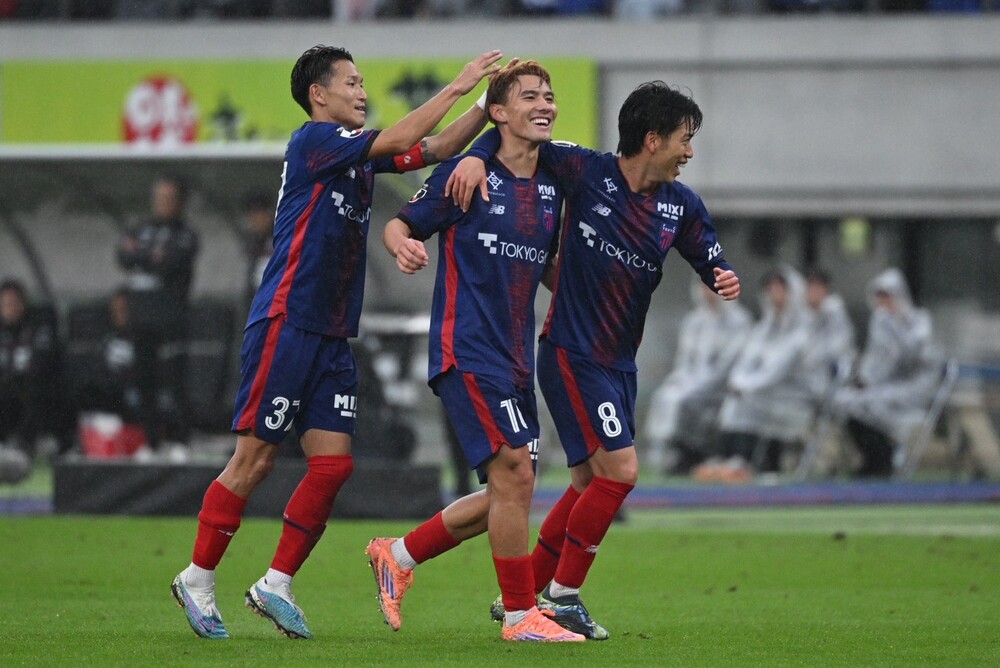
Q. It seemed like you were struggling with the opponent's defensive block in the first half. I think you yourself dropped back or tried to break through with one-twos. What were you focusing on during the first half?
A. We were unable to draw the opponent's five-back formation forward as much as we had anticipated, so we couldn't successfully thread passes into the areas where they had set up their block, and thus couldn't break down their formation. Another approach could have been for the forwards to drop a bit more to create a numerical advantage and break through, or to force passes in and then advance with forward support. There were few shots in the first half, especially few long-range shots from the defensive midfielders. The center backs were also able to carry the ball forward and apply pressure, so I think long-range shots from the center backs could have been an option as well. I believe if the team had done more of this, we could have found a way to break through.
Q, including those aspects, you organized various issues during halftime and capitalized on the first chance in the second half. How did that feel?
A. At halftime, the coach told us, "It's not bad at all, so don't be pessimistic," and instructed us to increase the speed of our play choices and decisions, and to use one-touch passes more effectively. I thought that if I could dribble forward where possible and break through on my own where possible, the next player would come out and create a numerical advantage. Takahiro KO skillfully carried the ball for the first goal, passing into the space that opened up, which led to the score. It was precisely because the awareness to break through alone increased in the second half that the opponent's formation collapsed, they were stretched out, space opened up, and I was able to receive the ball between the lines.
Q: You were involved in all three goals. The first was a goal aimed between the opponent’s legs, and the second was a goal where you struck the ball cleanly without tension. Please reflect on each of your goals.
A. The first goal was similar to the one I scored against Shimizu S-Pulse, but I focused on staying relaxed and gently guiding the ball in without completely beating the opponent. I was able to score exactly as I intended today as well. I had already grasped in practice the feeling that the goalkeeper couldn’t see and react because he was blind to the shot, so that went according to my image. As for the second goal, it wasn’t about the shot’s direction but rather that I fully committed to the strike, which caused the deflection that led to the goal. I think it showed decisiveness. I want to give myself credit for that.
Q. With more matches to come, the team still has a chance to win the Emperor's Cup title. With today's victory, the team has also mathematically secured its place in the J1 League.
A. My strongest desire is to win a title. I believe that winning league matches in good form will build momentum toward the Emperor's Cup. My determination to lead this team to victory has grown even stronger, so I want to give my all in every single match, both in the league and the Emperor's Cup, and win them all.
<Kota TAWARATSUMIDA>
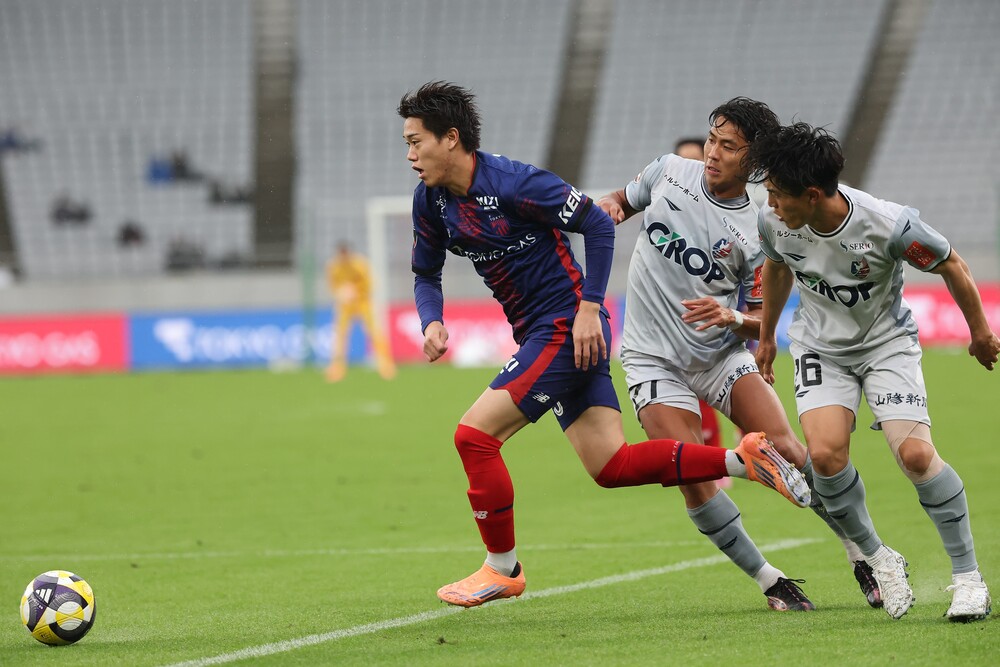
Q. I think it was a goal where you firmly tapped in the ball that spilled loose.
A. I think it was a scene that led to a goal precisely because I ran into the area in front of the goal while watching Keito Sato's movement.
Q, Kota TAWARATSUMIDA's goal ultimately became the Final Round-winning goal.
A. No matter the form, a goal is a goal. Moving in from the side to the front of the goal led to the score. As for the style of the goal, I think it was a tap-in goal that I hadn’t scored before, but I want to continue doing it steadily.
Q. You were brought onto the pitch when the score was 1-1. What instructions did the coach give you?
A. First, I was conscious of coming on and trying to change the flow of the game. Since the score was tied 1-1, I only focused on contributing through plays that would directly lead to a goal. Coach Matsuhashi told me to be aggressive, and I want to become a player who can create more and more situations like that one (the first dribble breakthrough after coming on).
Q: With many attackers injured, how do you want to build on today's goal?
A, I believe that a strong team is characterized by being able to achieve good results no matter who plays. Although the season is in its final stages, I want to keep working hard to help the team improve even more. Personally, I think that if I can express my strengths on the pitch, it will lead to goals, so I want to continue giving my best.
<Player Kim Seung-gyu>
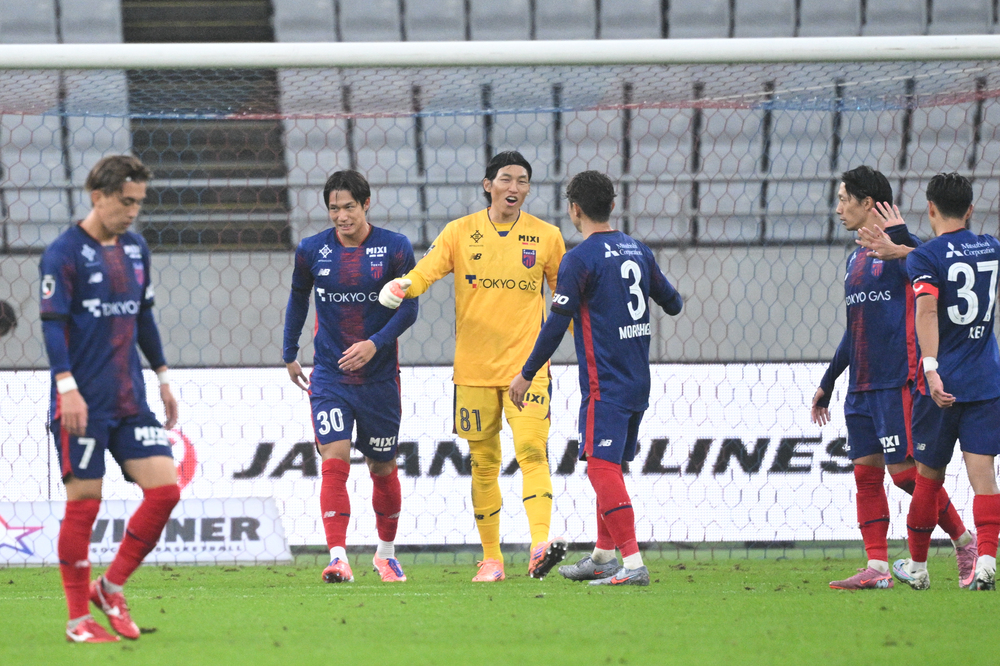
Q. How do you look back on today’s match?
A. Today was a match we had to win. With only two home games left, I’m really glad we were able to secure a victory in front of our fans and supporters here at Ajinomoto Stadium. I wanted to win both matches and finish the season strong, so I truly feel relieved.
Q. In the first half, there was a scene from the opponent's free kick, and Player Kim Seung-gyu made a big save.
A. We practiced set pieces as a whole team, and we knew the opponent would come even from a long distance, so I was able to react properly and prevent the shot in that scene.
Q, After conceding a goal and being equalized, you were able to keep fighting without falling apart, which led to the victory. What kind of conversation did you have with the defensive players?
A. When the home team is tied in a home game, I think there are times when the desire to win becomes too strong, causing the tempo to rise and the balance to be lost. However, the players in the defensive line are very experienced, so they communicated with each other to avoid being caught on the counterattack and facing dangerous situations. I believed that chances would definitely come, and I think we were able to play steadily while holding firm at the back.
Q. You spoke with the goalkeeper coach immediately after the match. What kind of conversation did you have?
A. I talked about the scene where we conceded the goal. It was from a set piece, and there are differences between what you feel on the pitch and what you perceive from outside, so I asked about the positioning and decision-making from an external perspective.
Q. The season is entering its final stages. Please tell us your enthusiasm for the upcoming matches.
A. Next, we will have consecutive matches against the same opponent, but by securing a solid win in the first match, we aim to approach the next game with our own rhythm. Above all, we want to fight each match one by one with the goal of winning the match right in front of us.