

<Match Review>
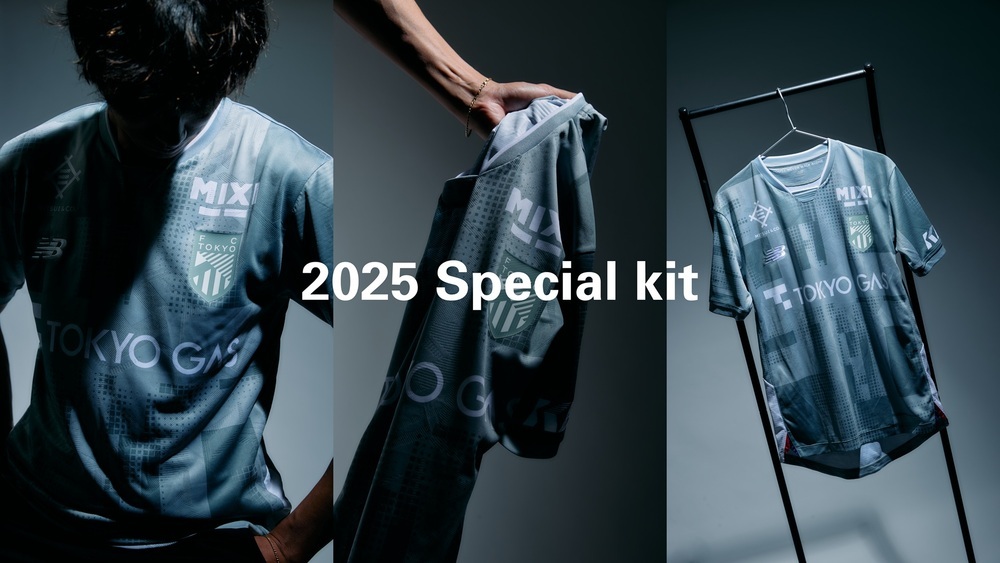
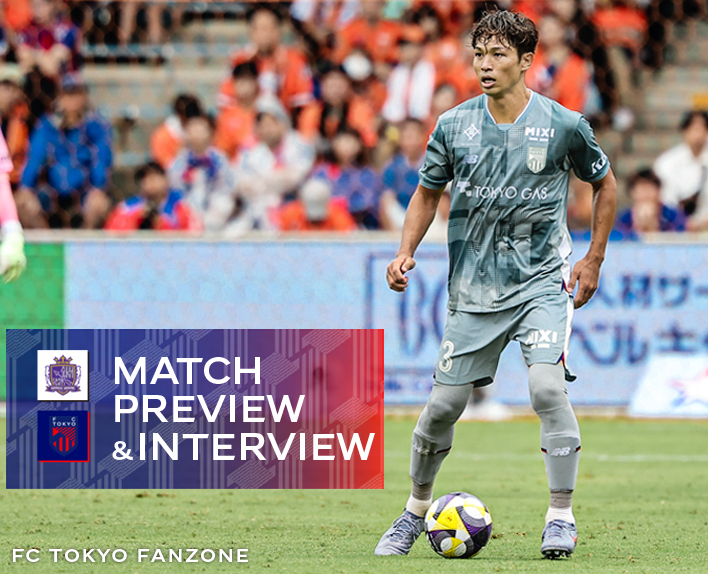
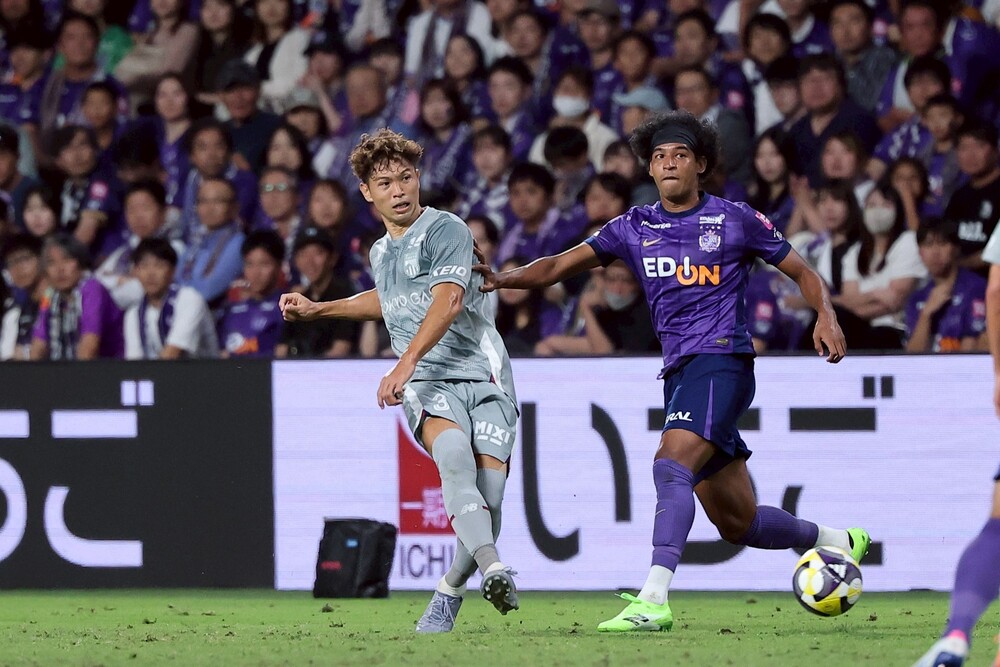
The 2025 Meiji Yasuda J1 League is in its final 5 matches. The away match against Sanfrecce Hiroshima, held as a Friday night game, saw the Blue-Red Eleven don the gray-colored Special Kit once again, continuing from the previous match.
Hiroshima has steadily accumulated results, boasting a solid defense that has conceded only 23 goals in 33 league matches so far. Not only are they 7 points behind the top spot in the league, but they have also reached the Final Round of the J.League YBC Levain Cup and advanced to the Semifinal Round of the Emperor's Cup, keeping alive the possibility of a domestic treble.
Based on a stable defense that fully showcases individual strength, this team advances the match with an aggressive style. For Tokyo, it will be a game where they want to firmly control one-on-one confrontations with opposing players both offensively and defensively, while breaking down the opponent's defensive network as a team to bring in goals and, ultimately, victory.
The starting eleven for the “Friday J” Hiroshima night game featured goalkeeper Kim Seung-gyu, who had returned from the South Korean national team. The center-back pairing consisted of Alexander Scholz and Masato MORISHIGE, with Yuto NAGATOMO, returning from the SAMURAI BLUE, at right back and Sei MUROYA at left back. In midfield, the game-controlling duo of Takahiro KO and Keigo HIGASHI were deployed, while the wide attackers were Keita ENDO on the right and Marcos GUILHERME on the left. The two forwards aiming for goals were Keita YAMASHITA, starting for the first time since Round 28, and Keiya SATO, who scored a spectacular equalizer in the previous match against Shimizu S-Pulse. Additionally, Taiyo YAMAGUCHI, making his second bench appearance, was aiming for a milestone professional debut.
In the 2024 season, after struggling in the Hiroshima away match heavily affected by a typhoon, the team was blessed with good weather at EDION PEACE WING HIROSHIMA. With the support of many blue-red family members who rushed to the stadium, the match kicked off at 7:03 p.m.
1st HALF—Losing control and enduring the situation
From the start, the team that took control was Hiroshima. Tokyo wanted to draw back effectively and aim for counters, but they struggled to regain possession in good positions and couldn’t launch a counterattack. On the contrary, they lost the ball in advanced positions and were pressed back, leading to a difficult period.
In the 8th minute of the first half, Muroya received the ball again from his own throw-in on the left side and advanced to the goal line. He skillfully targeted the pocket near the goal and crossed it back, but the forwards who had gathered inside the penalty area could not get a shot off, failing to create a clear chance.
Hiroshima continued to focus on high pressing to immediately regain possession, frequently attacking by spreading the play to the flanks, utilizing their wing-backs who took high positions. Tokyo also wanted to approach the opponent’s territory with quick attacks, but with the opposition retreating quickly, time passed without Tokyo being able to find effective attacking options as they wished.
Despite conceding the pace to the opponent, Tokyo displayed a defense that somehow prevented clear scoring chances. They gradually extended their playtime in the opponent's half, but Hiroshima firmly responded by forming a block with five defenders and four midfielders, preventing Tokyo from breaking through.
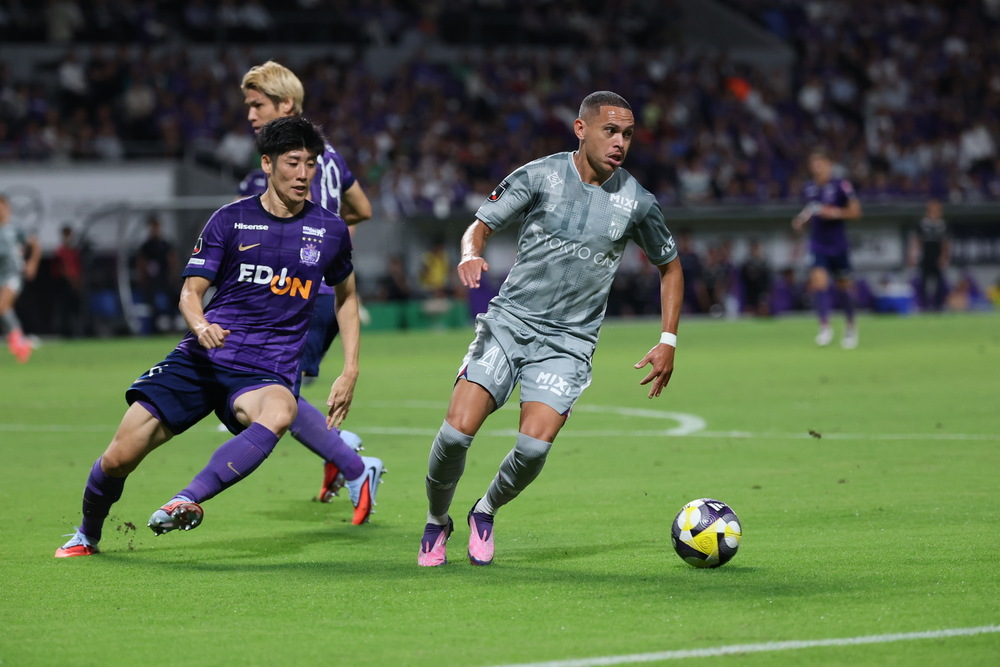
In the end, the score remained unchanged even after one minute of additional time in the first half. Although the defense fought hard in the crucial one-on-one situations, the question remained on how to connect that to the attack. The team faced challenges in adding depth to their offense and breaking down the opposition as they headed into halftime.
2nd HALF—Fought tenaciously and earned 1 point on enemy ground
Hiroshima took the initiative. From the start of the second half, they brought on Turgay as an inside half and Nakamura as the left wing-back to energize the pitch. Then, in the 4th minute of the second half, Shiotani and, in the 7th minute, the newly introduced Turgay took shots after advancing forward, but Kim Seung-gyu showed sharp reactions with fine saves, not allowing any goals.
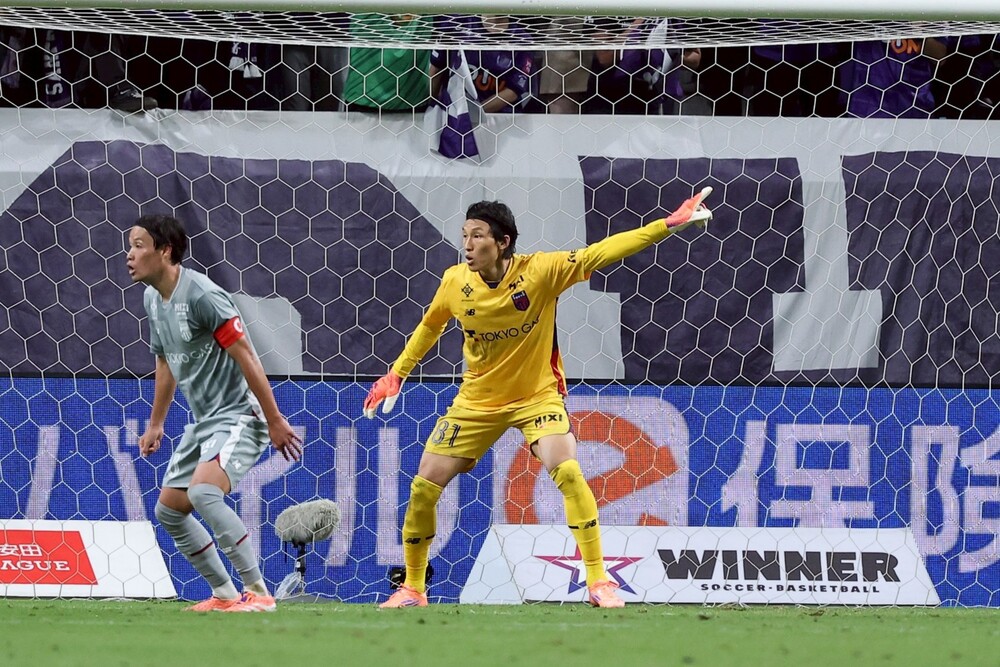
Then, in the 11th minute of the second half, after being released by a through pass, they launched a series of attacks, but Sungyu powerfully rushed out and punched the ball away. Even though they were pressed further, the defenders threw their bodies to make consecutive blocks. With spirited defense, the match continued scoreless.
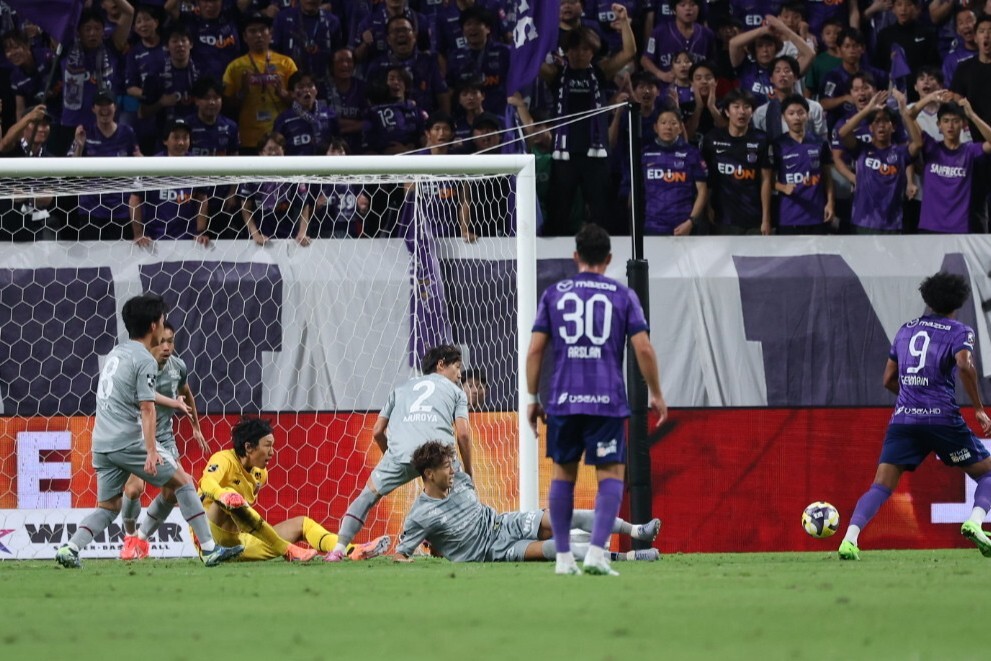
Here, the Tokyo bench made a move. In the 17th minute of the second half, they substituted Koizumi into the defensive midfield position for Higashi, brought Leon NOZAWA onto the pitch as the right attacker in place of Marcos, and shifted Hikaru ENDO to the left attacker role. While the defense continued to shine with their efforts, the focus turned to how to create cracks in Hiroshima’s defensive network. Attention was drawn to the changes in the attacking front.
It was finally in the 25th minute of the second half that Tokyo showed their true style. They launched a coordinated press on the right side and immediately regained possession, then Takashi played a long through pass to the left front. Muroya, who overlapped here, ran in and aimed with the instep of his right foot, but this was saved by Osako, the Japan national team goalkeeper.
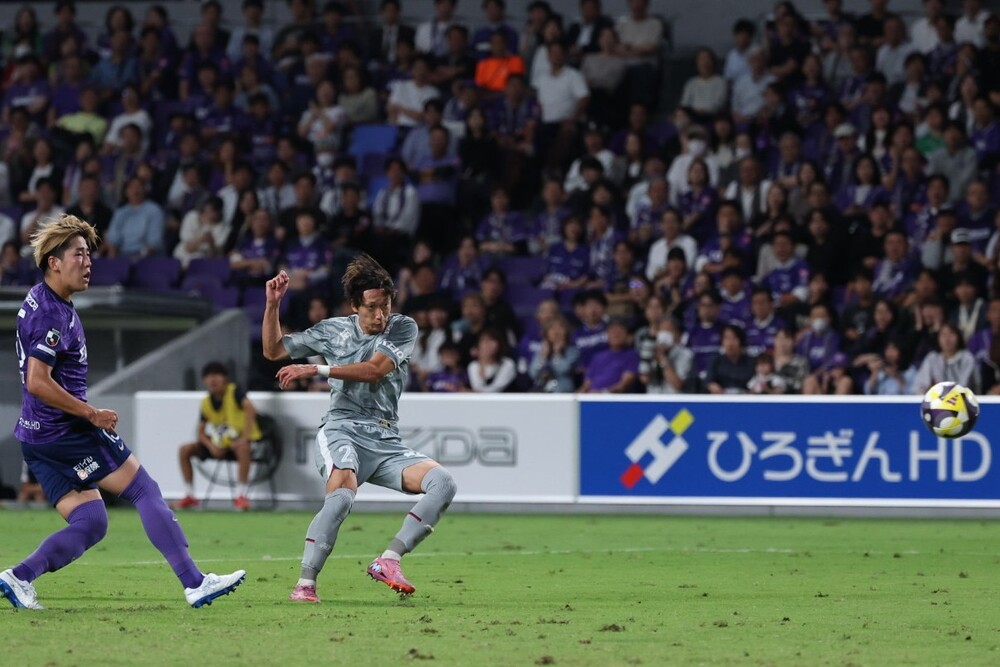
Meanwhile, Tokyo's national team players also showed outstanding defense. In the 30th minute of the second half, when Hiroshima launched a fierce counterattack, Nagatomo responded. While marking Nakamura, who was trying to break through, he also covered the space behind and the players making runs, then quickly closed the distance to block the shot just as they were about to enter the penalty area. Furthermore, on the ensuing corner kick, Araki connected perfectly with a header at the far post, but this time Sung-gyu made a sharp reaction with a flying super save. The blue and red representatives from Japan and Korea impressed with their defensive efforts.
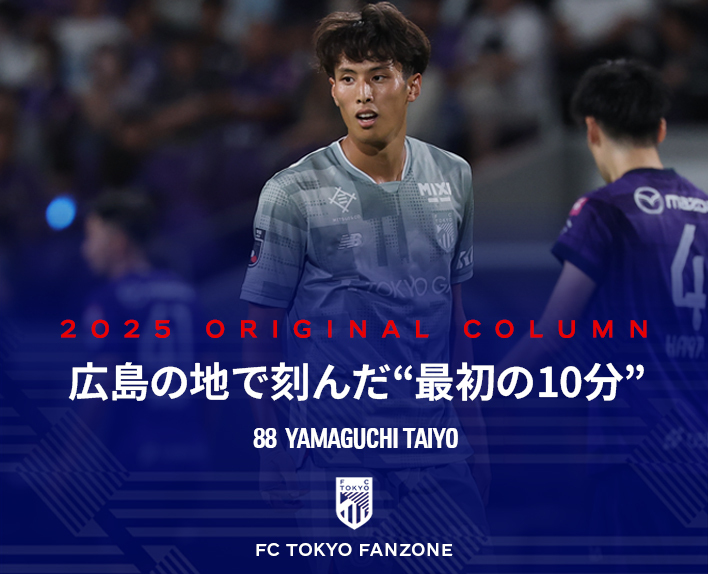
Responding to the defensive unit's hard-fought resilience so far, Tokyo made a change in the 40th minute of the second half, bringing on Yamaguchi, who made his professional debut, in place of Endo. They shifted the formation by moving Sato to the left attacker position and placing the rookie striker at the forefront. Then, in the 44th minute of the second half, they switched Sato and Yamashita for Soma ANZAI and Teruhito NAKAGAWA. Using their final substitution card, they entrusted the players on the pitch with the outcome of the match.
In the 5 minutes of added time in the second half, Tokyo advanced into Hiroshima’s territory by mixing counterattacks and possession play. The substitute players pressed aggressively, controlling both the origin and destination of the opponent’s passes to seize the initiative. They brought the game into the open style they aimed for, and a heated back-and-forth battle unfolded until the very end.
The match ended with the final whistle as it was. The players fought through without losing focus until the very end, resulting in taking home 1 point from a tough away game against a formidable opponent.
MATCH DETAILS
<FC TOKYO>
STARTING Ⅺ
GK Kim Sung-gyu
DF Sei MUROYA/Masato MORISHIGE/Yuto NAGATOMO/Alexander Scholz
MF Takahiro KO/Keigo HIGASHI (40th minute 2nd half: Keita KOIZUMI)/Keita ENDO (40th minute 2nd half: Taiyo YAMAGUCHI)/Marcos GUILHERME (40th minute 2nd half: Leon NOZAWA)
FW Keita YAMASHITA (44th minute 2nd half: Teruhito NAKAGAWA)/Kei SATO (44th minute 2nd half: Soma ANZAI)
SUBS
GK Go HATANO
DF Teppei OKA/Kanta DOI/Kosuke SHIRAI
MANAGER
Rikizo MATSUHASHI
GOAL
―
<Sanfrecce Hiroshima>
STARTING Ⅺ
GK Keisuke OSAKO
DF Sho SASAKI/Hayato ARAKI/Kim Ju-sung
MF Shuto NAKANO (83rd min: Naoki MAEDA)/Tsukasa SHIOTANI/Shun KAWANABE (80th min: Kosuke KINOSHITA)/Naoto ARAI (46th min: Sota NAKAMURA)
FW Mutsuki KATO (70th min: Daiki SUGA)/Ryo JERMAIN/Valere GERMAIN (46th min: Turgay ARSLAN)
SUBS
GK Jeong Mingi
DF Taichi YAMASAKI
MF Yusuke CHAJIMA/Sota KOSHIMICHI
MANAGER
Michael SKIBBE
GOAL
―
[Interview with Coach Rikizo MATSUHASHI]
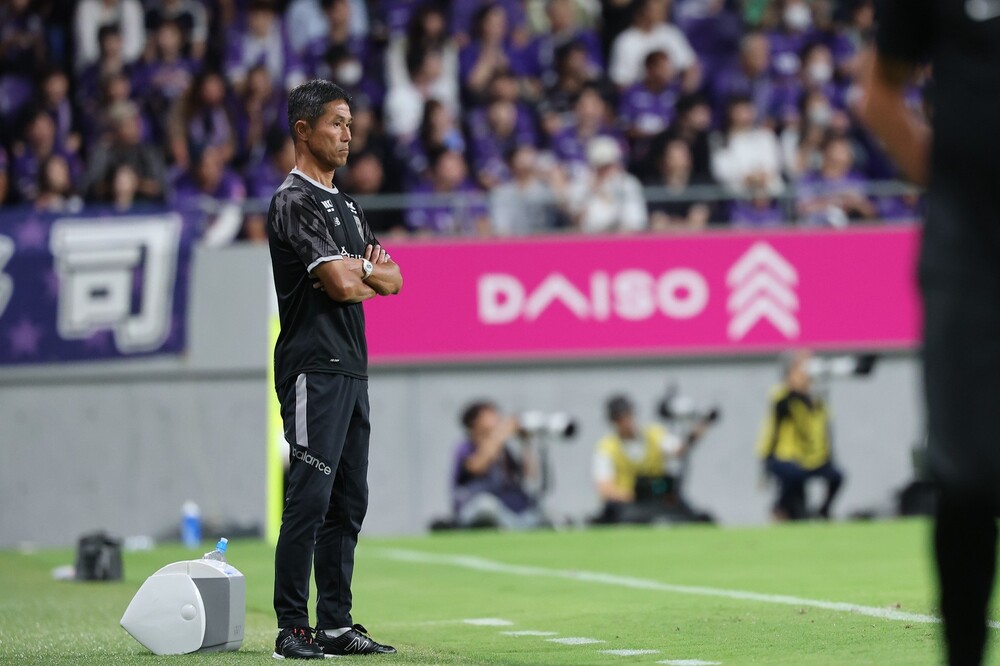
Q: please review the game.
A: I think it was a game where defense stood out, but given that there have been such issues in recent games, I believe the results of the thorough rehearsals showed through. We must continue this, and today’s game demonstrated some excellent aspects in that regard. Regarding the attack, there were parts where we acted with clear intent, but ultimately we did not reach the point of breaking the opponent’s momentum. We also had very few shots, and if we could have brought the ball that far, even with a small number of attempts, scoring just once would have changed the flow of the game. That remains an area with many challenges.
Q: Regarding the defensive details, I thought there was precision in the back line. Was it as intended?
A: Rather than saying it went exactly as planned, regarding how to defend against an opponent using a five-back formation, it was a basic approach, but in recent games there have been some slight misalignments, and there were issues with defending the flanks as well. First, that was a key point, and although there are situations where the opponent can deliver crosses, when the center backs are pulled out, who fills that position? To firmly block on the sides, the fullbacks took one step closer to prevent easy crosses, and when the ball was played back, they practiced pushing it back repeatedly. As a result, I think today’s performance in that regard was very good.
Q: Before the match, there was talk about allowing the opponent to push forward. Did it actually go as planned, or did you let the opponent do too much? What was the reality?
A: I think we were actually a bit too passive. However, the players firmly kept the objectives we rehearsed in mind, and there were several good attacks that followed from balls that entered those areas. That said, there were still challenges in fully capitalizing on those opportunities. In the first half, the game ended with monotonous crosses, and despite pushing forward with good attacks, we didn’t invest much effort in building them up. Of course, I believe the crosses were made with the intention of creating chances, but if the play is too repetitive, it results in longer defensive periods for us. There was a lack of play where we moved the ball more ourselves to adjust our positioning, or effectively used rotations on the sides to create mismatches in the opponent’s formation.
Q. Please give your evaluation of Yuto NAGATOMO and Kim Seung-gyu, who have returned from the national team.
A: Truly, just one word—wonderful. Although there are various conditions under which they are performing, they showed no signs of fatigue and no such gestures, contributing to the team’s points through their performance. They have been truly outstanding in recent games.
Q. What did you say to Taiyo YAMAGUCHI before the match, who made his J.League debut, and what are your expectations for him going forward?
A. I think there was some nervousness since it was his first appearance, but I believe he showed an extremely wonderful performance. His ability to hold the ball and change the situation was very good. However, to be able to demonstrate that over a longer period, he still lacks experience, so if he can perform those kinds of plays properly when given the chance, I think he will continue to grow as a player. Regarding his performance today, I am very satisfied and believe it was excellent.
Q, what were the reasons that the timing for making attacking substitutions ended up being late in the game?
A. There are several reasons, but rather than us switching to attack, it was more that we spent a long time defending. So, instead of changing players at the back, it was necessary to decide when to substitute the forward players while watching the situation on the pitch to ensure the formation wouldn’t collapse. Of course, I think fresh players had no stamina issues, but it was probably a difficult situation to come into. In that regard, the opponent was very aggressive and there was space behind them, so if asked whether it was early or late, it might have been late, but I believe the players acted with a clear intention even during that time.
[Player Interview]
<Taiyo YAMAGUCHI>
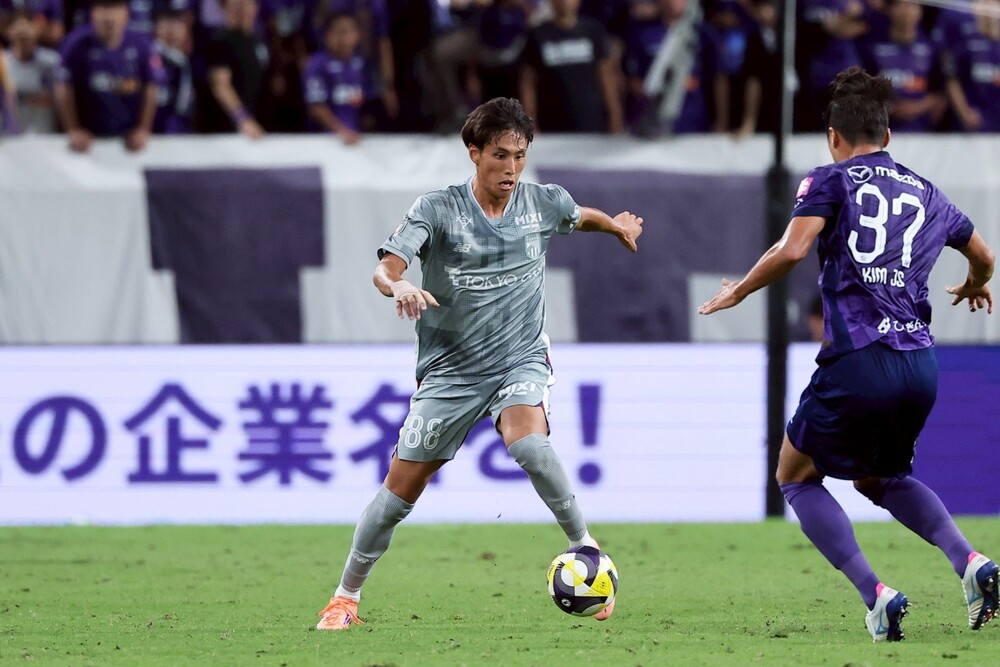
Q. When did you find out you were included in the squad?
A. I found out I would be included in the squad for the Sanfrecce Hiroshima match during the practice session the day before the game. I had a slight feeling that I might make the squad, but I always made sure to prepare well and kept myself ready to play at any time. I was hungry to get game time and have been training hard to break into the squad.
Q. How did you watch the first and second halves from the bench?
A. Hiroshima is a very strong team, and since we end up spending a lot of time defending, I was imagining while watching the match that we had to finish off the few chances we got. I wanted to do my job properly once I stepped onto the pitch, but I’m frustrated that we couldn’t score, and I want to use this experience for the next opportunity.
Q, what instructions did Coach Rikizo MATSUHASHI give you?
A, I was told to be the starting point of the attack up front and to aim for the goal. As a forward, I understand that I am expected to score goals, and I entered the pitch with that awareness.
Q, You were promoted to the top team, and your debut match was against Hiroshima, a team known for their strong defensive intensity. What kind of impression did you gain from this experience?
A. I believe that no matter the situation, scoring goals is the most important job. In today’s match, I couldn’t even take a shot or score, which is truly frustrating. However, there were some successful plays where I served as a starting point and used my body well. I once again realized that I want to grow more and become a forward who leads the team to victory.
<Yuto NAGATOMO>
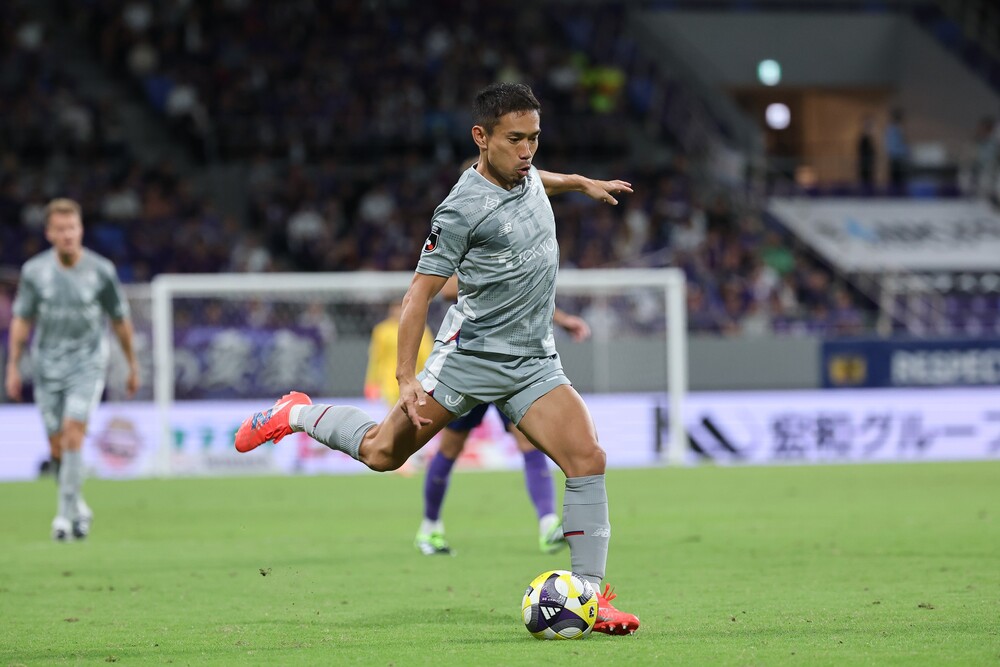
Q, please give us an overview of the match.
A, it was a very tough match. However, the team was able to defend solidly during dangerous moments, and since the team had previously shown a tendency to concede goals from crosses due to defensive lapses, I believe this match gave us confidence and a sense of accomplishment in our defense.
Q, I think the team's care for dealing with cross balls was also clear.
A, I was away from the team due to national team duties, but I have been informed that the team has been thoroughly working on dealing with cross balls over the past two weeks. Regarding defensive methods, marking handovers, and specifically against Sanfrecce Hiroshima, considering situations such as the opponent’s wing-backs appearing in front of the goal, through repeated communication and meetings within the team, we were able to approach the match without hesitation.
Q, I think while we were able to defend solidly, there remains an issue with transitioning effectively into good attacks.
A, Hiroshima also had a team full of highly skilled players, and I think they recovered more second balls by leveraging their physical strength. I believe we were overwhelmed by that pressure. The aspect of how to launch our attacks is something we need to refine further.
Q, There were also scenes in the second half where you prevented the opponent's counterattacks.
A, There have been many situations like that before. In that scene, although we were at a numerical disadvantage, I was not at all flustered. I skillfully negotiated with the ball holder, closed down the space, and the series of movements up to putting my foot out against the shot followed the theory perfectly. I think it was a scene that embodied the basics of defense.
<Masato MORISHIGE>
Q. You didn’t allow them to score until the very end.
A. We were very conscious as a team about dealing with the crosses, including during practice. I realized that just that awareness can make a difference, and I think we were able to show the results of our training.
Q. There was good defense, but how do you feel about the reason why it was difficult to transition into an attack from there?
A. I think there was a part where defense was too much on my mind, and I felt the difficulty in balancing that. Today, the defensive contribution of the side half players was outstanding, but on the other hand, I feel they were not very effective as a starting point for counterattacks. I believe the issue of balancing offense and defense came up today, and I want to adjust that balance well.
Q. How do you think earning a hard-fought point with everyone putting their bodies on the line will impact the next match?
A. Looking at the entire 90 minutes, I think it was not a bad match. Although we spent a long time defending, in the last 15 minutes, including the players who came on as substitutes, we were able to penetrate up to the front of the goal, so I feel that we needed the quality to finish there. The next match is at home, so while maintaining the defensive foundation, I want to focus on the final finishing touch.