

<Match Review>
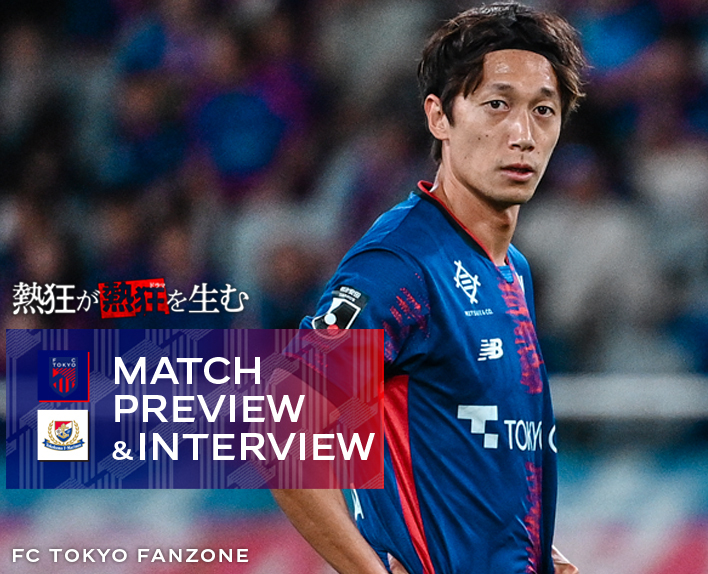
A battle aiming for the first 4 consecutive league wins of the season. By turning momentum into confidence and never becoming passive, it will be a game where we firmly pull victory closer by winning the battle before our eyes.
Tokyo, having achieved 3 consecutive wins with a style of flexible soccer that adapts to the opponent's approach while expressing their own identity. Of course, aiming for good attacks from good defense, and by focusing on defense that is conscious of the shape of the attack, the players on the pitch have become able to play seamlessly.
The Yokohama F.Marinos, who face us this week, are a team that keeps their defensive line compact from the front and base their play on challenging defense. This season, they have struggled with 28 points and are 17th in the standings, caught up in a relegation battle, so it is expected that they will show a desperate fight here as well. For Tokyo, it is important not to be overwhelmed by the opponent’s momentum, to win the battles for the ball with high-intensity play, and to demonstrate fearsome attacking with their sharp attacking strengths.
Six changes were made to the starting lineup from the previous match against Avispa Fukuoka, where we secured our third consecutive win. The goalkeeper was Kim Seung-gyu, and the back line from right to left consisted of Naruki Muroya, Kanta DOI, Alexander Scholz, and Yuto Nagatomo. The defensive midfielders were Takahiro KO and Kento HASHIMOTO. The attackers were Keita ENDO on the right and Kota TAWARATSUMIDA on the left, with Marcelo and Teruhito NAKAGAWA forming the two-forward partnership.
Also, before the match, four players from FC Tokyo U-18—Divine OTANI, Yuta SUGAWARA, Kaede SUZUKI, and Kio TANAKA—who were announced the day before on the 27th to be promoted to the top team from next season, greeted the fans and supporters. They passionately spoke about their gratitude to those around them, their determination to take on the professional world, and their enthusiasm.
1st HALF—Struggling against the opponent's compact formation, unable to create clear scoring chances
As expected, the match unfolded with Tokyo trying to counter Yokohama FM's high press from the start. Facing immediate pressure from the opponent, Tokyo attempted to break down the right side with a speed-up from RIAN's hold-up play, combining with Endo and Muroya, but Muroya's overlapping cross was unfortunately cut off by the opposing defender.
Scenes of Tokyo launching sharp attacks against Yokohama FM, who continued to maintain a compact formation, increased. There were also more cases of fouls leading to free kicks and opportunities for corner kicks, making how they capitalize on set plays likely to influence the outcome of the match.
From around the 15th minute of the first half, the opponent's pressing gradually settled down, and Tokyo had longer periods of ball possession to look for attacking opportunities. However, since Yokohama FM firmly closed down the center, it was difficult to insert effective vertical passes.
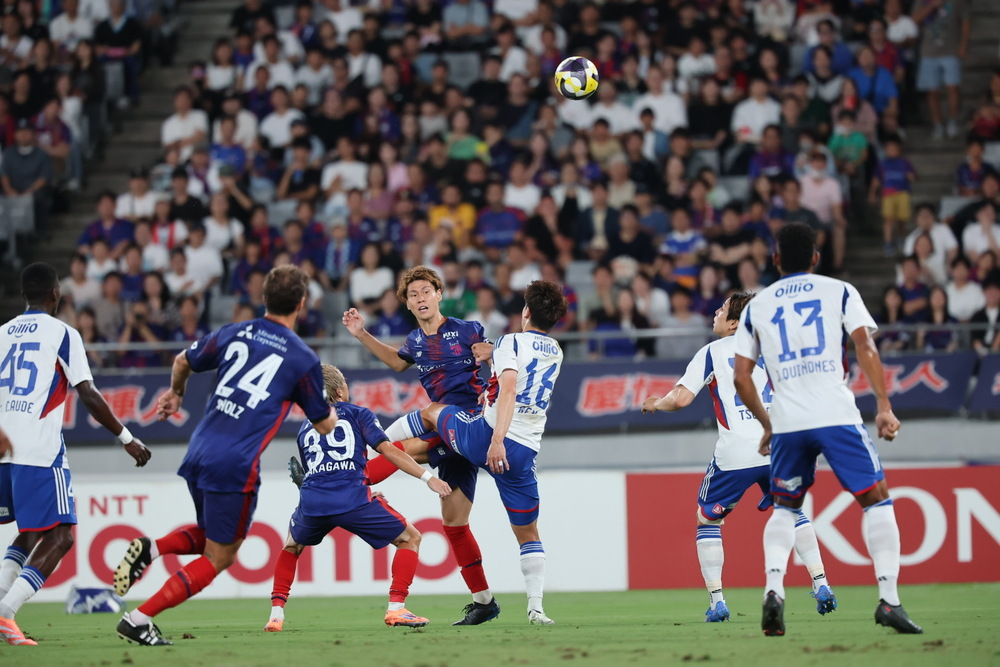
How to solve this issue on the pitch. Around the 30th minute of the first half, using the time caused by an opponent player's injury, the players actively communicated in each position. They coordinated and worked to improve the attack's target areas, support movements, and timing.
In the 34th minute of the first half, from a set piece, Jordy CROUX’s left-footed kick was headed by Kakuta in the center, but the crossbar came to the rescue, narrowly avoiding danger.
Yokohama FM switches between high press and mid-block to suppress FC Tokyo’s strengths. By maintaining a compact formation roughly the vertical width of the center circle from the front line to the last line, passing lanes are cut off, approaches to the ball outlet are tightly made, and the two forwards are closely marked, preventing them from freely targeting the space behind.
Still, they persistently searched for chances, and in the first half's additional time, they pushed forward from a left short corner flow to create a close opportunity, but they still could not produce a clear-cut chance.
At 45+4 minutes in the first half, it seemed that Jordy CROUX’s set piece was followed up by Tanimura scoring with a header, but with VAR support, it was judged offside and ruled no goal. Tokyo was saved by this decision, and the first half ended with the score remaining goalless at halftime.
2nd HALF—Consecutive goals conceded take their toll, and the late comeback falls just short
How to resolve the attacking issues seen in the first half. While firmly establishing outlets for build-up play, we want to instill threat by thoroughly focusing on simple attacks targeting behind the defense. From behind the goal after halftime, chants for Nakagawa echoed, delivering hopes for the second half.
Tokyo continued to look for attacking opportunities from the start of the second half. However, a horizontal pass intended to transition the attack from their own half was intercepted by a pressing player, allowing Yokohama FM to quickly develop play down the left side. Here, Tsunoda’s left-footed cross was met with a diving header by Kida, conceding the opening goal. This marked the first time in four matches that Tokyo had conceded, putting them one goal behind.
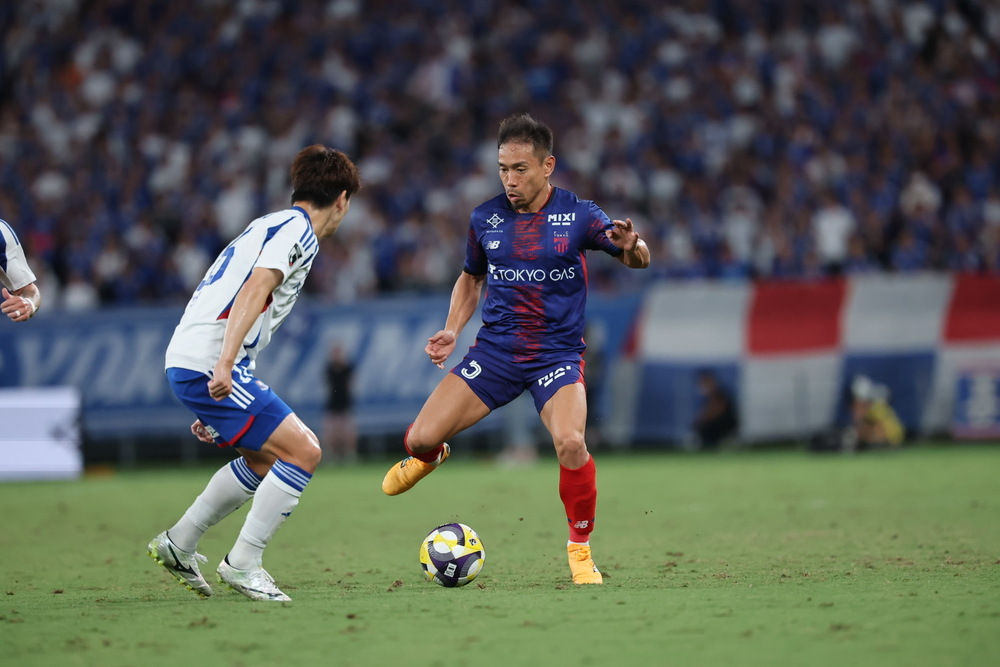
Tokyo also switched possession on the left side, with Nagatomo delivering a cross with his right foot, and Hashimoto inside the area tried to connect with the inside of his left foot but missed the ball. They wanted to equalize early and then aim for a comeback, but from here they were repeatedly caught off guard in a momentary lapse.
In the 14th minute of the second half, after allowing Kida to break free inside the area and deliver a cross, Tanimura pushed it in centrally to score. Then, in the 17th minute, after clearing the opponent's attack, the defense stopped moving, and Jordy CROUX, who picked up the ball on the right side, unleashed a sharp left-footed shot that they couldn't handle, allowing Tanimura to dive in again for a painful third goal conceded. It was a frustrating situation where three goals were conceded in just 11 minutes.
At the moment they conceded the second goal, Tokyo made substitutions, bringing on Marcos Guilherme as the left attacker and Keito Sato as one of the two forwards, replacing Tawara Tsukida and Nakagawa. They hope to use their driving force and aggressive play as a foothold for a counterattack.
Tokyo has no choice but to score one goal at a time. They advance into the opponent's territory while making use of fullbacks Muroya and Nagatomo. In the 32nd minute of the second half, a switch was made from Rian to Keita YAMASHITA. They sent him out with hopes of scoring as a striker who can be a target up front. Then, in the 38th minute of the second half, Keigo HIGASHI and Leon NOZAWA came on, replacing Hashimoto and Endo. Using the last substitution slot, they entrusted the players on the pitch with mounting a counterattack.
Tokyo, determined to show their spirit. In the 44th minute of the second half, Yamashita received a feed from Scholz inside the penalty area and took a shot. Although it was saved by the opposing goalkeeper, Muroya quickly seized the opportunity, and Tak rushed in to score on the rebound. With VAR support, the goal was confirmed, and Tokyo succeeded in pulling one back.
There were 6 minutes of additional time in the second half. Although the remaining time was limited, Tokyo launched a fierce attack. At 45+4 minutes in the second half, Sholtz delivered a feed that Muroya met with a header, but the ball, which seemed to clear the goalkeeper's head, was stopped by Park's outstretched left hand save.
Then, at 45+5 minutes into the second half, Nozawa, who launched an attack from the right side, was brought down inside the area, earning a penalty kick. Scholz calmly converted it with his right foot, and Tokyo finally closed the gap to one goal.
Tokyo continued to press forward. Encouraged by the loud cheers from the stadium, they pushed into the opponent's territory, but even though Nozawa made another move and was brought down inside the area, no foul was called. The final whistle blew here, ending the match 2-3. The consecutive goals conceded during the so-called 'cursed 11 minutes' resonated, stopping Tokyo's winning streak at three. It was a frustrating defeat.
MATCH DETAILS
<FC TOKYO>
STARTING Ⅺ
GK Kim Seung-gyu
DF Naruki Muroya/Yuto NAGATOMO/Alexander Scholz/Kanta DOI
MF Takahiro KO/Kento HASHIMOTO (38th minute 2nd half: Keigo Higashi)/Keita ENDO (38th minute 2nd half: Leon NOZAWA)/Kota TAWARATSUMIDA (15th minute 2nd half: Marcos GUILHERME)
FW Marcelo Jean (32nd minute 2nd half: Keita YAMASHITA)/Teruhito NAKAGAWA (15th minute 2nd half: Megumu Sato)
SUBS
GK Go HATANO
DF Masato MORISHIGE/Soma ANZAI
MF Kei KOIZUMI
MANAGER
Rikizo MATSUHASHI
GOAL
44th minute of the second half: Koya Takahiro / 45+7th minute of the second half: Alexander Scholz
<Yokohama F. Marinos>
STARTING Ⅺ
GK Ilgyu PARK
DF Ren KATO / Jason KINJONES / Ryotaro TSUNODA / Fuyuichi SUZUKI
MF Takuya KIDA (35th minute of the second half: Riku YAMANE) / Jean Claude (31st minute of the first half: Kota WATANABE) / Asahi UENAKA (35th minute of the second half: George ONAIWU)
FW Jordi Cruyff (21st minute of the second half: Jun AMANO) / Kaina TANIMURA / Yuri ARAUJO (21st minute of the second half: Ryo MIYAICHI)
SUBS
GK Ryoya KIMURA
DF Yukinari SUWAMA
FW Kenta INOUE/Dean David
MANAGER
Hideo Oshima
GOAL
6th minute of the second half: Takuya KIDA / 14th minute of the second half: Kaina TANIMURA / 17th minute of the second half: Kaina TANIMURA
[Interview with Coach Rikizo MATSUHASHI]
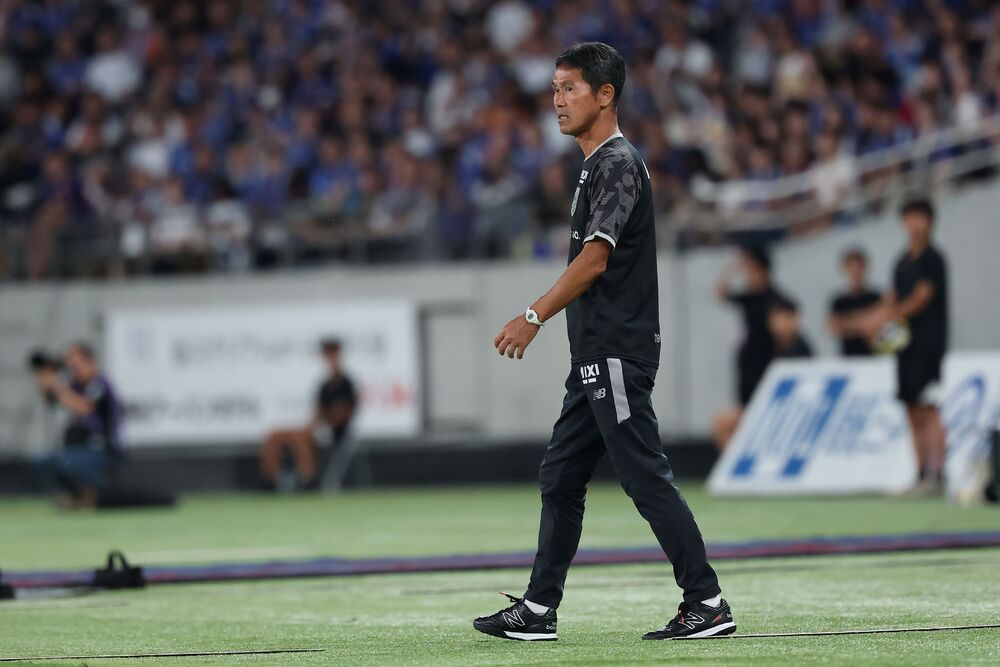
Q. Please give us a summary of today’s match.
A, simply put, I think today was a game where, unfortunately, we were unable to deliver the team performance necessary to secure a victory. While I fully acknowledge the players’ efforts in the final stages that allowed us to claw back two goals, despite the consecutive matches,we had been on a winning streak, so why did the nature of the game change so drastically? We need to thoroughly investigate that and proceed with preparations for the next match.
Q, rather than the opponent playing well, it seemed like Tokyo's performance was poor. Especially in the first half, it looked like there was very little movement. How do you feel about that at this point?
A, while playing with a clear intention, when one aspect didn’t go well, the movement would stop. There were also parts where it was difficult to see a plan for what to do next. Although some points were communicated during rehearsals, they were not emphasized much, so at halftime we emphasized those points a bit more to create rhythm. However, the goals conceded weighed heavily on us, and our performance was not good. That said, it didn’t seem to be just that from the start, and whether it was a matter of condition or not, I felt up close that the movement was definitely not good.
Q, today you positioned Sei MUROYA on the right side and Yuto NAGATOMO on the left side. Could you please explain the intention behind this?
A, unfortunately, we entrusted Kanta DOI and MUROYA with the task of preventing cases that led to conceding goals. Although we have not yet examined everything in detail, the opponent’s wide players are very distinctive, and NAGATOMO firmly marked Kluuks. Of course, it is difficult to cover everything, so when they come inside, their strength lies in tight defense that prevents being beaten in terms of height or similar aspects. However, I think there were moments when that defense was breached. Naturally, it was not only about that, but with that intention, we deployed both players on the right and left sides.
[Player Interview]
<Takahiro KO>
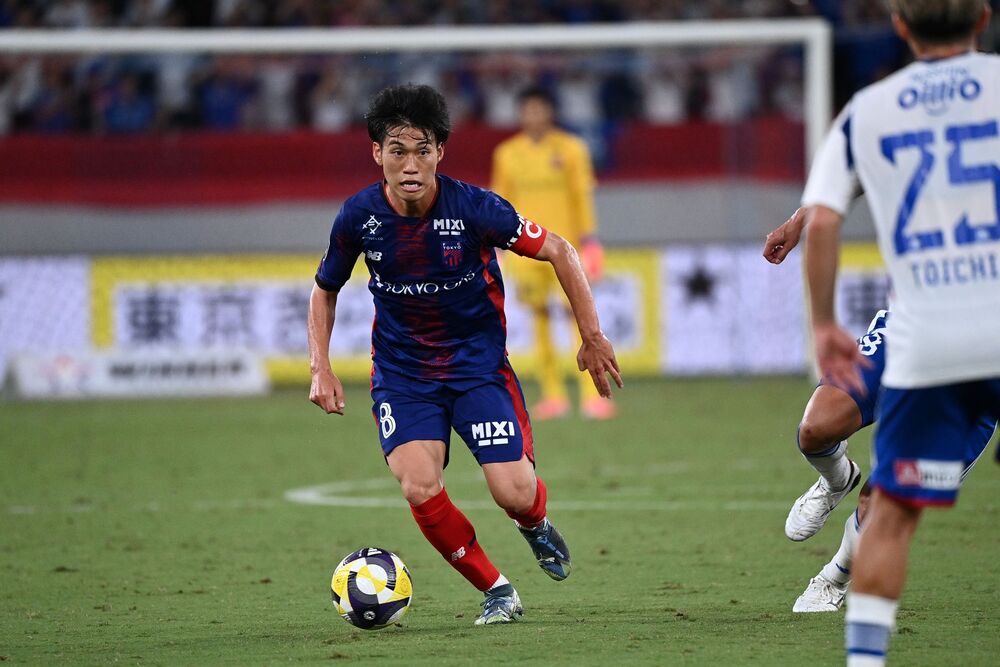
Q. Please reflect on the overall match.
A. I think conceding goals was everything, and from the first half, there was a feeling that something wasn’t going well. So, we need to do more in terms of unifying our awareness on how to correct that on the pitch and how to coordinate with each other.
Q. How did you feel about the opponent’s approach from your position in midfield?
A. In terms of lateral coordination, we also tried a style like 4-3-3 where one player moves forward. Marcelo RYAN, Teruhito NAKAGAWA, and I were conscious of moving forward, but the spacing in the advancing parts was not good, so from around the middle of the first half, we consciously tried to advance the ball while slightly dropping our positions. However, I think we could have done better with distribution that doesn’t miss the forward actions, and overall, I believe we should have worked on the quality of distribution from any position throughout the match.
Q. Up until now, we had been winning without conceding any goals, but today we were scored on consecutively.
A. It was really unfortunate that we conceded goals consecutively after the first one, and I believe that conceding three goals inevitably leads to this kind of result. Even after conceding, the ability to properly reset and make corrections is absolutely necessary. Although I haven’t watched the footage yet, we have been training thoroughly on how to deal with crosses that led to the first goal, so I think we need to reflect more broadly and unify our awareness while reviewing the video.
Q. After falling behind by three goals, the opponent started to sit back, and I think there was more time for us to hold the ball and also some distribution aimed at exploiting the space behind their defense.
A. Since the opponent scored three goals, they clearly dropped back, and naturally, we were able to push forward. I think this was more due to the opponent’s situation, including the goal difference, rather than something we created ourselves. Although we managed to score two goals after that, I believe we need to work on creating such opportunities proactively on our own.
<Alexander SCHOLZ>
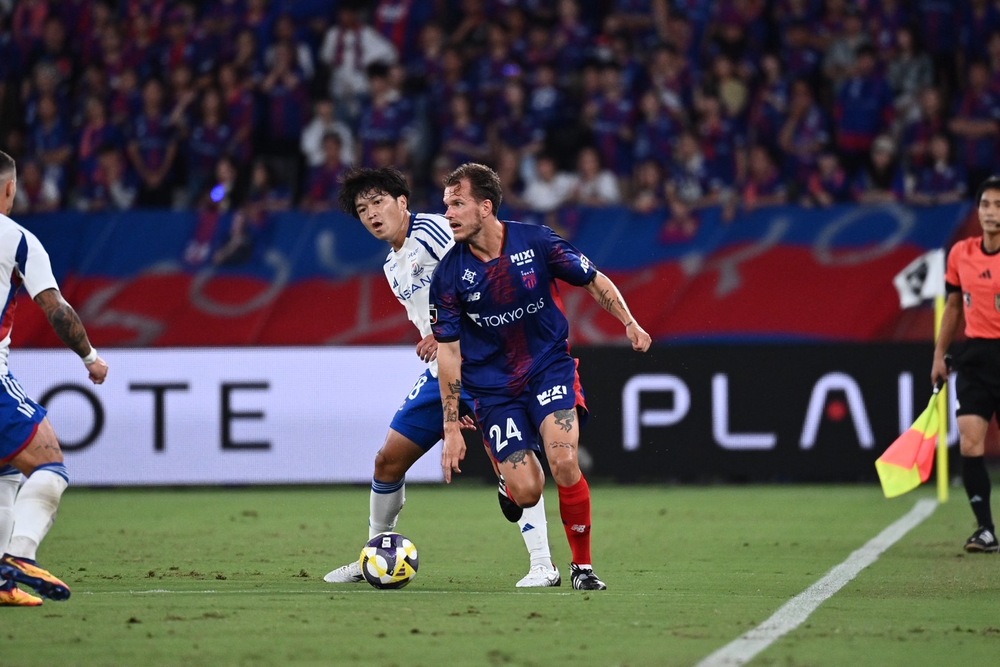
Q. It seemed like the build-up in the first half got stuck. What do you think was the cause?
A. The opponent was very tight, making it difficult to find space, and I think our tempo was also a bit lacking. In the first half, against the opponent’s defensive block, we needed to be a bit more patient in ball circulation and work to stretch their defensive block.
Q. I believe you knew in advance that the opponent would come with a high line and high press, but what kind of plan did you prepare to avoid it?
A. We had a plan to use the space behind the opponent more, but the timing didn’t match well. I believe the reason we couldn’t get behind them was because the distance was either too far or too close.
Q. What do you think was the cause of conceding three consecutive goals?
A. Simply put, the defense was not good. In particular, the defending in the box was poor.
Q. From about the last 15 minutes of the second half, after SCHOLZ started carrying the ball forward and was able to deliver diagonal passes to Yuto NAGATOMO, the team managed to score two goals back.
A. Since the opponent was leading by three goals and dropped back, we were able to find space. For me, I’m good at carrying the ball into open spaces, so I think I was able to show my strength. We managed to score two goals back, but it was too late.
<Leon NOZAWA>
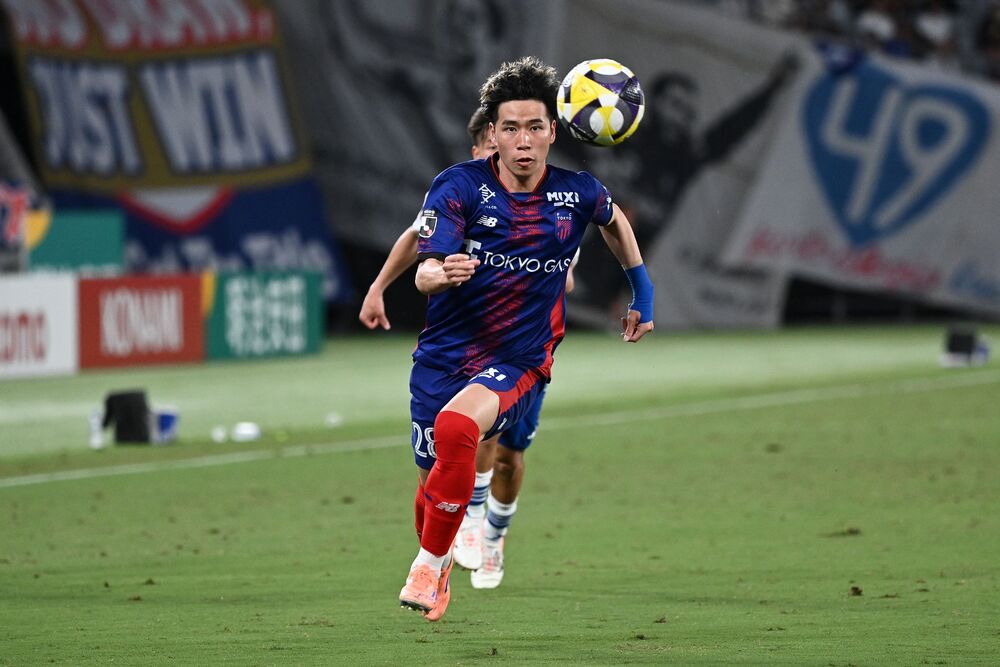
Q. You were brought on when the team was three goals behind. What instructions did the coach give you?
A. I was instructed to keep targeting the space behind the opponent. That is also one of my strengths, and it was important to make a difference there and connect it to scoring. It was good that we managed to create that kind of opportunity once, but I felt the final quality was still far from where it needs to be.
Q. It seemed like the team gained momentum after Leon NOZAWA came on.
A. The timing was difficult, and the situation was also challenging. However, I believed that what I needed to do wouldn't change regardless of the circumstances, so I simply fulfilled my role. Looking back, I think we could have made it a match where we didn't lose even if we couldn't win, so not being able to bring back a point is also my responsibility. I feel that this match revealed many issues both individually and as a team.
Q: please review the scene where you won the penalty kick.
A. I knew there was space behind, and when Keigo HIGASHI had the ball, we made eye contact, so I was sure he would come out. Before entering the pitch, I had already imagined that once I got the ball, I would firmly take on the challenge and actively aim for crosses and shots, so I think playing without hesitation led to winning the penalty kick. I want to continue making plays like that and become an extra asset for the team.
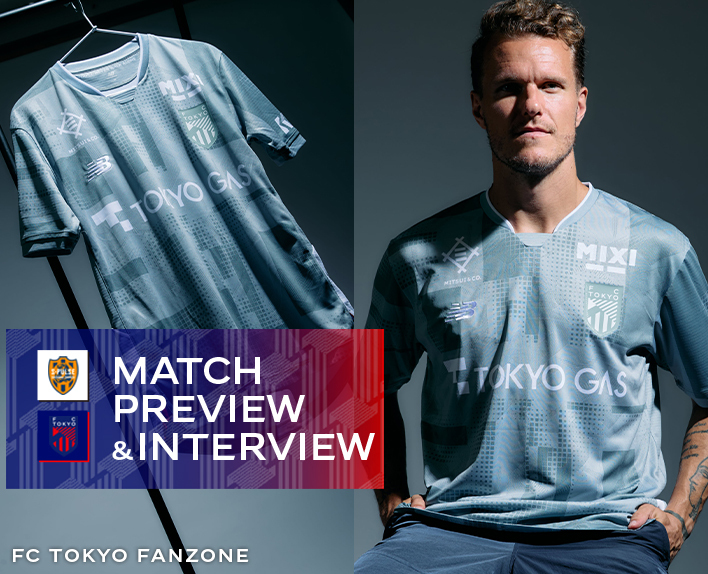
Q. The next match is an away game against Shimizu S-Pulse. How will you prepare for it?
A. As a team, we had been on a good run up until now, but today we ended without a win. Although we couldn’t achieve four consecutive victories, the season continues, and we must climb at least one spot higher in the standings. We need to properly process this in a positive way, switch our mindset, and of course face our challenges head-on. Even within this short period, we want to make solid corrections and bring out our strengths even more. Even when the score was 0-3, there were fans and supporters who kept cheering until the end, so we have to respond with results. Everyone needs to play with a greater sense of responsibility.