

Match Review
Back at Ajinomoto Stadium, Tokyo faces Shimizu S-Pulse in Meiji Yasuda J1 League Sec. 13. In the previous match at Japan National Stadium against Gamba Osaka, Tokyo scored three goals in the final stages to secure their first victory in nine games since Sec. 3. Riding the momentum of consecutive home wins, Tokyo aims to keep the streak going. Returning to the basics of football by not losing battles for the ball, they want to show play calculated from the goal, transitioning from solid defense to effective attack.
Tokyo, facing a tight schedule with only three days between matches, made four changes to the starting eleven. Kosuke SHIRAI took the right wing-back position, while the double pivot in midfield consisted of Takahiro KO and Kento HASHIMOTO. Teruhito NAKAGAWA was deployed as the right inside half. Despite the congested schedule, Maki KITAHARA, who has started four consecutive official matches, is expected to challenge the J1 youngest goal scorer record. Additionally, Kota TAWARATSUMIDA, who made a strong impact coming off the bench in the previous match, and Keito SATO, who has continued to play aggressively pushing forward, will start on the bench. Both are anticipated to be brought on at crucial moments in the game.
The game on the first day of Golden Week kicked off at 13:09 under clear skies at Ajinomoto Stadium.
1st HALF—Displayed coordinated offense and defense but conceded a regrettable goal just before the end of the first half
Tokyo maintained their traditional 3-4-2-1 formation, while Shimizu, dealing with injured players, adopted a new 4-2-3-1 setup with Uno positioned as center back. In the early stages, Tokyo adjusted cautiously while observing Shimizu's approach, leading to a game where they probed for attacking opportunities.
Tokyo, who struggled to create substantial attacks, had a big chance in the 16th minute of the first half from a simple play. When Shirai sent a soft feed forward from the right rear, Marcelo RYAN skillfully positioned his body to intercept as the opposing player trapped the ball while retreating near the penalty area, and struck a right-footed shot to the near side. The goalkeeper saved it, and Nakagawa tried to capitalize on the rebound, but the opponent made another great save, so no opening goal was scored.
At the 29th minute of the first half, Kitahara carried the ball vertically on the left side after cutting it with a high press, created space, and sent it to the center where Taka ran in, controlled the ball from a trap, and took a shot. Although the shot went straight to the opposing goalkeeper, it was a scene that showed a good transition from solid defense to effective attack.
Tokyo is required to devise ways to break through the opponent's defensive network. Player Taka drops back to the last line while Kanta DOI opens up on the right side, and Shirai drops back to right side back to push Keita ENDO on the opposite side, attempting to create gaps in the opponent's formation with a flexible system.
In the 44th minute of the first half, during a period when Shimizu, with multiple players actively engaging with the ball, was pressing, a penalty kick was awarded after player Inui was fouled inside the penalty area. Kitagawa scored from the penalty, conceding the opening goal in first-half injury time.
The first half ended with a score of 0-1. Just before the end, a regrettable goal was conceded, and the team went into halftime trailing by one point.
2nd HALF—Finding a way through side attacks but lacking a decisive blow
In the second half, aiming to create gaps in the opponent's defense with precise positioning and a robust attack. Tokyo, without any substitutions, pressed into Shimizu's territory from kickoff and showed their intent to counterattack early on with a long shot from player Hashimoto.
However, in the second half, Shimizu continued to dominate by controlling the ball and attacking. They committed multiple players to the ball side, showing attacks involving several players. Tokyo also tried to find attacking opportunities by connecting passes in the back line, but struggled against the opponent's compact defense and could not advance beyond the middle zone, resulting in monotonous attacks.
Tokyo, aiming to strengthen their attack, made a double substitution at the 15th minute of the second half, replacing Nakagawa and Kitahara with Sato and Tawara Tsukida, both inside halves, to try to break the deadlock. This created movement on the left side. Left winger Endo shifted centrally depending on the situation, while Tawara Tsukida opened up on the left, dynamically changing positions to add variation to the attack.
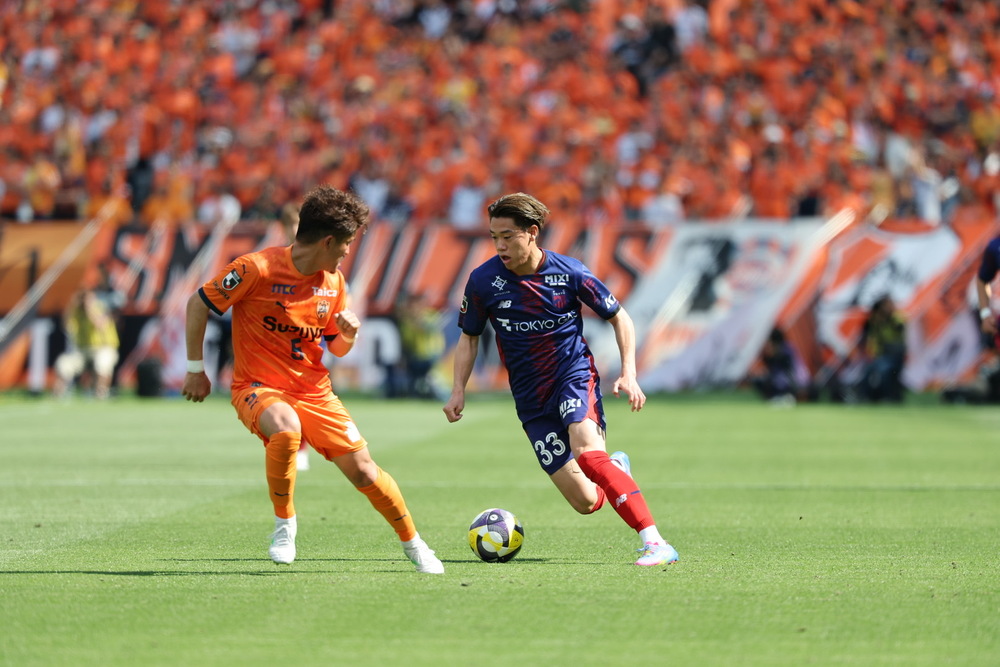
At the 19th minute of the second half, Teppei OKA's long feed found Shirai on the right side, who made a cross. In the center, RIAN met it with a header, creating a great chance, but the impact was weak and the ball narrowly missed to the left of the goal. After that, Tokyo continued to control the game with plays like OKA's half-volley, but they couldn't shake the net. Gradually, Shimizu regained their rhythm and increased their possession.
Player Tawara Tsukida, who scored a super goal in the previous match, tries to attack from the left side, but the opponent cuts off the dribbling routes both vertically and horizontally. Even so, he forcefully breaks through, advancing near the goal line and delivering crosses, making every effort to get involved in scoring opportunities.
At the 32nd minute of the second half, a switch was made from Anzai and Hashimoto to Seiji KIMURA and Keigo HIGASHI. The formation was changed to place KIMURA in the center of the three-back line.
However, at the 34th minute immediately after the substitution, we allowed player Inui to dribble through on a counterattack, carrying the ball into the penalty area and scoring a goal. At a time when we wanted to strengthen our counterattack momentum, we conceded a regrettable additional goal.
At the 43rd minute of the second half, Kei KOIZUMI came onto the pitch, replacing Shirai. The team captain, who took the right wing position, maintained a high position and showed an attacking stance by delivering crosses. However, the Shimizu defense, firmly positioned with their weight back, proved difficult to break down, and the team struggled to create clear scoring opportunities.
After the 5 minutes of displayed second-half additional time, the match could not be changed, and we lost 0-2 as it was. We were unable to present a victory to the blue and red fans and supporters who packed Ajinomoto Stadium, following the previous match, and suffered a frustrating shutout defeat.
MATCH DETAILS
<FC Tokyo>
STARTING XI
GK Taishi Brandon NOZAWA
DF Soma ANZAI (32nd minute second half: Seiji KIMURA) / Teppei OKA / Kanta DOI / Kosuke SHIRAI (43rd minute second half: Kei KOIZUMI)
MF Hiroshi GAO / Kento HASHIMOTO (32nd minute second half: Keigo AZUMA) / Keita ENDO / Maki KITAHARA (15th minute second half: Kota TAWARATSUMIDA)
FW Marcelo Hian / Teruhito NAKAGAWA (15th minute second half: Yoshimasa SATO)
SUBS
GK Go HATANO
DF Yasuki KIMOTO
MF Kota TOKIWA
FW Leon NOZAWA
MANAGER
Rikizo MATSUHASHI
GOAL
―
<Shimizu S-Pulse>
STARTING XI
GK Yuya OKI
DF Kengo KITAZUME/Yuji TAKAHASHI/Yutaka YOSHIDA (45+1 min 2nd half: Kento HANEDA)
MF Kai MATSUZAKI (32 min 2nd half: Teru NAKAHARA)/Zento UNO/Masaki YUMIBA/Matheus BUENO/CAPIXABA (45+1 min 2nd half: Reon YAMAHARA)
FW Koya KITAGAWA (32 min 2nd half: DOUGLAS TANKI)/Takashi INUI (40 min 2nd half: Shinya YAJIMA)
SUBS
GK Yuui Inokoshi
DF Rin Oohata
MF Yudai Shimamoto
FW Ahmed Ahmedov
MANAGER
Tadahiro AKIBA
GOAL
45+1 min 1st Half: Koya KITAGAWA / 34 min 2nd Half: Takashi INUI
[Interview with Coach Rikizo MATSUHASHI]
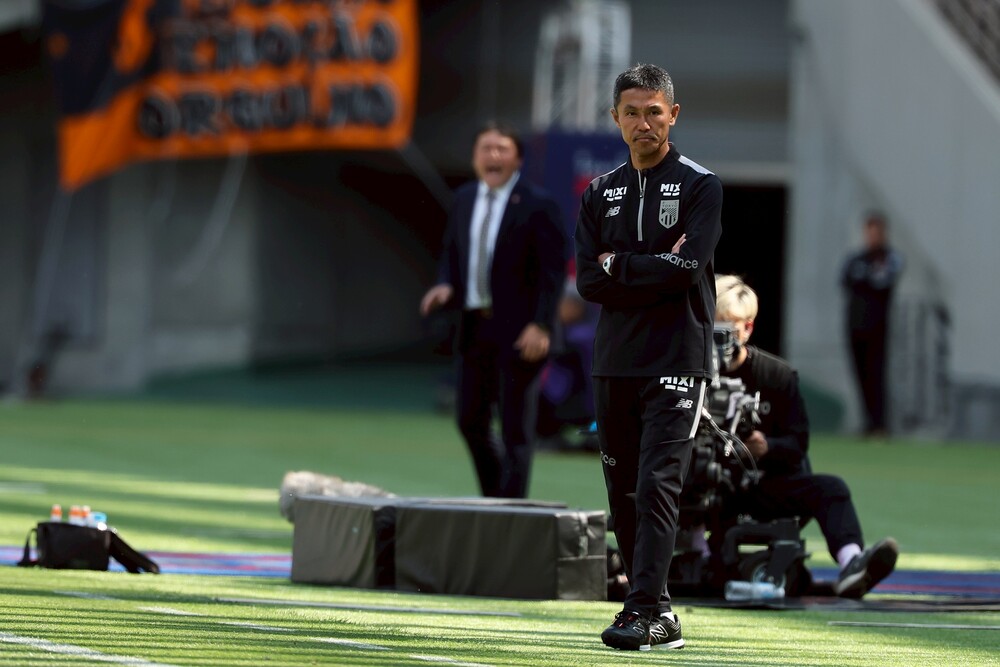
Q, please look back on today's game.
A: Since it was Golden Week, many fans and supporters came to the stadium to support us, but despite that, I think we played a very disappointing game with little to watch. Right now, I am truly filled with feelings of apology.
Q: You mentioned that there was little to watch in the match. What do you think was the main reason for that?
A, statistically, we may have had some possession of the ball, but it was a game where the attacking focus was mostly not aligned. Of course, it’s fine if we can effectively advance by using long balls, but since that didn’t go well, the change in approach made it difficult to align our focus. In the second half, we were in a pressing situation, but the final quality there was not high, which also led to some counterattack situations against us.
In each and every play, whether it was controlling the ball or creating time, I think Shimizu S-Pulse had the edge in the quality of individual plays. It's not that we lack those qualities, but today we couldn't demonstrate them properly, resulting in a game with few highlights to watch.
Q. Please tell us the purpose of the player substitution.
A: Our aim was to bring in players who can aggressively challenge both wide and inside positions up front. Although the players originally on the field also have those qualities, we entrusted the next players waiting for their turn. The reason for substituting the defensive midfielders and center backs was to create an advantage at the back by putting players in their natural positions, hoping this would enable smooth distribution to the front line and apply more pressure on the inside. However, we ended up relying solely on crosses. There was one close chance, but we couldn’t quite deliver the quality needed at the end. Also, when the opponent was compact in front of the goal, we failed to demonstrate the quality of varied attacks—such as middle-range shots from cutbacks or changing our approach to unsettle the opponent and finish—which we couldn’t execute in today’s game.
Q. The players are of high quality, and considering what Coach Rikizo MATSUHASHI has been working on at Albirex Niigata, it is very frustrating. How does the coach perceive this?
A. As you mentioned, I also believe we can do much more. In fact, while building the team from the training camp, we experienced camps where those strengths were demonstrated, so I felt a strong sense of progress. However, since the start of the actual season, despite feeling the difficulties, we have struggled to convert that into wins. There is a challenge in aligning our perspectives on the players' courage, or rather their continuous attempts, which has led to focusing too much on various factors, making it difficult to fully utilize each player's strengths.
Since we are using a new system starting this season, I believe it naturally takes time. It might be enough if someone says these ten-plus rounds are sufficient, but within that period, I personally feel the difficulties caused by injuries and the coordination and combination challenges. However, during the preparation phase, we try to provide the players with as clear information as possible so they can approach the games confidently, and in that regard, I think we have been somewhat successful.
Even so, when it comes to the actual game, I believe that my role in making adjustments, how to utilize the players, placing the right people in the right positions, and the timing of these decisions is a major responsibility I must take on. There have been many moments in the past when this coordination fit perfectly, but currently, there is some frustration as those aspects are not coming through well, and I think this has caused a bit of instability.
[Player Interview]
<Marcelo RYAN>
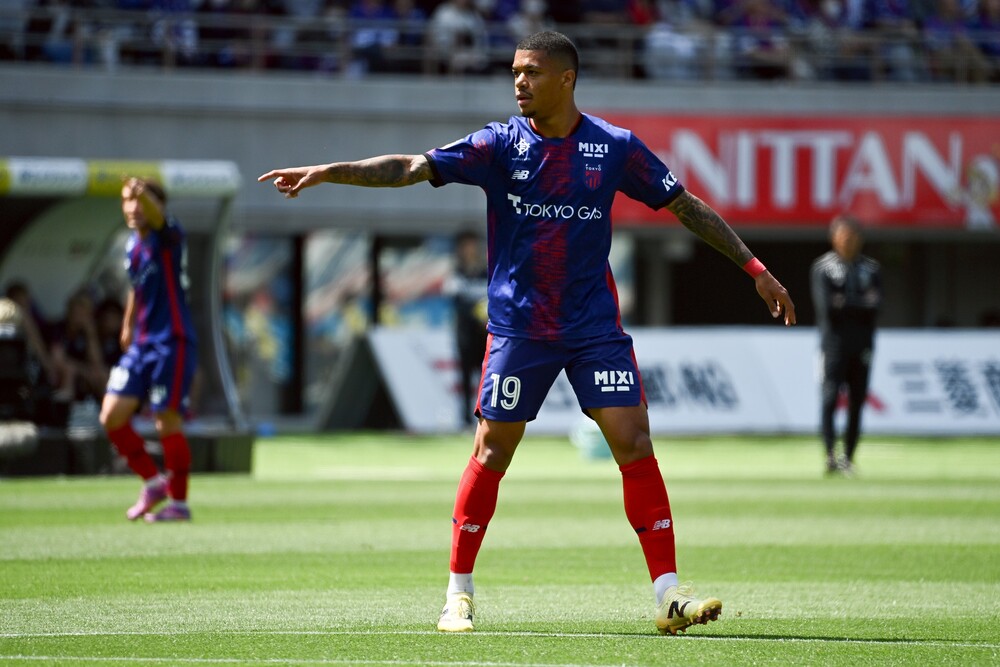
Q. As the number of times you appear in front of the goal and your coordination with teammates gradually improve, everyone is eagerly awaiting your first league goal. What challenges do you feel?
A. To break through this unfavorable situation, I am working hard in daily training. Not only the forwards including myself but also the defenders, we want to further strengthen our play as a whole to coordinate and aim for goals. As of today, 13 matches have ended, and it is frustrating that we have not been able to score in the league for a long time. Led by head coach Rikizo MATSUHASHI, we have reorganized the style of soccer we want to express as a team, and I myself want to aim for my first league goal of the season in a way that fits the soccer everyone on the pitch should aim for.
Q. There were many scenes where the attack struggled against Shimizu S-Pulse's solid defense.
A. The coach asked us not to rely solely on short passes at our feet but to look for the right timing to play balls behind the defensive line or make runs into the space behind. Personally, I made too few runs into the space behind the opposing defenders and was unable to properly express the plays that were expected of me. As a team, the situation is by no means good. I want to contribute to the team as soon as possible with plays that break through this difficult situation.
Q: I think the opponent's defense has become tighter as the matches progress when playing in the lone striker position. How has your awareness regarding teamwork with your teammates and utilizing those around you increased?
A. Playing at the top position requires connecting various balls to the attack. For example, when I contest a long ball, I need to decide whether to head it on to a teammate or control it myself. Also, if I cannot earn the trust of my teammates for the decisions I make on the field, it won’t lead to good reactions. If my teammates trust my play and make runs or receive passes, and if I can hold the ball in advanced positions for longer, I believe not only I but the entire team will increase our goal scoring.
<Soma ANZAI>
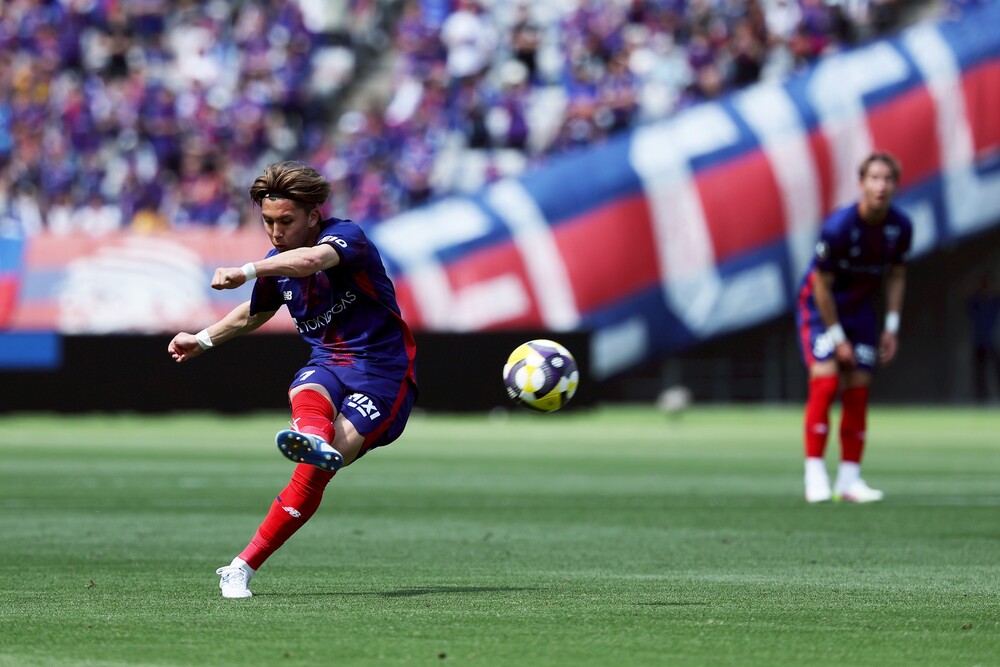
Q. It was a tough match.
A. In the previous match, we had some success mainly using long balls to utilize Marcelo RYAN and Keito Sato to a certain extent. Regarding today as well, we had planned to use a similar approach at the start of the game, but it didn’t work out. Amidst it not functioning properly, the team couldn’t align on whether to connect passes or to kick the ball, and I think the match ended up being disjointed throughout.
Q: After conceding a goal, it became difficult to break down the opponent.
A: I think that was almost everything in today’s match. Defensively, I believe we hardly allowed the opponent any chances in the first half, and with that one goal, Shimizu S-Pulse gained confidence and were able to play well in the second half. I think we made the game’s flow difficult for ourselves at the end of the first half.
Q. What do you think were the factors that caused the mismatch?
A. We couldn’t align the team’s decisions on when to kick and when to connect passes. Initially, we had a clear intention to push forward by kicking, but we need to establish a shared understanding of the exact moment to transition to the next phase from there.
Q. Can you view identifying the issues positively?
A: No, that is something we have been working on continuously, and if we don't improve during the match, it will just be the same thing repeated every time. So, I want us to be able to make more improvements during the game.
Q. As one of the three defenders now, is it necessary for you to give instructions and communicate proactively?
A. Since I am playing at the back, I believe it becomes necessary. It is a difficult aspect, but even so, I think I have to do it where I am assigned, so I want to do my best with what I can do.