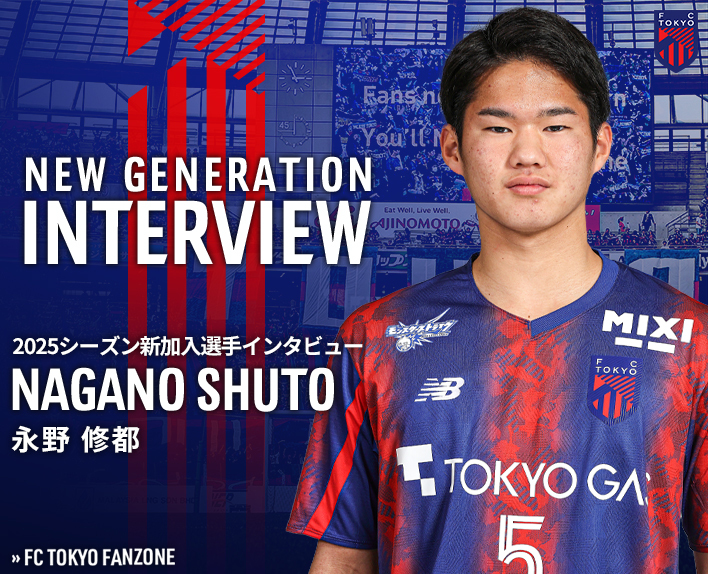


Growing up in blue and red since elementary school. The center-back, who is expected to be the future of the club, has been promoted from FC Tokyo U-18 to the top team. In the 2024 season, while still belonging to U-18, he is registered as a second player and made his top team debut in the Emperor's Cup in June. He felt a renewed sense of responsibility to fight in the blue and red uniform at Ajinomoto Stadium. Shuto NAGANO expressed, "I want to approach it with the mindset of competing for a starting position from my first year." We spoke with the young defender, who is also preparing to take on the challenge from Asia to the world wearing the national flag, about his journey to promotion and his current state of mind.
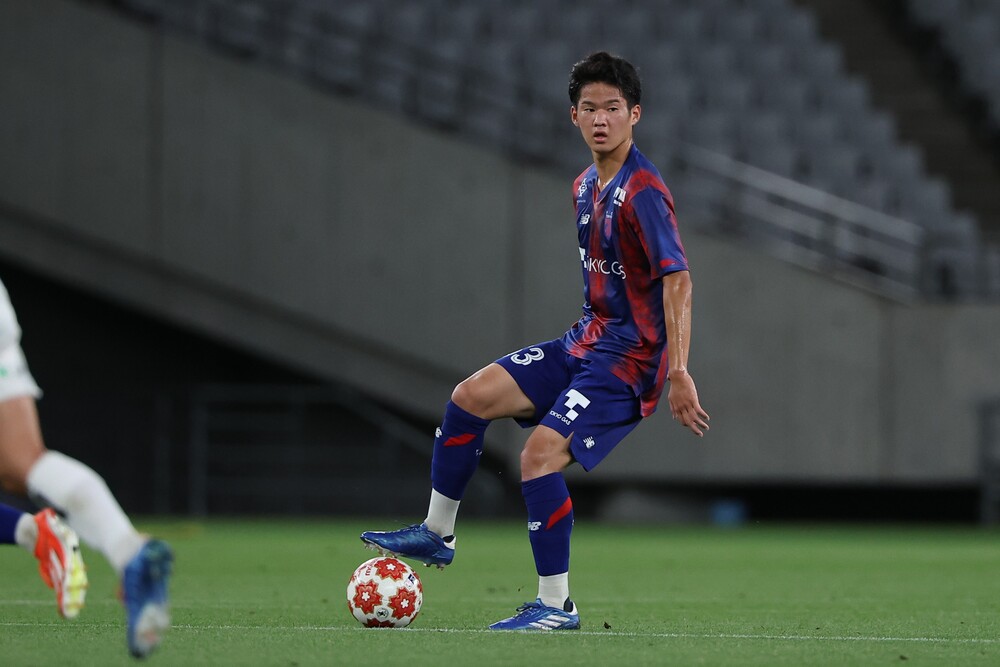
──Congratulations on your promotion to the top team. First, please tell us how you felt when you heard the good news.
Thank you very much. Honestly, I was very happy. I have always thought that it is not easy to be promoted to the top team at a club like Tokyo. I have truly worked hard aiming to become a professional as a dream, so I was really happy.
I have been going to Kodaira since I was in elementary school.
Since the 5th grade of elementary school, I have been practicing as a member of the club in the Kodaira course of the FC Tokyo Soccer School Advanced Class. I was truly nurtured by the academy for a very long time, so I am really happy to have been able to turn professional with this club.
──At that time, I was in the same Advanced Class as Ryunosuke SATO.
That's right. The U-15 team was divided into Musashi and Fukagawa, but being able to play soccer professionally alongside players I have trained with since elementary school is truly moving.
──Including your self-introduction, what kind of player do you think you are?
My strength lies in aggressively winning the ball in one-on-one situations, and I believe this is a weapon that I do not lose to others.
I heard from the staff who were involved during the academy days that he said he "liked defense" since he was in elementary school. There are not many players like that, so those who coached him at the time were also impressed.
Normally, people tend to focus on players who are good at attacking, but I enjoyed taking the ball away from skilled players. I have played by devising ways to steal the ball myself. The moment when I actually managed to take the ball by thinking that way was the most enjoyable moment for me.
──I heard you also attended the Japan School of Boca Juniors (Argentina).
From around the third grade of elementary school until I graduated, I attended Boca's school continuously. There, I learned various aspects of the intense Argentine style of play and defense, and I feel that the skills I acquired there are still alive in me today.
──At that time, I also heard stories that people actually went to Argentina.
When I was moving from 5th to 6th grade in elementary school, I actually went to Argentina through a Boca project and was fortunate to have the opportunity to play soccer alongside Boca players of the same age and players from other Argentine teams. Being able to physically experience the intensity of South American play and the South American soccer environment at such a young age was truly a valuable experience. I was also able to watch a match at the stadium of Boca’s top team and felt the passion for soccer firsthand. I still vividly remember the scene where fans, supporters, and all the players united and got excited together.
──Did you experience "La Bombonera (the home stadium of Boca Juniors)"?
It was truly amazing. I still remember it vividly. Fans and supporters were climbing the fences, and smoke from flares was billowing everywhere. Boca scored about three goals, and no joke, the stadium was shaking. The rumbling was incredible, and regardless of where you were seated, everyone was genuinely joyful and ecstatic. It gave me a sensation that gave me goosebumps all over my body.
──That original experience is... amazing.
It was a project where we went as a team from Boca's Japan School, with considerations for the environment and safety, and since the players I usually play with were also there, my parents told me, "You should go and see." I believe that my liking for intense play was influenced, at least in part, by the valuable experience I had in Argentina. At the Japan School, we received direct coaching from local coaches, so their coaching methods were different from those of Japanese coaches, and they spoke passionately to the players themselves, which might have been a bit different from others. It was a special experience. The mindset for competition was something we were taught from practice, and even now, I always play with the awareness of competing and the determination to never lose.
──What was the time like during the 6 years of middle and high school wearing blue and red?
I feel that I have grown a lot over these six years. I don't think I was an outstanding player during elementary school, and even at FC Tokyo U-15 Fukagawa, where there were many skilled players around me, I myself was not at all. Since my elementary school team was not very strong, joining Fukagawa was the first time I realized the standards around me, and from there, I believe I was able to improve by competing and training alongside those skilled players.
Do you have any memories from your three years in junior high school?
At Fukagawa, I believe I was developed as a person not only in terms of play but also in aspects such as the importance of diet. In soccer, during my third year, I became conscious of leading those around me, but until then, I wasn't very good at speaking up. I think that was an area where I was able to grow thanks to the guidance from Coach Masato OTA.
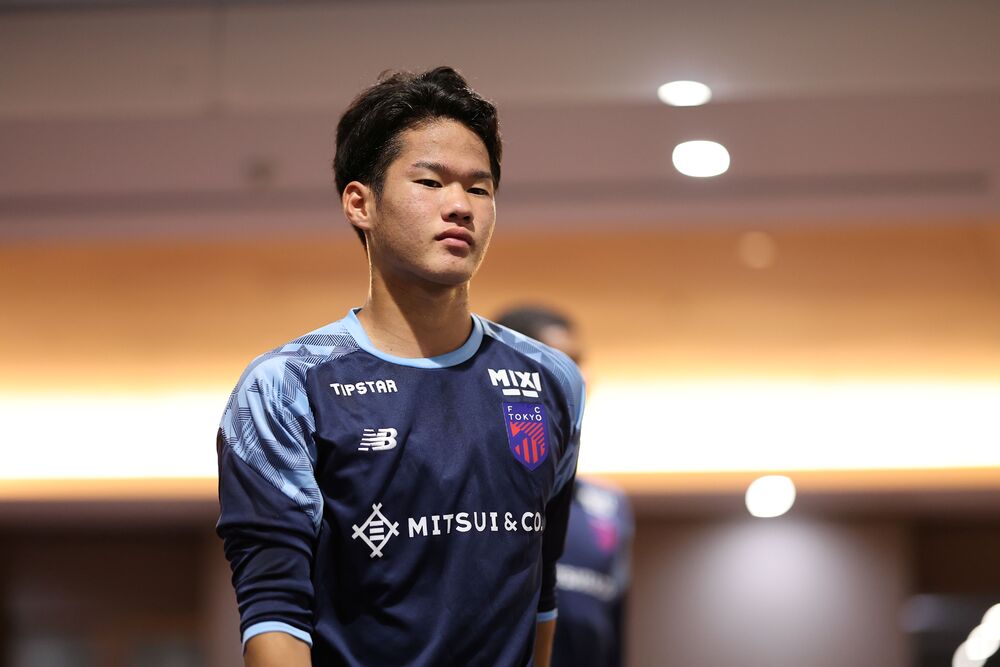
──Please tell us if there is anything that has left an impression after the promotion of FC Tokyo U-18.
I think that after entering high school, things happened one after another beyond my expectations. I was able to play in matches immediately after moving up to the U-18 team, and for the first time, I was called up to the age-group national team. In terms of encounters, I learned a lot from Mr. Takashi Okuhara, and practicing every day alongside professionals such as Kanta DOI, Kota TAWARATSUMIDA, Naoki KUMATA (currently on a developmental loan to Iwaki FC), and Renta HIGASHI (on a developmental loan to Giravanz Kitakyushu starting from the 2025 season) greatly contributed to my personal growth.
──When I was a first-year high school student, I was playing with a very strong-willed third-year student.
That's right. At first, I was a little intimidated (laughs). But as I practiced together and got to play in matches, I think I was able to gain recognition from those around me. Also, the third-year students kindly spoke to me, so I think I was able to fit in well.
Are there any players you should aim for in the top team?
Player Doi has always played alongside me, and since our positions are close, he is a senior I truly respect. When I was a first-year high school student, I was constantly watching his play and was able to learn a lot. Although he can be a bit absent-minded off the pitch (laughs). He is very kind and really easy to talk to, so I am very grateful to him.
──FC Tokyo U-18 was making steady progress, but last year we experienced a significant injury. Given that it wouldn't have been surprising for me to be promoted last summer alongside player Sato, I must have been carrying some regret as well.
To be honest, during my second year of high school, I had continuous injuries and felt that I was falling slightly behind player Sato and other players of the same age, so I honestly had a lot of frustration. However, I also believe there were things I gained precisely because of the injuries. During the rehabilitation period, I was able to focus properly on building my body, so in that sense, I think it was a meaningful time.
──Next season, battles await from the AFC U-20 Asian Cup to the FIFA U-20 World Cup. Beyond that, there is also the Los Angeles Olympics. As someone who experienced disappointment at last year's FIFA U-17 World Cup after returning from injury, I believe there is a desire to seek revenge on the world.
1A year ago, I experienced the most frustrating moment of my life, and I truly want to return to this stage. Next season, that opportunity will come again, but first, I need to make an impression in the professional world; it won't be easy to reach that point. Therefore, I want to focus on how much I can showcase my abilities within the team. As we move into the Olympic generation, it will become a place where only players who excel in the top level of the J1 League or overseas leagues will be selected. For me, it depends on how early I can play as a key player in Tokyo. I want to approach it with the mindset of competing for a starting position from my first year.
The factor that helped me recover from what can be said to be the most frustrating experience of my life.
To be honest, the presence of my teammates was a big factor. I was feeling down for a while, but they encouraged me half-jokingly and treated me with a bright atmosphere despite my mood, which I believe really saved me.
──This season in the final year of the academy, I have been living a life going back and forth between the top team and U-18. What have you gained from that experience?
Participating in training with the top team was indeed a special experience. It was a completely different environment from the U-18, and among many high-level players, even a single training session offered a lot to learn. Those moments were precious and truly became wonderful times for me.
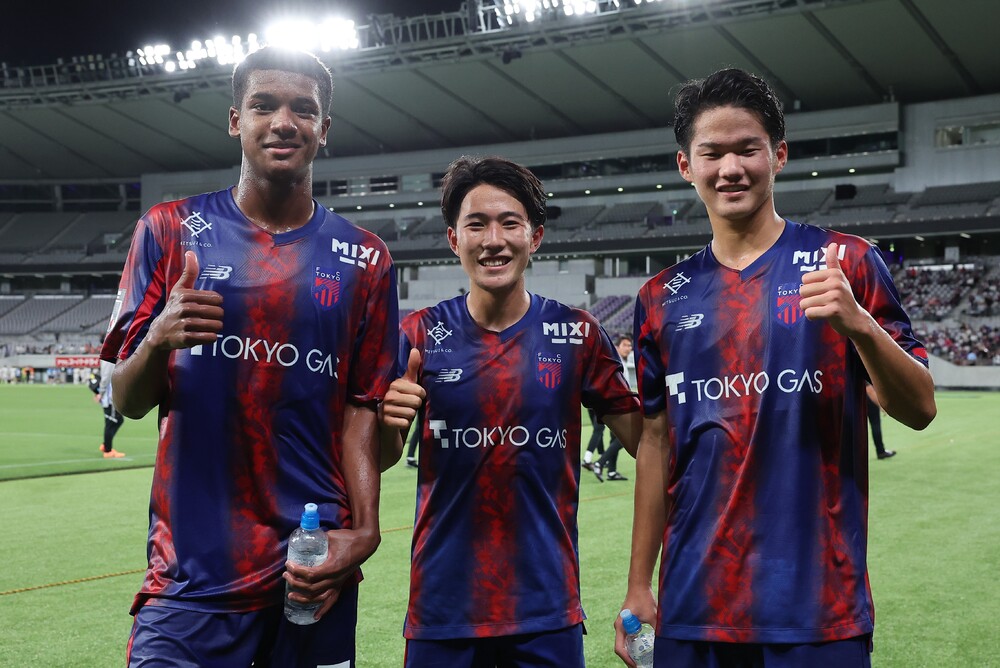
──I made my top debut in the 2nd Round of the Emperor's Cup match against Veertien Mie held in June. How did you feel the moment you stepped onto the pitch?
I was really nervous. When I played in the match, I felt, "This is the professional world," but at the same time, I also felt, "I want to play more on this pitch," so I thought I have to work even harder.
──It was my top team debut at Ajinomoto Stadium. The view from the stands and the view from the pitch were completely different, weren't they?
As a member of the professional team, supported by fans and supporters, I once again felt the responsibility that comes with standing on the pitch at Ajinomoto Stadium. When I was cheering from the stands, I always wanted the team to win, so wearing the blue and red uniform means I must always give my all in battle, and I deeply felt the responsibility of standing on the pitch.
──Starting next season, I will have to compete for positions with Masato MORISHIGE and players like Dohi, who is also a senior from the academy. What are your thoughts on that competition?
1Just because it's my first year, I can't just passively follow someone else; I believe that if I spend my time that way, I will end up wasting a year. I want to show proactivity regardless of the age difference with my seniors, and I want to play actively from before the season starts so that I can be recognized by the coach, staff, and my fellow players. However, I understand that even if I perform well in practice, there may be times when I can't play in matches or things don't go as I wish, which is part of the professional world. Honestly, I do feel anxious, but I am very excited about how much I can achieve in that environment and how I can turn around situations when I can't play.
Four players from the same year, including Sato, have been promoted to the top team. In the future, there will likely be players who meet again in the professional league after going through university. What kind of presence do those teammates have?
I believe I wouldn't be who I am today without the teammates I've played with so far. We've pushed each other and inspired one another while striving to improve together with the members I've worked with in Tokyo. I want to play soccer together again, and I hope we can reunite someday in this professional world.
──Finally, please give a message to the fans and supporters.
I want to be recognized by the fans and supporters by demonstrating my strengths in one-on-one duels and my skill in build-up play. To become a central player for this team, effort is essential. I will do my best to compete firmly in the professional world from now on. Thank you for your support.
♢Shuto NAGANO Profile
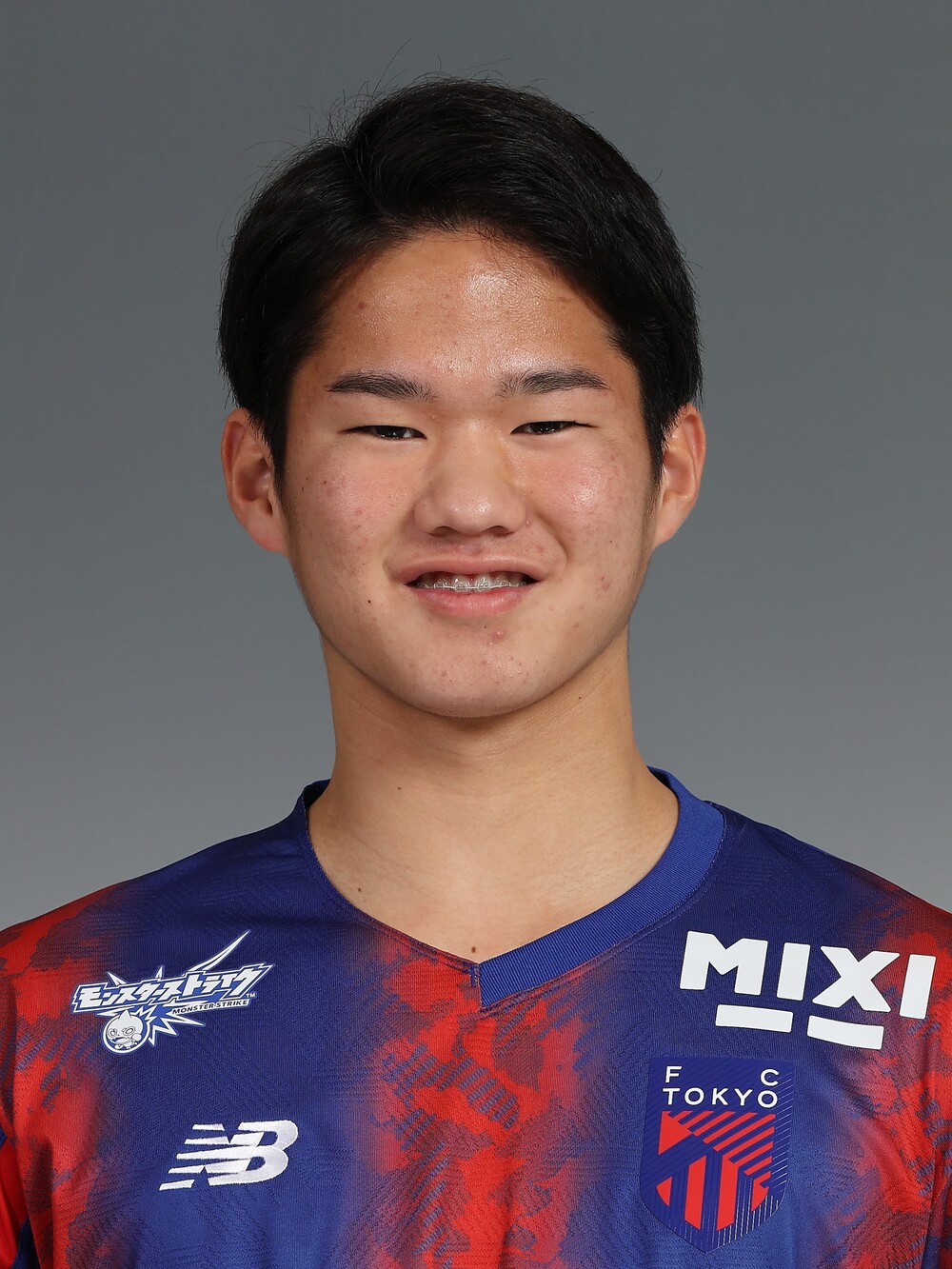
Date of Birth: April 15, 2006
Height/Weight: 182cm/77kg
Hometown: Nerima, Tokyo
Career: FC Tokyo U-15 Fukagawa → FC Tokyo U-18
Representative history: U-16 Japan national team, U-17 Japan national team, U-18 Japan national team
Text by Kohei Baba (Freelance Writer)