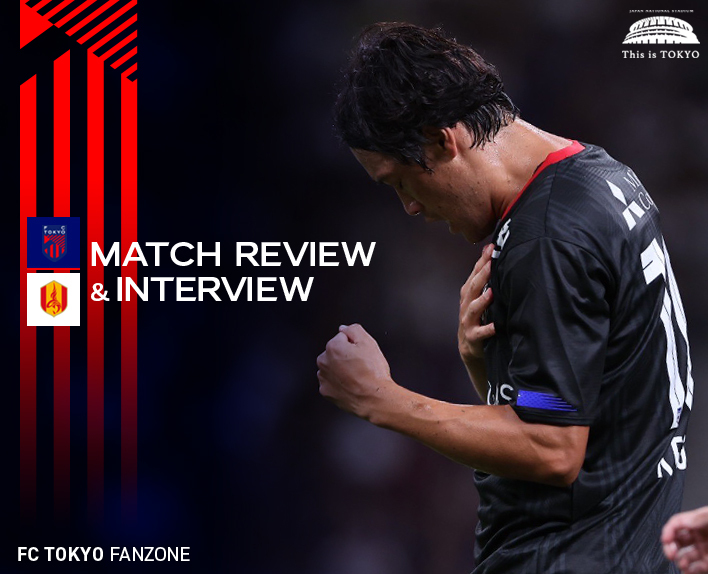


<Last Match Review: Sanfrecce Hiroshima>
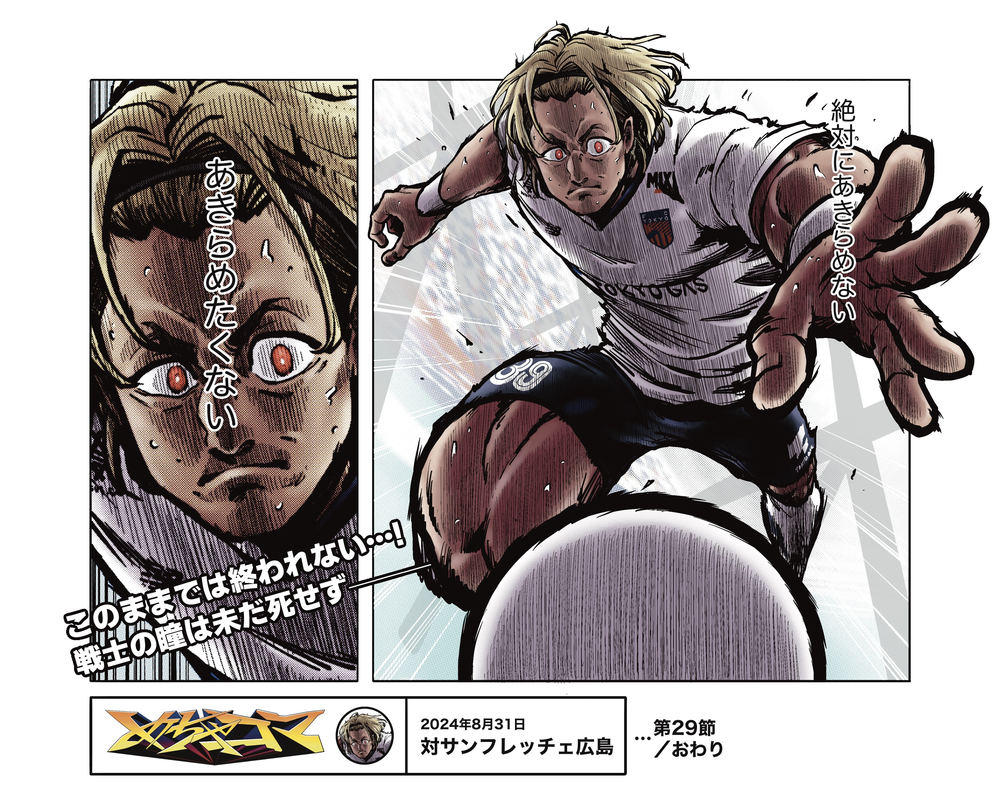
I want to win. I absolutely do not want to give up until the end──. The passionate feelings of number 39, wanting to repay the support of those who cheer for us, called for a determined counterattack goal.
Tokyo, who had been struggling with no goals in the four matches after the break, faced Sanfrecce Hiroshima in an away game aiming for their first victory in five league matches.
However, the team, which was determined to win every match, was greatly affected by Typhoon No. 10. Although they started their journey two days before the match to adjust their schedule, they ultimately arrived in Hiroshima only in the early afternoon on the day of the match due to transportation paralysis. After traveling for two and a half days and with only a little rest, they were forced to head to the stadium. Still, giving their all for victory is what it means to be a professional. The players stood on the pitch of EDION PEACE WING HIROSHIMA without ever making excuses.
The match was forced into a difficult development. We were pushed back by the opponent's press, conceding a goal in the 5th minute. Furthermore, we allowed an additional goal in the 18th minute of the first half, and in the second half, we conceded a third goal from a penalty kick.
The score is 0-3. It seemed that the outcome was decided. However, the cheers from the away supporters did not lower the voltage, and as if pushed by that atmosphere, the blue and red players launched a fierce counterattack, pressing Hiroshima.
We cannot end like this. For those who have come all the way to away Hiroshima against all odds, and to respond to the thoughts of those supporting us from various places.
That feeling came to fruition in the 34th minute of the second half. Kota TAWARATSUMIDA broke through the left side with a powerful dribble and crossed it to the center, where Tsuyoshi OGASHIWA slid in and kicked a fierce shot to score his first goal in five matches.
As the remaining time dwindled, there was a man who displayed a fierce desire for victory.
It was just after entering the 6 minutes of added time in the second half. After quickly restarting with a short corner kick on the right side, Teruhito NAKAGAWA received the ball and made a run into the penalty area along the goal line. From there, he delivered a powerful cross that deflected off an opposing defender and went into the goal.
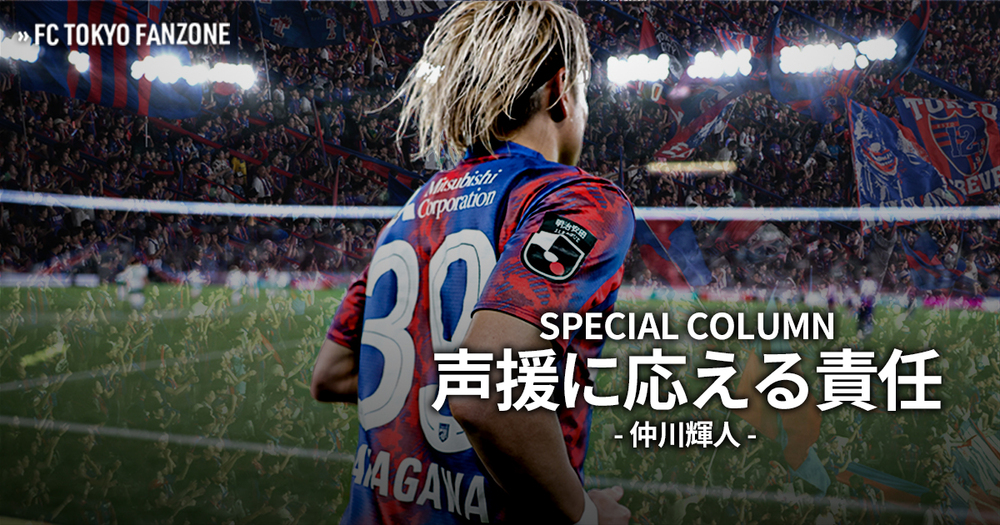
The player wearing number 39 delivered a determined strike that closed the gap to just one point, immediately picked up the ball, and rushed back towards the center circle. The desire to counterattack as quickly as possible was evident in their demeanor.
Although they could not mount a counterattack and the time ran out, they showed a fierce attack in the final stages that did not reflect the handicap of travel, and despite their strong desire for goals and victory, they fell just short.
However, they undoubtedly showed their determination. Both the supporters behind the goal and the players were moved to tears by their frustration in this match. This feeling will surely connect to the future. It was a game that made you think so.
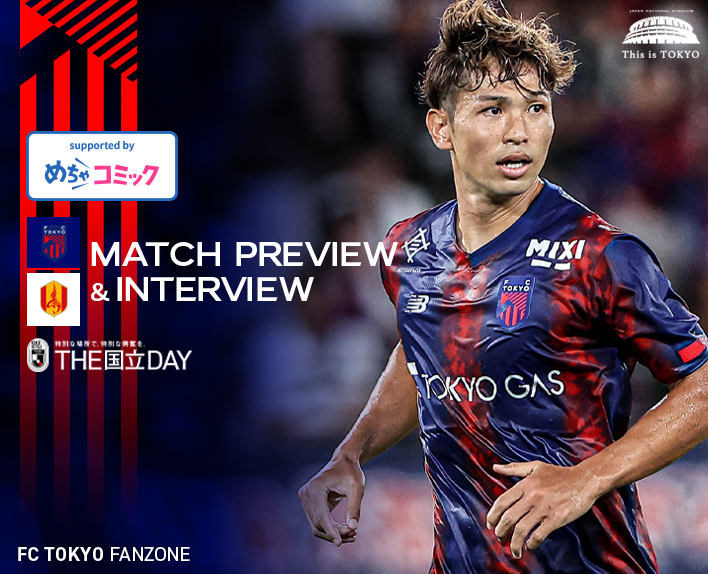
Match Preview
The previous match against Sanfrecce Hiroshima ended in a frustrating 2-3 defeat, and we could not break out of the long tunnel of six winless games. However, we were able to score for the first time in five matches and find a glimmer of hope for a resurgence.
Tsuyoshi OGASHIWA came off the bench to score a goal, giving the team a chance to fight back, and just before the end of the match, a shot-like cross from Teruhito NAKAGAWA led to an own goal. Despite the incident of having to travel to the venue on the day of the match due to the impact of the typhoon, Tokyo showed their determination to fight back and demonstrated their fighting spirit until the end. After the match, NAKAGAWA said, "Both OGASHIWA's goal and the own goal count as goals. I have always believed that any goal can change the flow of the game. If everyone on the team can show more determination to get closer to the goal in the penalty area, something will happen."
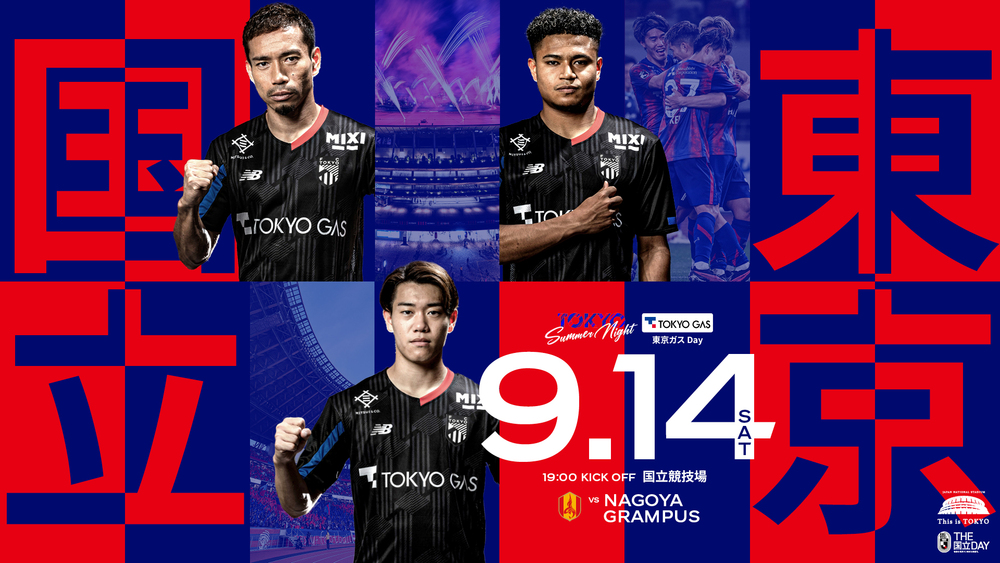
This match will see us take on Nagoya Grampus at the Japan National Stadium. In the previous encounter, Tokyo's attack was effectively contained, resulting in a 1-3 defeat away. Player Nakagawa stated, "The fans and supporters have been cheering us on strongly in every match, both at home and away. We have to respond to that. We have that responsibility." The stage is set at the National Stadium, where Tokyo still boasts an unbeaten record. We want to secure a victory here after about two months and turn the tide.
This matchday program is here
[Interview with Peter CKLAMOVSKI]
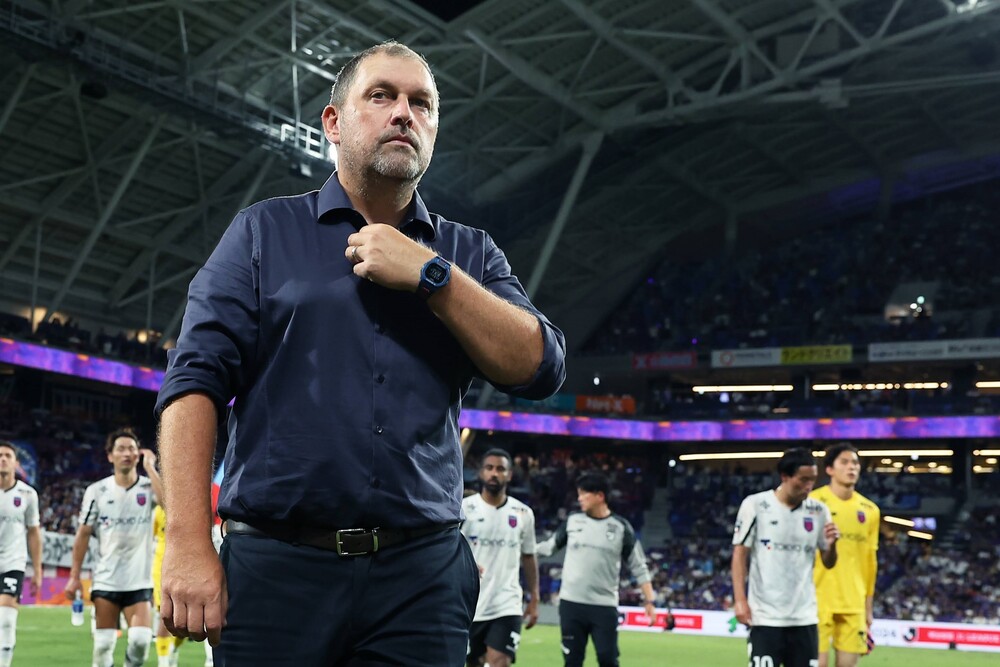
Q: It has been a tough situation, being away from victory for two months.
A: Everyone wants to win, and there isn’t a single player who is satisfied with the current situation. We must not lose focus and must steadily prepare for the next match. Even when we are on a good run with two or three consecutive wins, I believe I would say the same thing. It is important to firmly develop and strengthen what we need, and this remains true regardless of the situation.
Whether in a good situation or a bad one, the awareness and preparation do not change regardless of the circumstances. I want to focus only on the next match, overcome the current difficult situation, and finish the season successfully.
Q, I think that conceding goals early in the game is one of the points that needs improvement.
A: This is a part we must eliminate. In any match, conceding the first goal early means there are many more challenges we have to face. Conceding early goals is something we must remove from our style of play, and we want to proceed with the match in a way that allows us to score the first goal and effectively use that advantage.
Q: I believe that fighting together as a team, or what you might call 'total effort', will also be required.
A: I have mentioned before that fighting united and needing the strength of every single player is essential. Each player demonstrating their abilities and contributing to the team is the true mark of a strong team. I want to show matches where we contribute fully when our turn comes, fight united, and make our fans and supporters proud. This week, we have the opportunity to play on a special stage, the Japan National Stadium. I want us to focus on our performance and give everything we have within that. I expect it to be a tough match, but we will prepare thoroughly for a battle that excites our fans and supporters.
[Player Interview]
<Masato MORISHIGE>
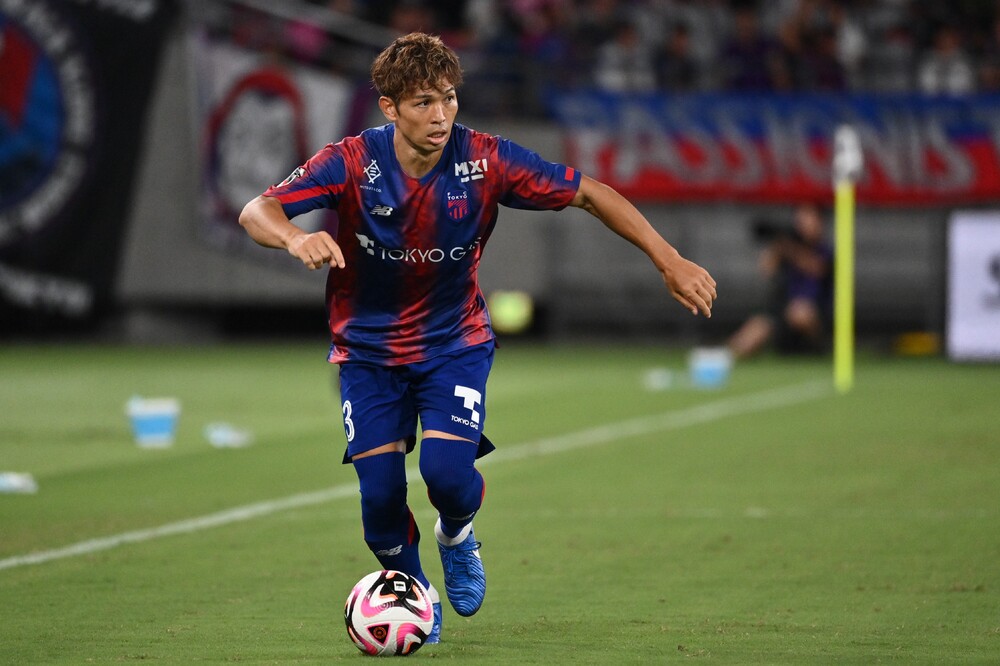
Q, please tell us what the team has built up during the break period.
A: It was a period during which we were able to fine-tune the details of our defensive aspects. While the team had been conceding multiple goals consistently, we were able to spend time focusing on the finer points during this period. On the offensive side, we had not scored until the previous match against Sanfrecce Hiroshima, and I believe we were able to accumulate training to increase our attacking actions toward the goal. The match against Nagoya Grampus is one where we want to firmly show the results and numbers of what we have built up.
Q: Looking back on the match against Hiroshima, what kind of game was it?
A, we had gone five matches without scoring, so scoring two goals in the match against Hiroshima was a significant achievement regardless of the manner. I believe we must continue to move forward step by step. To break through the current situation, we want to keep working positively. Just as the two goals against Hiroshima can be seen as a trigger that helped us emerge from a long tunnel, we want to approach the Nagoya match with an aggressive attitude as a team and fight with that front and center.
Q: In difficult situations, what do you want to prioritize?
A: During the early part of the league when we were in good form, we had the power to score 2 goals even if we conceded 1. I believe that our confident attitude of going after goals created a positive flow, and it felt like one of the triggers for a virtuous cycle. Certainly, we were able to score and accumulate wins, but it is also true that we conceded many goals at the same time. I think that in trying to reduce goals conceded, we became too focused on defensive awareness and ball possession, which made it difficult to maintain a balance between offense and defense. I personally feel that it is necessary to remind ourselves once again that Tokyo is an attacking team that continuously aims for goals, and to increase the options for attacking play in order to enter a good cycle again.
Q: In pursuit of victory, I think there is a tendency to play conservatively in such matches, which limits options.
A: I think the players' mentality will be tested. The more passive they become, the less dynamic the play will be. It is important not only to maintain possession of the ball but also to launch attacks aimed at scoring goals. If the fear of conceding goals takes over too much, the play becomes constrained, and the range of choices narrows. Continuously choosing aggressive play and plays aimed at scoring is, I believe, the key to achieving victory.
Q: How should we approach Nagoya, and what points should we be careful about?
A: Nagoya constantly increases their forward pressure in both offense and defense, so I think it is important for us to move the ball quickly when we have possession. We must always be mindful of choosing plays that take advantage of the opponent’s forward momentum, and we want to avenge the frustration of losing 1-3 away.
<Teruhito NAKAGAWA>
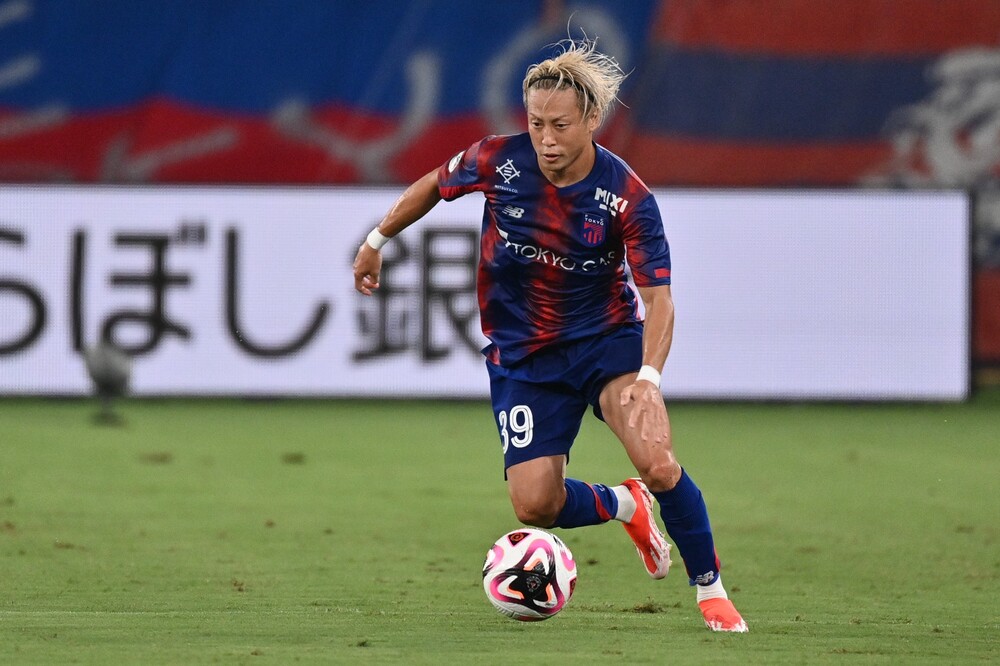
Q: Please tell us what you worked on during the break after the match against Sanfrecce Hiroshima in the last round.
A: During the break, we focused our practice on plays that lead to scoring. In the last match against Hiroshima, the team finally scored after a long time, which gave me a feeling of "finally," and I felt confident that once we scored, we could fight through the remaining time with confidence. I believe that no matter how the goal is scored, it will lead to multiple goals like in the Hiroshima match.
Q: Please tell us about the insights and challenges gained from the match against Hiroshima in the last round.
A: Scoring goals is important, but conceding soft goals and conceding early are challenges we have faced in the last few matches, including the Hiroshima game. First, we need to fix those issues, but more seriously for us was the inability to score goals. We want to continue focusing on scoring.
Q: How did you feel about the frustrating situation of not being able to score?
A: There were parts where we tried too hard to break down the defense neatly, and the number of shots was low, with some matches having no shots on target. I personally feel that our focus leaned too much towards ball possession, which did not directly lead to goals. Also, conceding the first goal to the opponent and failing to establish rhythm from the first half were factors that prevented good attacks and scoring opportunities.
Q: This round is being held at home at the Japan National Stadium.
A: Every match features wonderful production and the atmosphere is extremely good. There are games with 50,000 spectators, and as a soccer player, you can play while feeling the best atmosphere. I think Tokyo also has a good image of being unbeaten at the National Stadium, but rather than relying on that, if we approach the match in front of us with the mindset to defeat the opponent right before us, good results will naturally follow. Although we haven’t had good results in the past few matches, the voices of the fans and supporters are still reaching us, and the players have seen and felt the support that continues until the end even in away games, including the last match against Hiroshima. In the end, I hope we can smile, sing “Yuruneba,” and take great photos together with everyone.