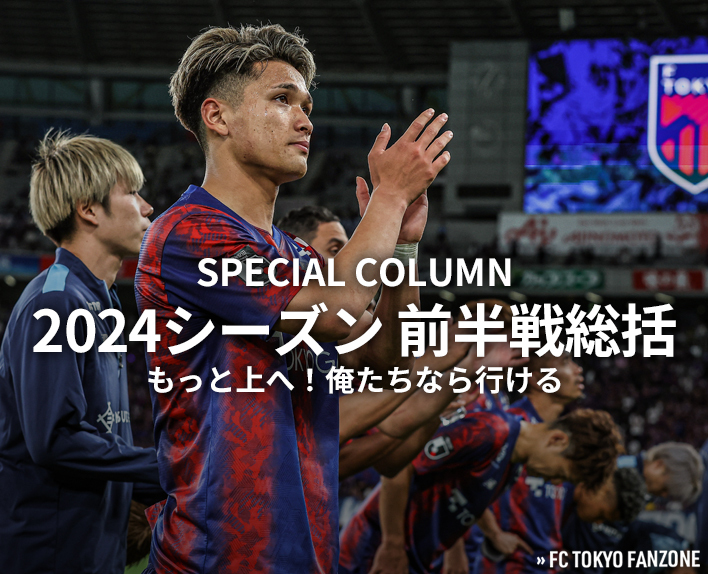


The first half of the 2024 Meiji Yasuda J1 League ended with the 19th round match against Shonan Bellmare on June 22nd. Tokyo finished the season with 30 points, 29 goals scored, and 26 goals conceded, placing 6th and aiming for a top spot. They had 8 wins, 6 draws, and 5 losses in their fight for the top.
What kind of battle did Peter Tokyo show in the first half of the season? And what is needed for a comeback in the second half?
Text = Tomoaki Aoyama
Harvests and Challenges Seen in the First Half
There were brilliant victories, frustrating matches, and hard-fought wins. The blue-red squad, which aggressively reinforced the team before the season opener by adding new players, along with the growth of young talent, gives the impression of a team transforming into one with great potential for the future. That was the first half of the season.
The biggest change since last season is the significant improvement in scoring ability. After 19 league matches, the gains and challenges have become clear. Overall, it can be said that the team's way of playing has definitely been built up.
First, let's look back on the performance of the league's first half using data.
It is not possible to make a simple comparison due to the difference in the total number of league matches, but when compared to the first half of last season, it is clear that the scoring power has increased while the number of goals conceded has also increased.
2023 Season First Half (17 games)
12th
5 wins 4 draws 8 losses (19 points)
22 goals scored 28 goals conceded
2024 Season First Half (19 Matches)
6th Place
8 Wins 6 Draws 5 Losses (30 Points)
29 Goals Scored 26 Goals Conceded
In terms of increasing scoring power, the transfer of Ryotaro ARAKI is the biggest positive factor. Furthermore, the variety of scoring patterns has increased, and many players are now able to create scoring opportunities. This has greatly contributed to the team's ability to earn points based on their high scoring power.
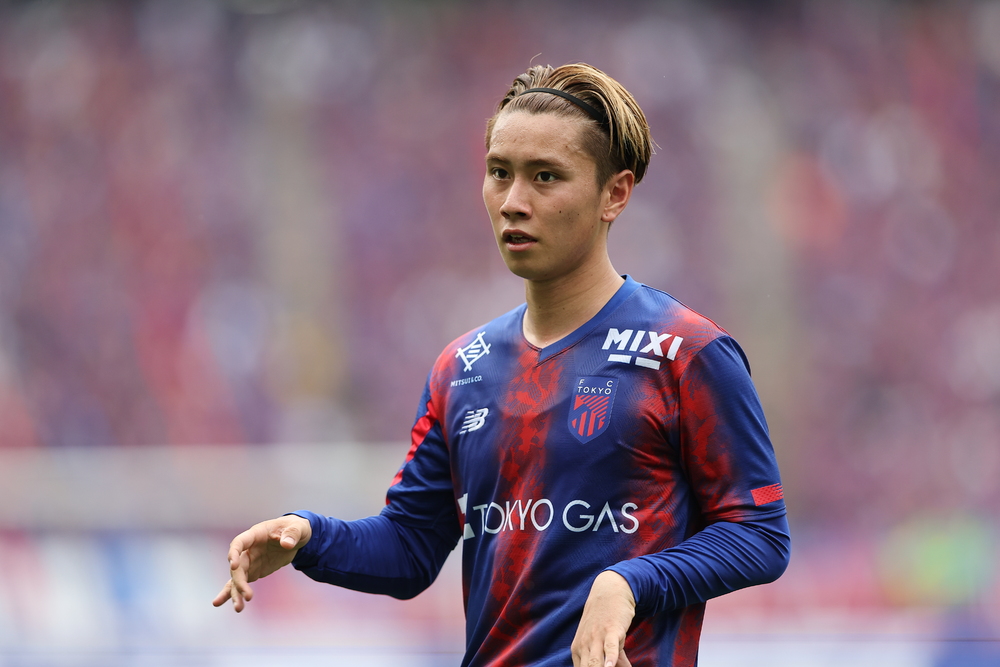
First, Cerezo Osaka and Sanfrecce Hiroshima's opening two matches were both draws after coming from behind. Player Sandro showed an impressive performance by scoring all three goals in the first two matches, and continued to score more goals. He demonstrated his excellent attacking sense and quickly established himself as the top scorer.
In addition, these first two matches were also a demonstration of the team's tenacity.
In the 2023 season, the game that was conceded first was a difficult record of 1 win, 2 draws, and 13 losses, but here we were able to fight tenaciously and successfully earn points. Furthermore, in the first half of the season, we have a record of 2 wins, 6 draws, and 4 losses in the 12 games where we were conceded first. In order to compete for the championship, it is necessary to turn losses into draws and draws into wins, so it is positive to see that we are gradually accumulating points and moving forward. It is undeniable that the team is growing while acquiring the scoring power to come back in games where we were conceded first.
That said, it is concerning to counterattack after being led. The fact that we have conceded first in 12 out of 19 league matches is a significant point for reflection. This season, we have achieved 6 wins and 1 loss in the 7 matches where we scored the first goal, so it is crucial to see how we can take the initiative in our games. First, we need to improve our concentration in various situations, such as conceding goals at the start of both halves, conceding multiple goals in a short time, conceding immediately after scoring, and how to manage the game to secure a win. If we can unify our intentions from the front line and maintain balance, our ranking should definitely improve. As a club, while we are promoting "+1 Goal (One more Goal)," it is also necessary to establish a path to victory from defense, as seen in the matches against Sagan Tosu in Sec. 17 and Shonan Bellmare in Sec. 19, and to demonstrate our skill in managing games.
To understand how the team has become capable of scoring from anywhere, it would be quick to look at the breakdown of the goal scorers. Last season, Diego OLIVEIRA was the team's top scorer with 15 goals, but only 5 other players scored multiple goals besides Diego. Overall, 16 players scored for the team, but this season, at the halfway point, 6 players have already recorded multiple goals, and a total of 15 players have scored.
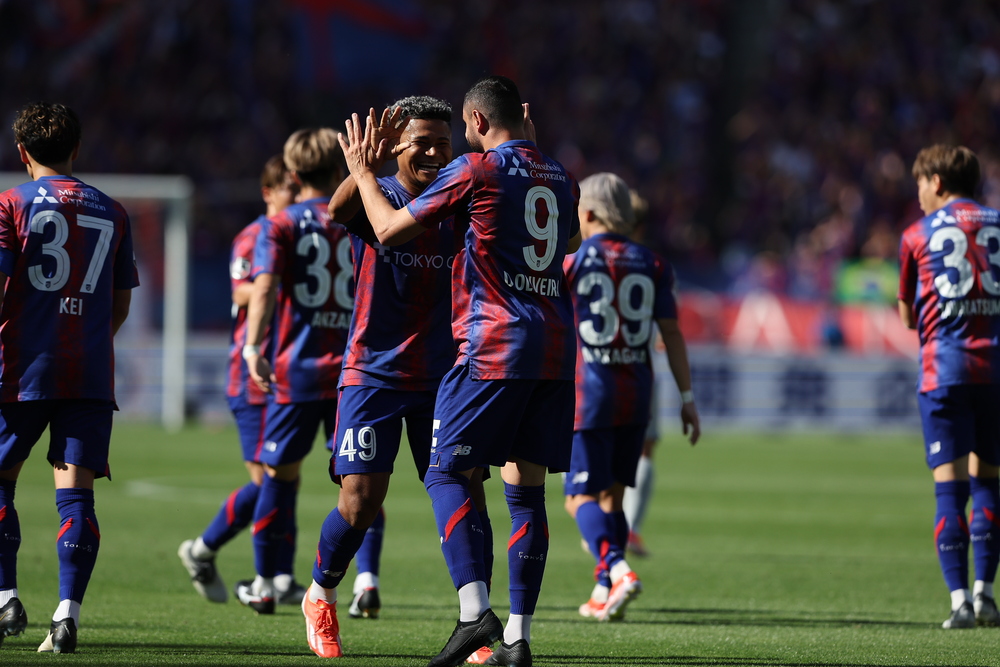
The pattern of the opposite side fullback entering the cross as a team has been established, and the form of Kota TAWARATSUMIDA, the left side, has become a favorite attacking pattern. In addition, players such as Kota TAWARATSUMIDA and Teruhito NAKAGAWA, who enter the front line, are functioning as a symbol of Tokyo's attack this season as a "zero top" style that contributes to the construction of the attack. The depth of the player layer has increased, and the point where the pitch can be powered up by player substitutions can also be said to be a feature of the 2024 season.
However, as symbolized by the matches against Nagoya Grampus in Sec. 14 and Júbilo Iwata in Sec. 18, it is clear that when forced into a situation lacking offensive options, it becomes quite difficult to find a breakthrough. What can be done in a scenario where the defense is solidified and the team cannot exhibit its attacking prowess will be a significant challenge heading into the second half of the season. If ideas, combinations, and tactical maturity to break through this situation are not developed, there is a high possibility of repeating similar scenes and struggling in matches. Given that the attacking lineup consists of players with various characteristics, how to combine them and make the team function effectively is crucial. We should also pay attention to the coach's decisions as they make adjustments while observing the opponent's moves.
In terms of player utilization, there have been quite a few matches where the increase in injuries has caused headaches regarding player selection, but the scenes where the players sent onto the pitch produced solid results stood out. Yuto NAGATOMO has joined the Japan national team, while Kuryu MATSUKI, Taishi Brandon NOZAWA, Kashif BANGNAGANDE, and Araki have been called up to the U-23 Japan national team. Ryunosuke SATO has also been away from the team for an extended period due to activities with the U-19 Japan national team, which has had some impact on conditioning adjustments and the development of combinations. However, national team activities contribute to the individual growth of the players. Additionally, during their absence, the players in the blue and red uniforms rallied together to achieve three consecutive victories, so as not to be said that they were lacking because the national team members were not present. Although there are challenges in ensuring that the national team members can focus on Tokyo in perfect condition, the impression is that the team is improving while fighting through the season.
The Rise of Young Tokyo
The major takeaway from the first half of the 2024 season is undoubtedly the rapid growth of young players. The fact that Kanta DOI and Taira Tsukita both started in the opening lineup as teenagers symbolizes the success of Young Tokyo, including the Paris Olympic generation. The U-23 Japan national team quartet has become an essential backbone of the team, and Soma ANZAI, of the same age group, has also become a key player supporting the team with dedicated play, particularly as a right winger. The victory against Urawa Reds in Sec. 6, with an average starting lineup age of 22.73 years, marked a significant result that impressed upon us a new era. Additionally, in the second leg of the J.League YBC Levain Cup playoff round against Sanfrecce Hiroshima, Oya Divine Chinedu, from FC Tokyo U-18, scored the top team's first official goal with a powerful header. The young talents are leaving their mark.
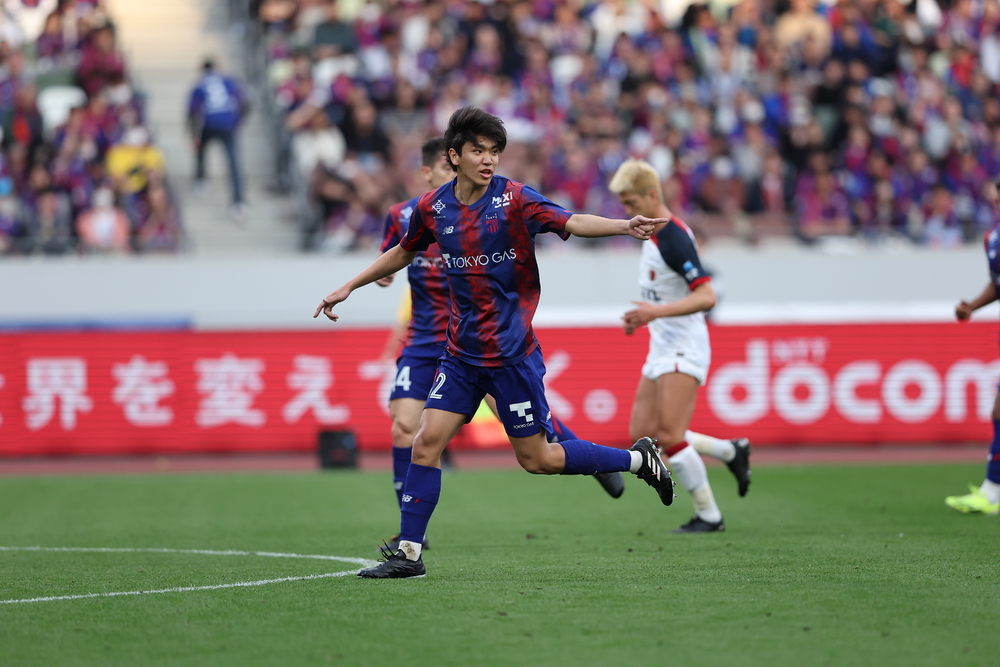
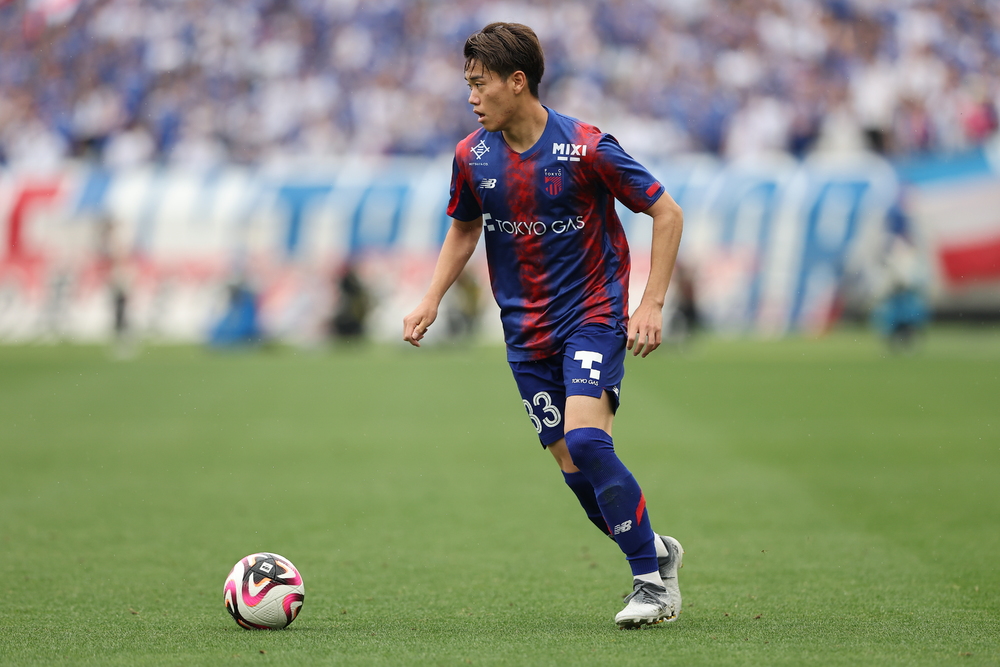
The rise of young talent has also sparked fierce competition within the team. Due to the depth of the squad, there have been times when experienced players were unable to make the bench. However, the team has been able to have battles where heroes are swapped out every game, proving that the competition at the Kodaira Ground is translating onto the official pitch.
Additionally, winning away games against Fukuoka, Sapporo, and Tosu, which were considered a "difficult hurdle" until last season, successfully dispelled the bad jinx and is a significant topic for the first half of the 2024 season. However, the ongoing inability to win at home at Ajinomoto Stadium remains a major concern. While the 2023 season had 8 wins, 1 draw, and 6 losses in 15 matches, this season has seen only 1 win, 4 draws, and 3 losses in 8 home matches. Continuing the unbeaten streak at the National Stadium while improving the record at Ajinomoto will be a key to rising in the rankings.
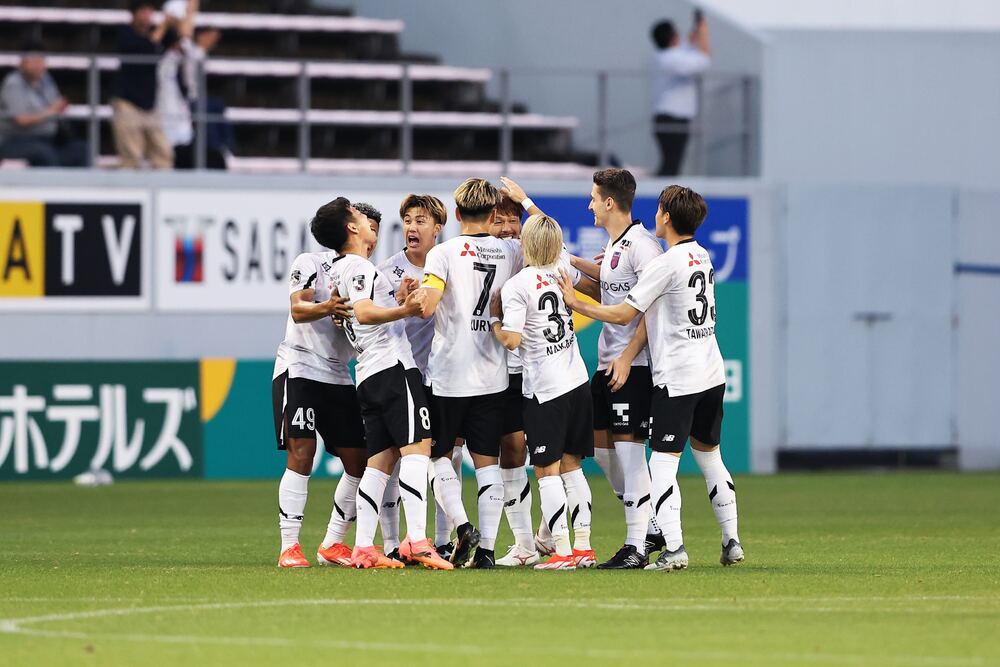
Captains' Perspective
It was a positive first half with many good aspects, but looking back overall, it is also true that there were many games where we dropped points due to unnecessary goals. One of our captains, Kei KOIZUMI, reflects on the first half of the season.
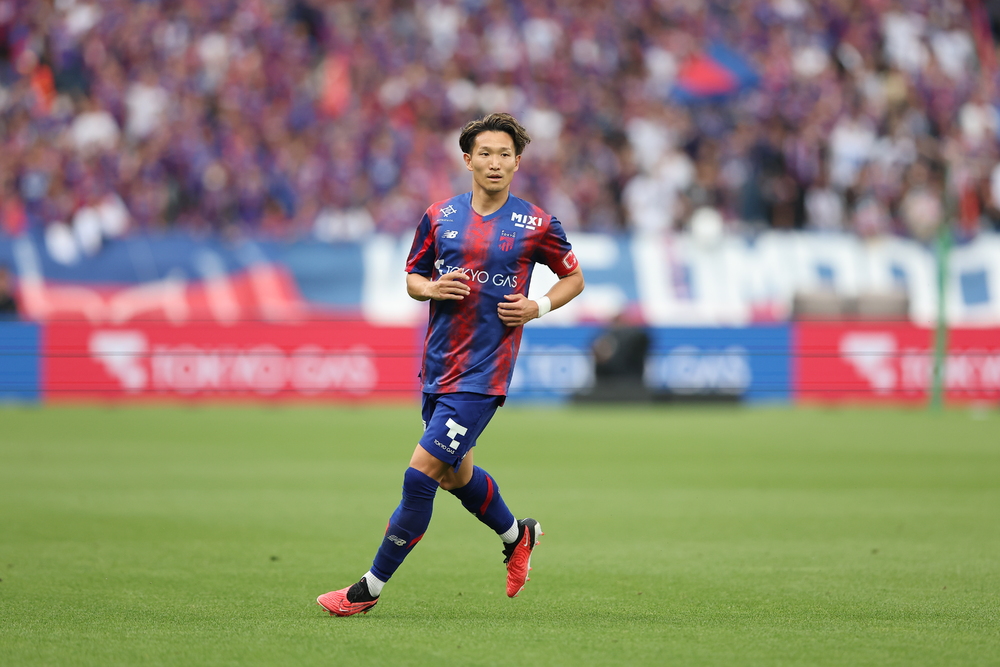
"Not everything goes perfectly, and I don’t think it’s that easy either. But I believe the team can climb much higher in the standings, and we know what points need improvement. I want to firmly direct the focus on myself and aim higher with a sense of unity. Even if only the players work hard, or only the fans and supporters get excited, we absolutely cannot win the championship. Tokyo is undoubtedly strong when everyone’s power comes together as one, so I want us to focus on the match in front of us, the play in front of us, and be able to have those kinds of matches together every game."
A characteristic of strong teams — one of them is that everyone demands from each other and takes responsibility for their words. Captain Matsuki also speaks about the changes in the team and his own thoughts.
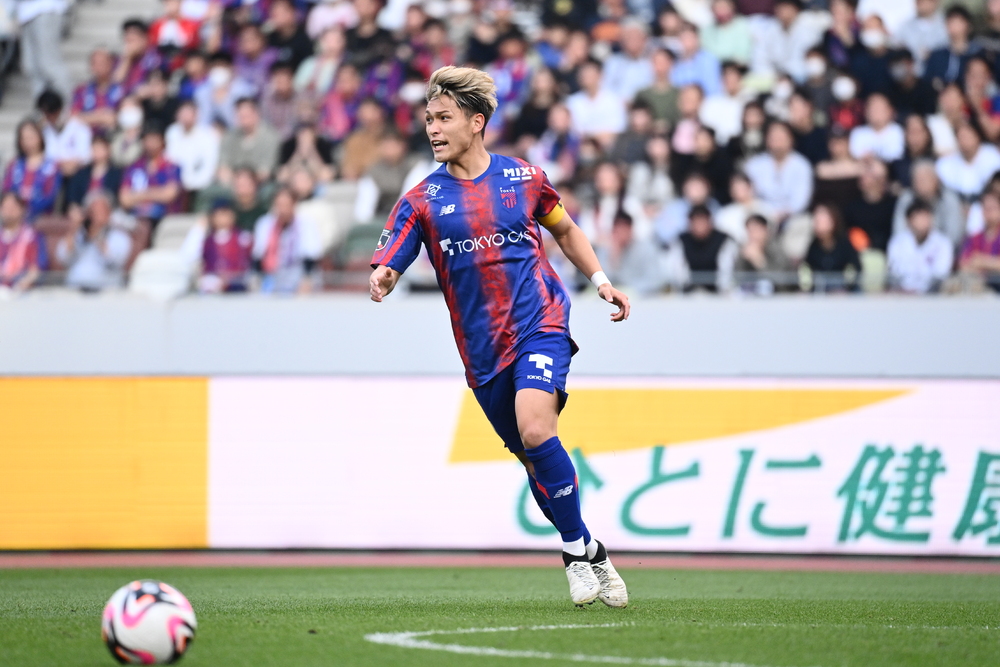
“This season, the whole team has started to demand more from each other. Various young players are appearing in matches, but they are able to communicate properly and make requests to those around them. Since we are on the pitch, we must all work equally toward a single victory. Everyone has started to voice their thoughts, but I want them to demand more, express their own desires more, and act to improve the team. I also intend to keep encouraging the team actively. For that, whether in practice or matches, I make sure to be the one who works the hardest, runs the most for the team, and leads by example in the basics like fighting for the ball. Anyone can just talk, but you have to earn recognition from the team.”
And another captain who knows the history of Tokyo, Masato MORISHIGE, says that the key point lies in the games at Ajinomoto Stadium.
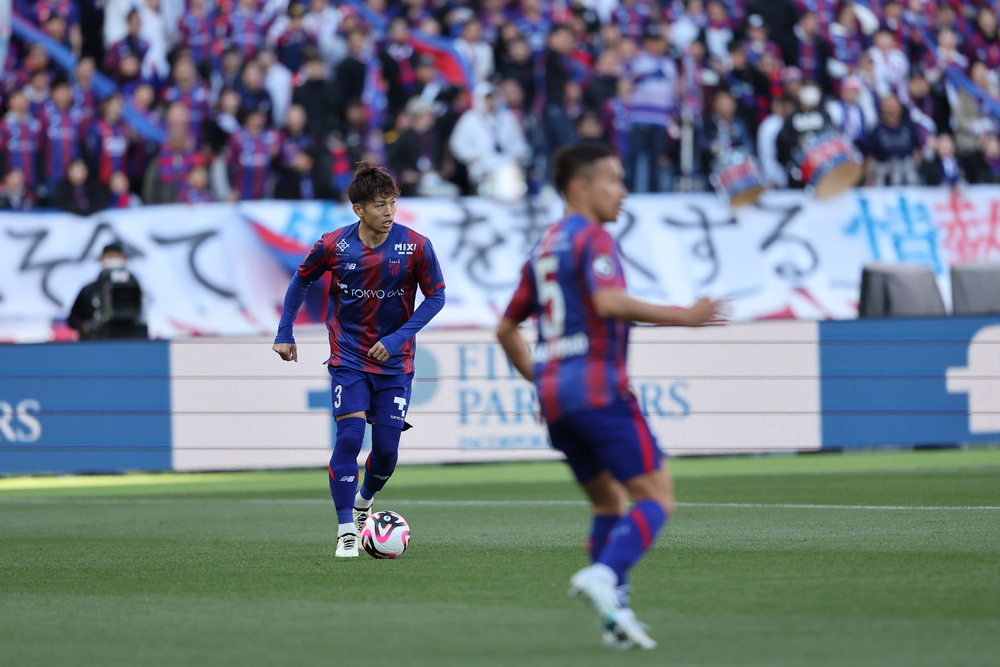
"It is our responsibility that we haven't been able to win despite having so many fans and supporters coming to watch. The strength at home energizes the team, so in the second half of the season, we definitely want to win at Ajinomoto."
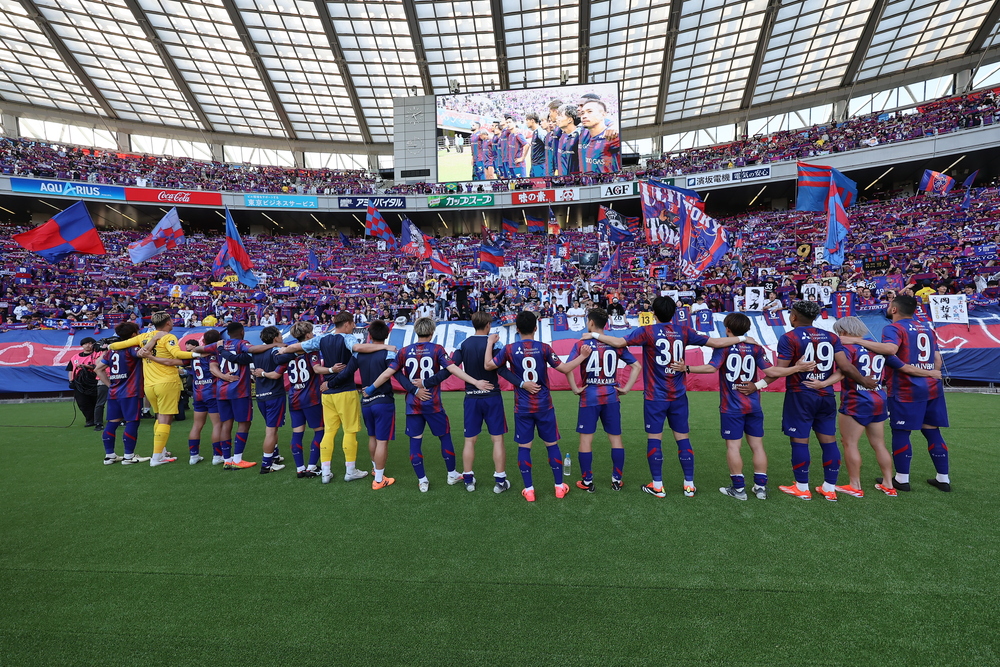
The team is undoubtedly moving forward from multiple perspectives. However, the first half of the season also made us feel that better results could have been achieved. In the second half, injured players will gradually return, but it is also expected that some U-23 players will be absent due to the Paris Olympics. Even so, by refining the details to reduce easy goals conceded and gradually demonstrating the competitive strength that has begun to emerge, advancing further up the standings is by no means impossible. After the match against Shonan, banners appeared behind the goal saying, "Higher up! We can make it," and "Second half, let's make a comeback." Both the players on the field and the fans and supporters fighting alongside them definitely feel that more can be done. In the second half, we want to firmly connect that potential to results with the power of everyone involved.