

Match Review
Away game against Nagoya Grampus. Although the winning streak in the league was stopped at 3 games with a draw in the previous match, it is important to maintain focus and aim for a solid result in this game.
The starting eleven saw three changes from the previous match against Kashiwa Reysol. Goalkeeper Taishi Brandon NOZAWA, who returned from the Japan U-23 national team, made his first start since the 7th round match against Kashima Antlers. Yasuki KIMOTO, who used to play for the opponent team, was chosen as the center back, and Kei KOIZUMI, who had just finished serving his suspension, was placed in the defensive midfield. In addition, Ryotaro ARAKI, who had been recovering from an injury sustained during the Japan U-23 national team match, returned and made it to the bench.
The congested schedule of three consecutive days is the same for the opponents as well. The match, which was scheduled to be held on May 15th, "J-League Day", kicked off at 19:03 in the pouring rain just before the start.
1st HALF - Unable to find an attacking player and concede a one-point lead
The first chance came in the 4th minute of the first half, when right-back Kosuke SHIRAI overlapped from the center and supplied a ground cross in the negative direction. Kota TAWARATSUMIDA aimed for it with his right foot, but unfortunately the ball went over the bar.
In the 8th minute of the first half, Diego OLIVEIRA, who received the ball on the front line, turned and faced forward, swinging his right foot from long range to attack the goal. Although it flew straight to the opponent's goalkeeper, he continued to show a proactive attitude from the start.
Tokyo started off with an aggressive attack, but Nagoya has been able to defend well with their compact 4-3-3 formation, making it difficult for Tokyo to find a way through the center.
The game continued with a back-and-forth attack and defense, but neither team was able to create a shooting opportunity. However, in the 30th minute of the first half, the game took an unexpected turn.
The opponent pressed as we attempted a difficult build-up from deep on the left side of our own half, resulting in Masato MORISHIGE being fouled in the penalty area and giving Nagoya a penalty kick. This was converted by Kasper JUNKER, making it the third consecutive game in which we conceded the opening goal.
Tokyo, which is trying to counterattack, is increasing the pressure from the front line. They are trying to penetrate the enemy's territory by connecting passes precisely.
In the first half additional time, a free kick from the right side of Nagoya was powerfully combined in the center and shook the net, but with the support of VAR, it was ruled offside, and the first half ended with a score of 0-1.
How will we break down Nagoya, who will come aiming for a counter while tightening the center and creating a "red wall"? The strategy was carried over to the second half.
2ndHALF - Taro's comeback goal was not enough for a counterattack.
Tokyo, trying to break through Nagoya's solid defense. In the 5th minute of the second half, Diego Taba takes a shot with his left foot after cutting back. In the following 6th minute, Teruhito Nakagawa and Shuto Hakuai both attempt to score from Tawamurezumiya Tada's cross from the left side, but they are unable to shake the goal net.
As they searched for attacking options by incorporating angled passes, dropping passes from vertical wedge passes, and side changes, the bench made a move in the 16th minute of the second half. They simultaneously brought in Kuryu Matsuki, who had been active in the U-23 Japan national team, and Araki to break through.
However, it was Nagoya who scored the next goal. In the 21st minute of the second half, Kasper JUNKER, who received a long ball, moved to the left and advanced to the front line. After receiving the ball, Izumi passed it to the center, and JUNKER, who was running towards the front line, took a one-touch shot with his left foot, making it 0-2.
In the 26th minute of the second half, Kasper JUNKER scored a header from the near side after Nagoya's left corner kick was crossed in from the right, going over the goalkeeper's head and into the goal. This allowed for a hat-trick.
Tokyo, who is aiming for a comeback, brought in Yuto NAGATOMO and Jája Silva in the 27th minute of the second half. This player substitution led to a counterattack goal.
In the 33rd minute of the second half, Takahiro KO connected with a throw-in from the right side and made a dash towards the open space. He then received a perfect through pass from Takahiro KO and crossed it while falling down, finding Araki in the center. "Taro", who had just returned to the pitch, quickly produced a result and scored a goal that encouraged the team.
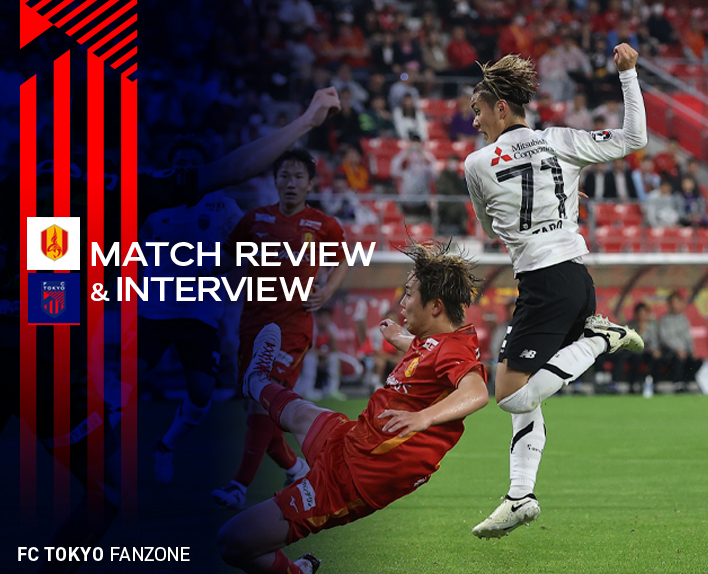
In the 41st minute of the second half, Matsuki player picked up a loose ball that was crushed by Jaja player in a high position on the left side and dribbled. The opponent's sliding block trying to stop the ground early cross was heading towards the goal, but it was cleared just before an own goal, unfortunately not resulting in a score.
They continue to launch fierce attacks even during the 4 minutes of additional time. They created close chances with set plays, and players like Araki and Matsuki relentlessly attacked the Nagoya goal with middle shots and decisive shots, but they were unable to change the score.
Despite the good news of player Sho Araki's comeback goal, there was a disappointing loss at away game Nagoya. It was their first loss in 5 league matches.
MATCH DETAILS
<FC Tokyo>
STARTING Ⅺ
GK Taishi Brandon NOZAWA
DF Kosuke SHIRAI/Masato MORISHIGE/Yasuki KIMOTO/Kashif BANGNAGANDE
MF Takahiro KO (40th minute of the second half: Riki HARAKAWA)/Kei KOIZUMI/Teruhito NAKAGAWA (16th minute of the second half: Ryotaro ARAKI)
FW Diego OLIVEIRA (16th minute of the second half: Kuryu MATSUKI)/Kota TAWARATSUMIDA (27th minute of the second half: Jája Silva)/Soma ANZAI (27th minute of the second half: Yuto NAGATOMO)
SUBS
GK Tsuyoshi KODAMA
DF Henrique TREVISAN
GOAL
33 minutes into the second half: Ryotaro ARAKI
Nagoya Grampus
STARTING Ⅺ
GK LANGERAK
DF Akinari KAWAZURA/Kennedyegbus MIKUNI/Haruki YOSHIDA
MF Masahito ONO (23rd minute of the second half: Ken MASUI)/Keiya SHIIHASHI/Sho INAGAKI/Tsukasa MORISHIMA (37th minute of the second half: Takuji YONEMOTO)/Takuya UCHIDA (23rd minute of the second half: Katsuhiro NAKAYAMA)
FW Kasper JUNKER (37th minute of the second half: PATRIC)/Kensuke NAGAI (13th minute of the second half: Ryuji IZUMI)
SUBS
GK Yohei TAKEDA
DF Hachanre
GOAL
First Half 33rd Minute: Kasper JUNKER / Second Half 21st Minute: Kasper JUNKER / Second Half 26th Minute: Kasper JUNKER
[Interview with Peter CKLAMOVSKI, Manager]
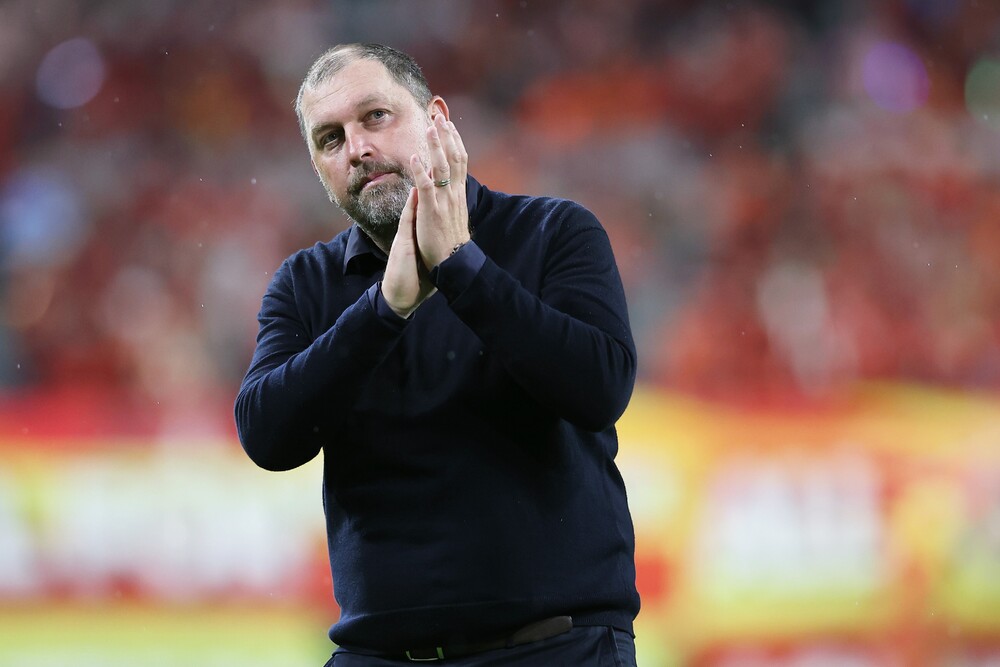
Q, please give us an overview of the match.
A,Unfortunately, it was a disappointing result. It was a game that we could have grabbed ourselves and I feel that we were not far from taking the victory, but there were moments where we made the game difficult for ourselves. I think the easy goals we conceded were painful. We felt that we could fight strongly towards the end of the game, but regarding today's match, I believe it was a game where we made it difficult for ourselves.
Q, The goal scoring scenes have always been able to show their usual strength, but on the other hand, the goal difference is increasing. What are your thoughts on how to improve this?
A, first of all, as we thoroughly analyze the match, in the first half we conceded a goal from a penalty kick. I don't think this was due to the defensive shape, structure, or defensive rules. This is something that can happen in football. Regarding the second goal conceded, I believe there are areas we need to improve, and I think it became a decisive moment. There were also chances where we could have scored before that, and if we had taken those chances, I felt we could have turned the game around. However, Nagoya Grampus finished those chances well, and we made the game difficult for ourselves.
The third goal was from a set piece. We need to improve in those areas and make sure we don't concede easily. However, I believe this group has the mentality to come back after conceding. Nevertheless, we need to improve in the areas where we concede easily and use that to our advantage. If we do that, we can become a difficult and tough opponent for our opponents to face and defeat.
In the end, we knew we could fight strongly and there were also good saves from goalkeeper LANGERAK. I think there were also clearances on the line. We feel the cost of conceding easily today in those areas. It was a tough lesson, but we want to learn from it, recover, and prepare for the next game.
[Player Interview]
<Ryotaro ARAKI>
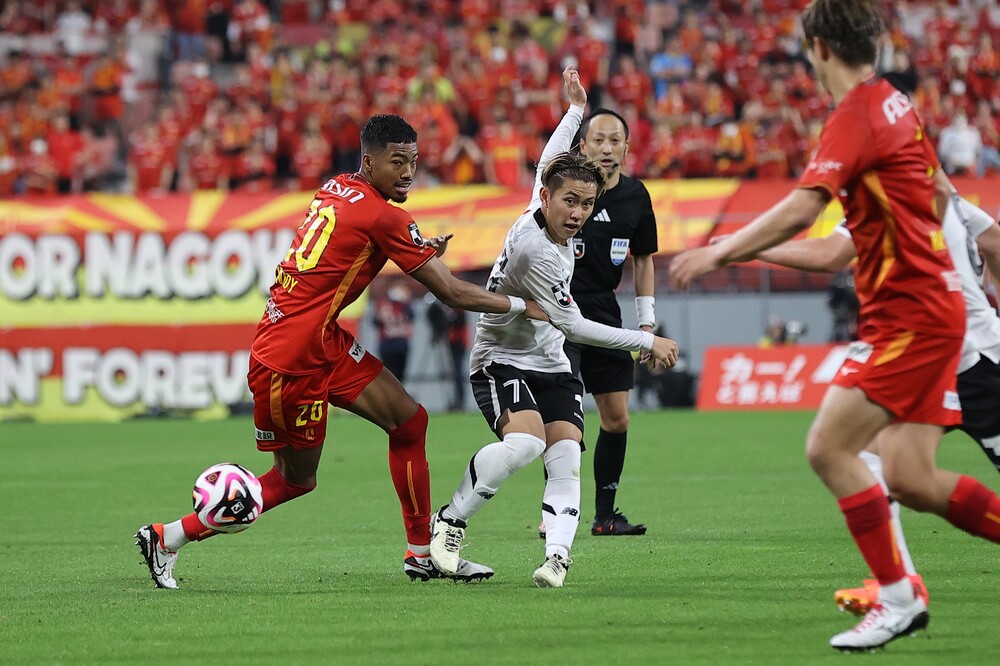
Q, this was my first appearance in Tokyo in a long time.
A, the aspect of defense that does not concede goals has been an issue I recognized even before I left the team for national team activities, and it is something the team must improve. No matter how many goals we score, if we concede more, it becomes difficult to win, so I want the entire team, not just the defenders, to work on correcting this.
Q, please look back on the scoring scene.
A, at the timing when Kosuke SHIRAI played a through pass to Yuto NAGATOMO, I initially thought to dive near the near post, but since the space was closed off, I repositioned myself anticipating a cut-back ball. The pass came exactly as planned, so I just had to create space and calmly make contact.
Q, Ryotaro ARAKI's ball gathering created attacking organization and fluidity.
A, being involved with the ball and building up the attack are my strengths and my unique qualities. Watching from the bench, I wanted to bring change to the pitch once I got on. I was conscious of making plays that could change the flow of the game, and although we lost, I believe I was able to fulfill my role to some extent.
<Kei KOIZUMI>
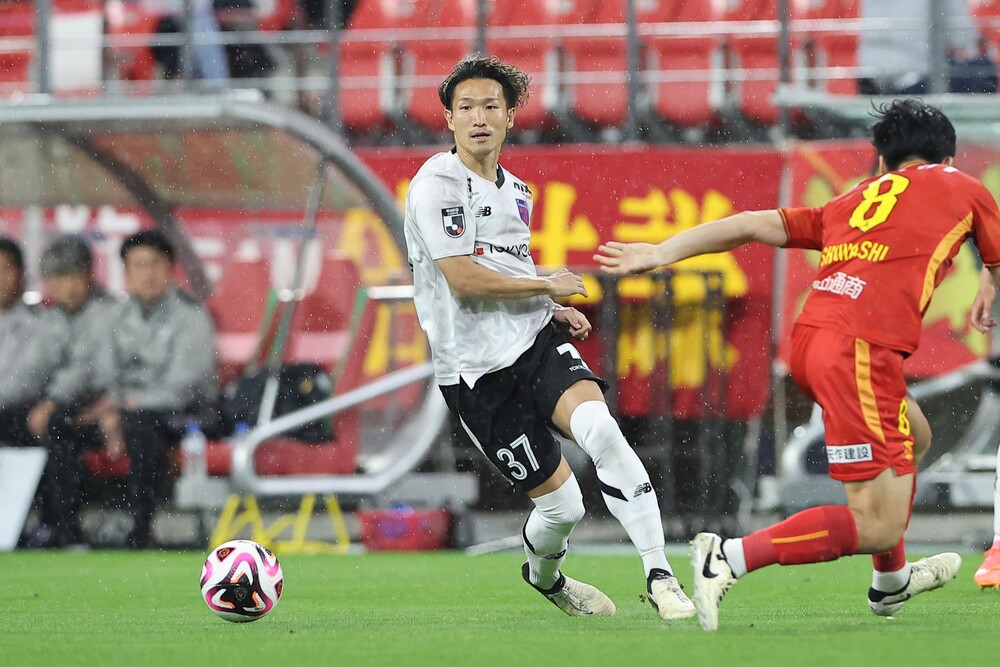
Q: please review the game.
A, we knew from the start that the opponent's strength lies in their intensity, winning challenges for the ball and second balls, and finishing with a single counterattack. I think if we don't surpass them a bit more in terms of intensity, this kind of outcome is inevitable. Fundamentally, it's about fighting more than the opponent—not just running, but the battle aspect of 'fighting.' Especially for players like me, who are entrusted with the central defensive midfield role, if we had been able to win second balls and secure possession in chaotic situations, I believe we could have controlled the game at our own pace a bit more. Also, how to break down the opponent when they drop back slightly is something the team needs to improve on. Not everything is a negative factor, though.
Q, how do you see the factors that did not lead to points, even though the connecting parts and the parts that dominate the game have been expressed in the same way as the past few games?
A: In the end, you can't score a goal without taking a shot. I think the timing of the shot and the decisiveness at the final moment are things I, including myself, should have shown more of. I want to challenge myself in that area. However, it's no good to shoot out of impatience, so I want to improve my judgment and be able to take shots flexibly when the opportunity arises.
Q, there will be consecutive games. How will the team approach this?
A, the next match is coming soon, and there is no time to be down. No matter how much we talk, we have to perform on the pitch. I want to refocus and give it my all once again.
<Kashif BANGNAGANDE>
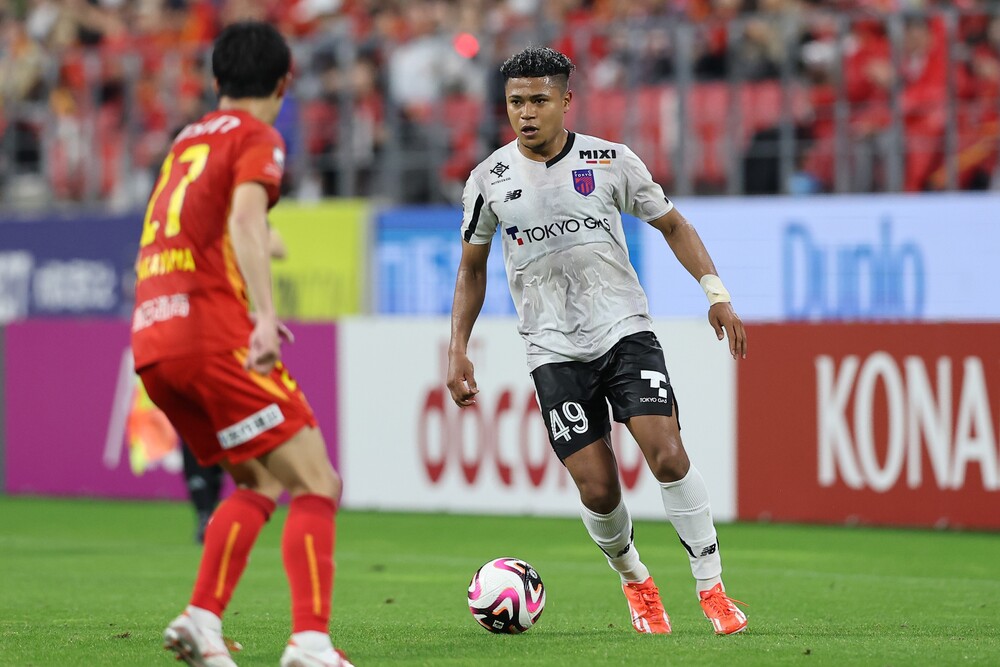
Q: please review the game.
A, we couldn’t bring the first half into a good flow and conceded a goal in a bad way. I think the whole team was running well, but the connections didn’t go smoothly. We were playing good soccer towards the end of the second half, so if we had been able to do that earlier, I believe we could have controlled the game in the first half like we did against Kashiwa Reysol. The next match is coming up soon, so we will switch our focus quickly.
Q, there were many scenes where we were able to break through with a good combination in the side attack.
A, there were several scenes where we were able to break through with combinations. However, in the first half, especially, Kota TAWARATSUMIDA was marked by two players and I was marked by one, so when Kota TAWARATSUMIDA received the ball, if I had supported him a little better and created more one-on-one situations, I think it would have led to more attacks. That is an issue for us going forward. Since there were also scenes that went well, we want to continue that kind of coordination and work on correcting the challenges.
Q, in the first half, the opponent had particularly prepared for attacks from the left side.
A, I think things have been going too smoothly until now. When we were pushing forward aggressively, it became one of the team's strong points, so the challenge now is how to adjust on the pitch when the opponent counters that. When things don’t go well like in the first half, we need to communicate more on the pitch. Not just between me and player Tawara Tsukida, but we want to talk with more players to make better use of the left side and improve our ability to adapt.
Q, there will be consecutive games. How will you improve the quality?
A, since there are many players with unique qualities, the variety of attacking patterns depending on the players on the field is a characteristic unique to this team. We need to maintain that aspect while also aiming for results. Although we had chances in the second half, we couldn't finish them off. If we can become a team that can convert those chances, we will be able to win, so I want to focus on that final part. Since we have consecutive games, we will reset, continue what we did well, correct the issues, and approach the next match on the weekend.