

<Match Review>
It was a big match with pride and determination. The stadium, which was attended by a record-breaking 56,705 spectators in the club's history, created an amazing atmosphere. FC Tokyo, who were on a two-game losing streak, had Yuto Nagatomo, Yasuki Kimoto, Yuhei Tokumoto, and Keigo Higashi in the starting lineup. Up front, they had Teruhito Nakagawa, Ryoma Watanabe, and Diego Oliveira, as they aimed for a victory against Kawasaki Frontale at the home Japan National Stadium, their arch-rivals, after 10 games.
1st HALF - Leading with 1 goal and 1 assist from Tokumoto
As the loud cheers of both teams' fans and supporters filled the air before the start of the match, Kawasaki kicked off to begin the first half. Unlike the previous two matches where they suffered consecutive defeats, Tokyo showed a composed start to the game. Instead of pressuring Kawasaki's build-up play from the front, they adopted a defensive approach of observing the situation to some extent. There were a couple of moments in the early stages where left fullback Torisawa was left free to receive a diagonal pass, creating a dangerous situation. However, they managed to withstand that scene and gradually gained control of the game. And in the 12th minute of the first half, a superb goal erupted throughout the stadium.
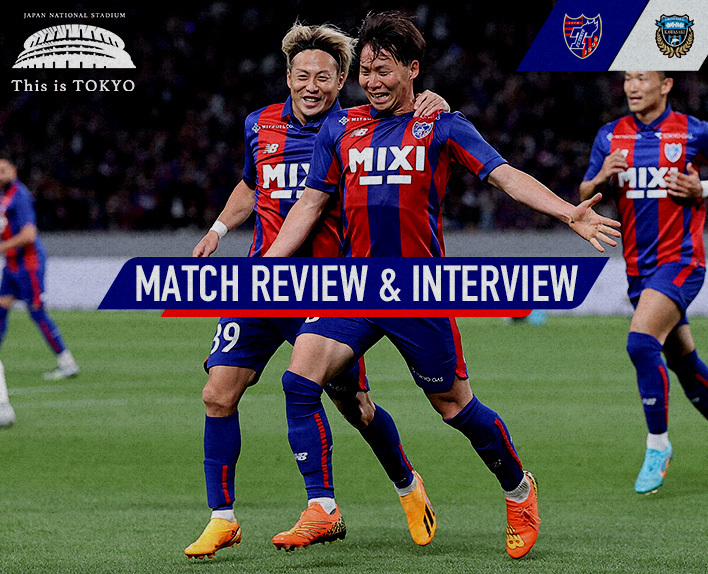
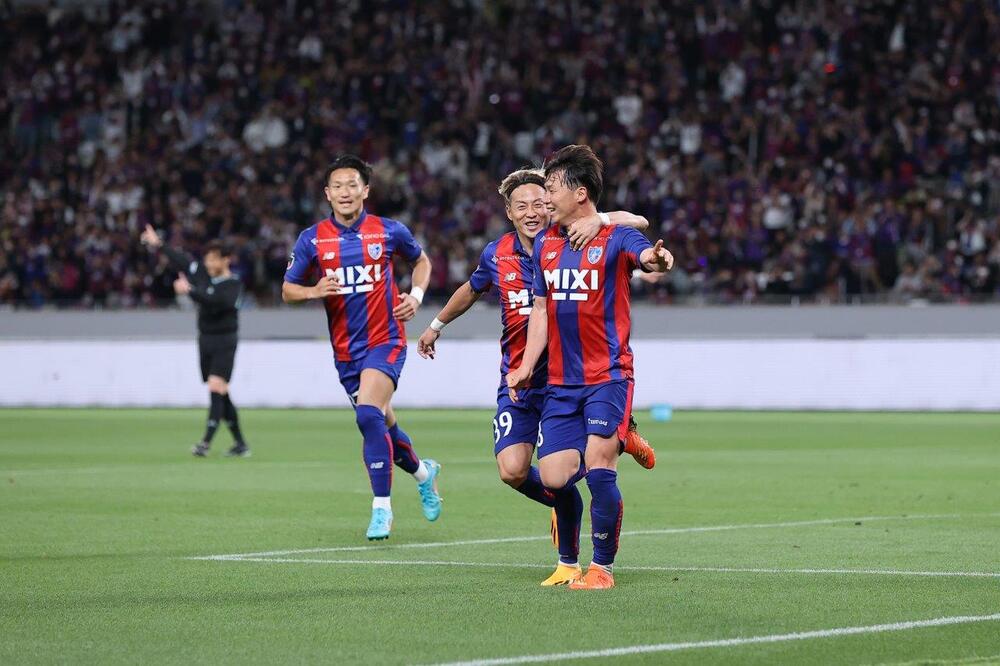
In the middle of the game, East player with the ball expands to the right side. Nagatomo's cross does not meet the player in the center and flows to the far side, but Tokumoto player picks it up and dodges the opponent with a deep cutback, flashing his right foot, which is his non-dominant foot. The powerful shot pierces through the side net.
Furthermore, in the 25th minute of the first half, they scored an eagerly awaited additional goal from a brilliant flow. Diego passed to Tokumoto, who had stolen and kept the ball in front of the area while running up the left side. Shuto ABE jumped and pushed the ball into the goal from Tokumoto's ground cross.
The game continued at a complete Tokyo pace, and they quickly and fiercely took the ball from the opponent's defense in the midfield, maintaining control and not giving the opponent a chance. However, once Kawasaki started to regain their rhythm, they began creating scenes that ended with shots.
In the 37th minute of the first half, Yakub Slowik, the player, managed to fend off a decisive pinch with a super save, but in the 39th minute, just two minutes later, Miyashiro, the player, finally broke through and scored. However, Tokyo, who managed to regroup in the remaining time, ended the first half with a one-point lead. They spent a promising 45 minutes and headed to the locker room.
2ndHALF—Maintaining the lead, victory in the Tama River Clasico
In the second half, an early play that influenced the flow of the game occurred. From a set-piece sequence, Nakagawa picked up the ball, and Wakisaka tackled him from behind. With VAR support, the foul was judged as a red card, giving Tokyo a numerical advantage. Then, in the 9th minute of the second half, they created a big chance. Connecting and breaking down on the right side, Kei KOIZUMI’s cutback was shot at by Watanabe, but unfortunately, the bar denied the shot.
However, even after being reduced to one player less, Kawasaki pushed forward without losing their attacking power. They brought players like Kobayashi and Oshima onto the pitch, increasing the number of players in the front line. With space beginning to open up in the midfield, each player used their high skill to approach the goal. In the 33rd minute of the second half, Tono broke free from a single feed and took a shot after a perfect chest trap, but here Slowik once again made a fine save. They somehow escaped the danger.
As the remaining time decreased, Tokyo also showed a pragmatic response. They successively brought on Koki TSUKAGAWA and Kashif BANGNAGANDE, who were facing their former club, maintaining the balance and intensity of the side defense. Then, they skillfully managed the time and entered 6 minutes of additional time.
Captain Masato MORISHIGE's body-clearing and other efforts, he defended until the end without losing concentration. As the cheers and applause from fans and supporters filled the air, the clock reached the 53rd minute of the second half and the final whistle blew. The whistle announcing Kawasaki's first victory in 5 seasons sounded, and the stadium was filled with joy, especially in the home goal section.
Tokyo, who stopped their losing streak in the best way possible, shared the joy of victory with the fans and supporters who believed in their win and rushed to the stadium, resonating the "City That Never Sleeps" for the first time at the renovated Japan National Stadium. They extended their winning streak in official matches at the Japan National Stadium to "4", and blue and red smiles burst everywhere.
MATCH DETAILS
<FC TOKYO>
STARTING Ⅺ
GK Jakub SWOBODNIK
DF Yuto NAGATOMO/Yasuki KIMOTO/Masato MORISHIGE/Shuhei TOKUMOTO
MF Keigo KOIZUMI/Keigo AZUMA/Shuto ABE
FW Ryoma WATANABE (28th minute second half: Koki TSUKAGAWA)/Diego OLIVEIRA (15th minute second half: Adailton)/Teruhito NAKAGAWA (43rd minute second half: Kashif BANGNAGANDE)
SUBS
GK Taishi Brandon NOZAWA
DF Henrique TREVISAN
FW PEROTTI/Kota TAWARATSUMIDA
GOAL
First half 12 minutes: Shuhei TOKUMOTO/First half 25 minutes: Shuto ABE
<Kawasaki Frontale>
STARTING Ⅺ
GK Naoto KAMIFUKUMOTO
DF Miki YAMANE/Takuma OMINAMI (90+7 min: Kazuya YAMAMURA)/Shintaro KURUMAYA/Kyohei NOBORIZATO
MF Joan Simic (82 min: Arata YAMADA)/Itsuki SEKO (59 min: Ryota OSHIMA)/Yasuto WAKIZAKA
FW Akihiro IENAGA (75 min: Kento KITSUTA)/MARCINHO (59 min: Daiya TONO)/Taisei MIYASHIRO (75 min: Yu KOBAYASHI)
SUBS
GK Sung Ryong JUNG
GOAL
First half 39 minutes: Taisei MIYASHIRO
[Coach Albert PUIG ORTONEDA Press Conference Comments]
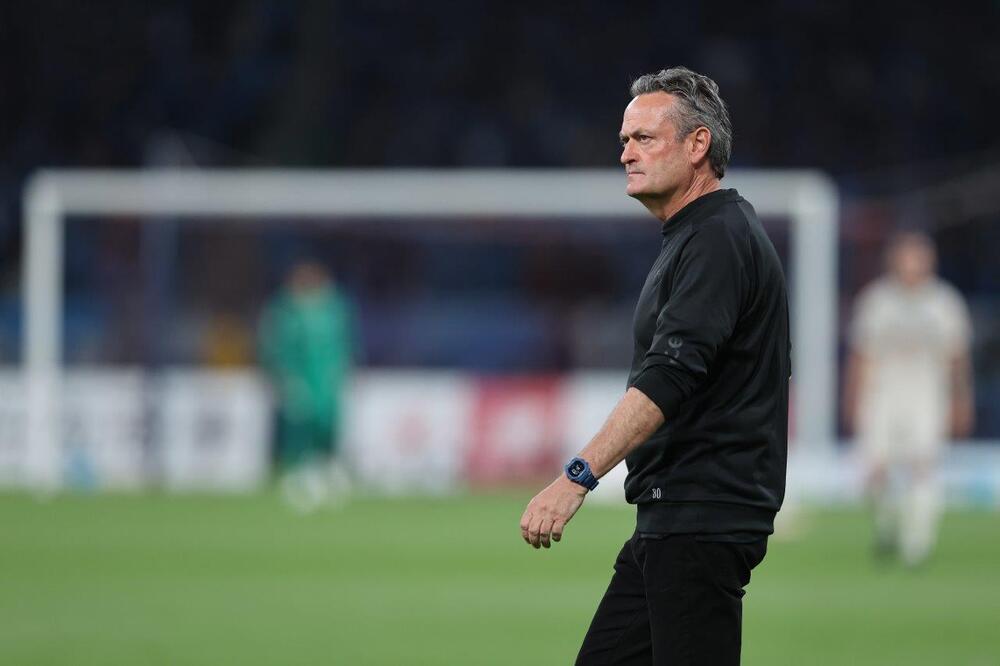
Q: please review the game.
A, for us, the Japan National Stadium is like a place under a spell. We had a great rival in front of us. I think this wonderful atmosphere pushed us forward to fight against them. I think we dominated the game in the first 30 minutes. It was a 4-3-3 vs 4-3-3 matchup. We were able to defend well against Kawasaki's dangerous attacks, which are attacking from the sides with numbers or utilizing the quick counter-attacks with Marcinho. Our press was working well, and when we had the ball, we had a strong awareness of attacking towards the opponent's goal and were able to play offensively. We didn't make many mistakes in the first half. However, Kawasaki scored from a few mistakes. I think it proved that Kawasaki has great goal scorers.
I thought we had a good start in the second half. We also had chances to hit the post. We had a player sent off, which was a plus for us, but it wasn't easy to play against a team with one less player. After Kawasaki had one player sent off, they divided into two groups, the defense and the forward line, and they first broke our press in the forward line and distributed the ball to the forward line. I think they also created decisive chances. To neutralize their effective play, we lowered our defensive block a little and adopted a waiting approach in defense. After that, we were able to make good adjustments and their chances did not lead to decisive chances like long shots.
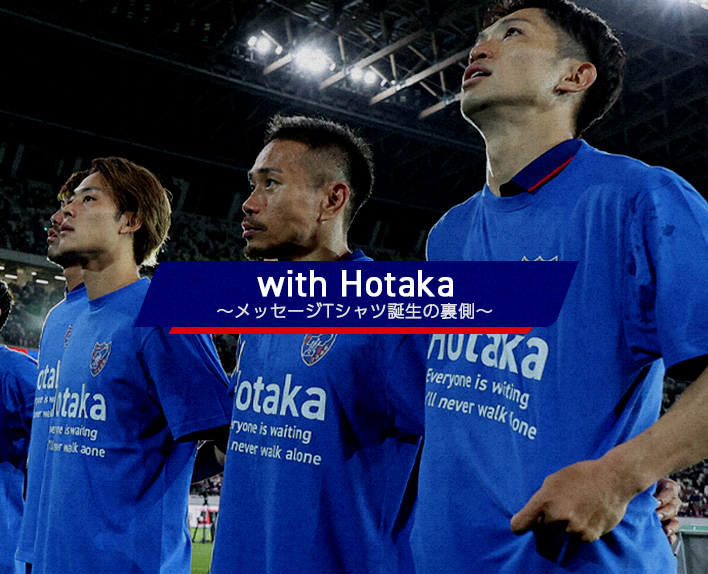
For the past four years, we have suffered seven consecutive losses to Kawasaki. In the midst of that trend, it was very difficult to achieve a victory against them, and I think it was a very valuable thing. I would like to dedicate this victory to Hotaka NAKAMURA. I did not mention their names, but I also want to dedicate it to the other two players.
Q: What role was assigned to Ryoma WATANABE?
A, against an opponent like Kawasaki who clearly plays a 4-3-3 formation with both wingers and a center forward, it is important to gain an advantage in the central area. Therefore, his initial position was left wing, but during attacks, he was expected to drift inside from there and create a numerical advantage of 4 against 3 in the center. Against an opponent who organizes their midfield in an inverted triangle 4-3-3, the space beside the lone defensive midfielder becomes an effective area for attacking. We assigned the task of exploiting that space to Ryoma WATANABE and Shuto ABE.
Q: What was the reason for returning to the familiar form of last season, including system and pass direction?
A, I believe soccer is a sport influenced by memories of recent match results and match content. For example, please recall last season’s opening match, the away game against Kawasaki. I think the quality of the team’s play in that match and today’s match was completely different. In this season’s opening match against the Urawa Reds, we were able to secure a good victory. However, after that, many injuries piled up. When multiple injured players returned, we were able to win against Gamba Osaka, Sanfrecce Hiroshima, and Albirex Niigata. But after that, I think the second half of the Avispa Fukuoka match and the first half of the Hokkaido Consadole Sapporo match were very poor in content.
What I want to say is that Tokyo has continued to grow over the past year and a few months. There is a clear growth when comparing the beginning of last season to now. I want people to understand that. We are still in the growth phase. It is not the case that a complete generational change has taken place. It is also true that we have not yet reached the level of consistently playing well with stability. We are in the middle of the growth process. This change in style is a very significant one. Many players were also part of this club two years ago. We must not forget that we are working on the style change with those players in the lineup. That is the fact and the reality. Sooner or later, the reality of losing matches will come. Then we will rise again and sometimes achieve victory. Things went well today, but there will be days when they do not. Kawasaki can be said to be a mature team in the sense that they have continued to play with their current style for a long time. They stick to their style whether they win or lose. On the other hand, we have only been working on this style for a little over a year. That is the reality, and when we lose matches, we are criticized, and when we win, we rejoice. I think that joy, anger, sadness, and pleasure are what football is all about.
[Player Interview]
<Masato MORISHIGE>
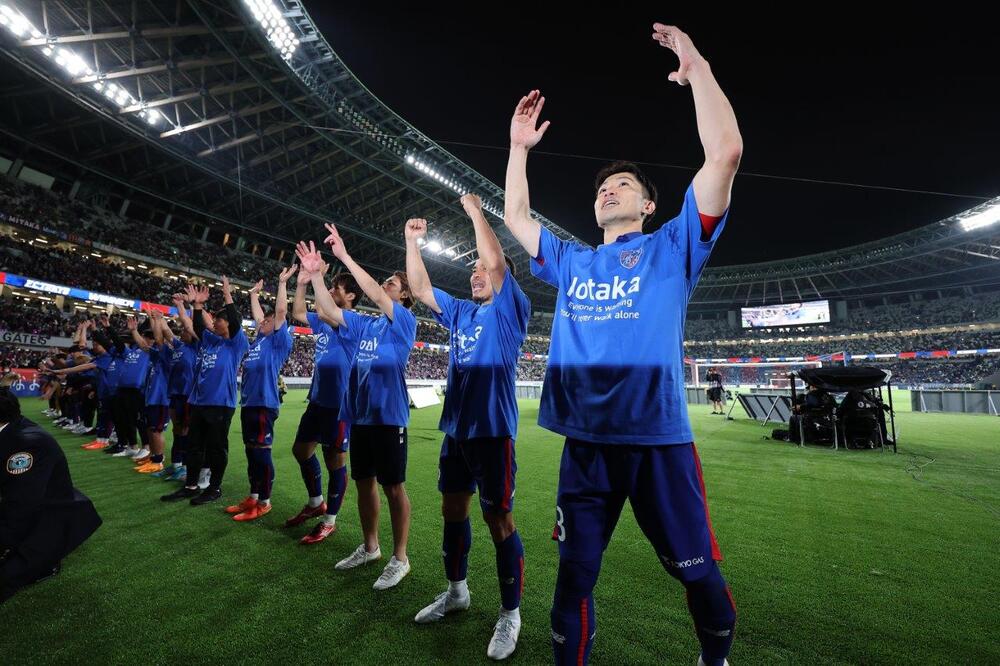
Q: please review the game.
A, I am more than anything happy to have won, and I feel a joy that cannot be put into words.
Q, there were also moments after the end of the match where it seemed like the emotions of the past overflowed.
A, we have experienced a lot of frustration up to this point. Above all, we wanted to win today's match as a team, and throughout this week, everyone struggled and was able to regain the feeling of fighting once again. This victory represents that.
Q: What do you think about the victory against Kawasaki Frontale in the league match, which is the first time since the 2018 season?
A, this victory gave us a great deal of courage. There were times when we struggled with how the team should fight, but today the players on the pitch steeled themselves in a good way, focused as they entered the match, and were able to secure 3 points. I also believe that winning at the Japan National Stadium, where many people came to watch, holds great significance.
Q: Please once again explain the importance of winning in the long-standing "Tama River Clasico".
A, I myself have fought in the Tama River Clasico as a member of Tokyo, and I have often felt frustrated. Because of that, I am truly happy to have been able to win on such a big stage like today.
Q, please tell us about the difference in the team atmosphere that player Morishige felt before and after the match.
A, before the match, we just needed to organize what the team had thoroughly prepared and discussed, and fight together as one. The players on the pitch were able to play courageously. I was able to reaffirm that the more everyone suffers, the more we can all share this much joy together.
<Jakub SLOWIK>
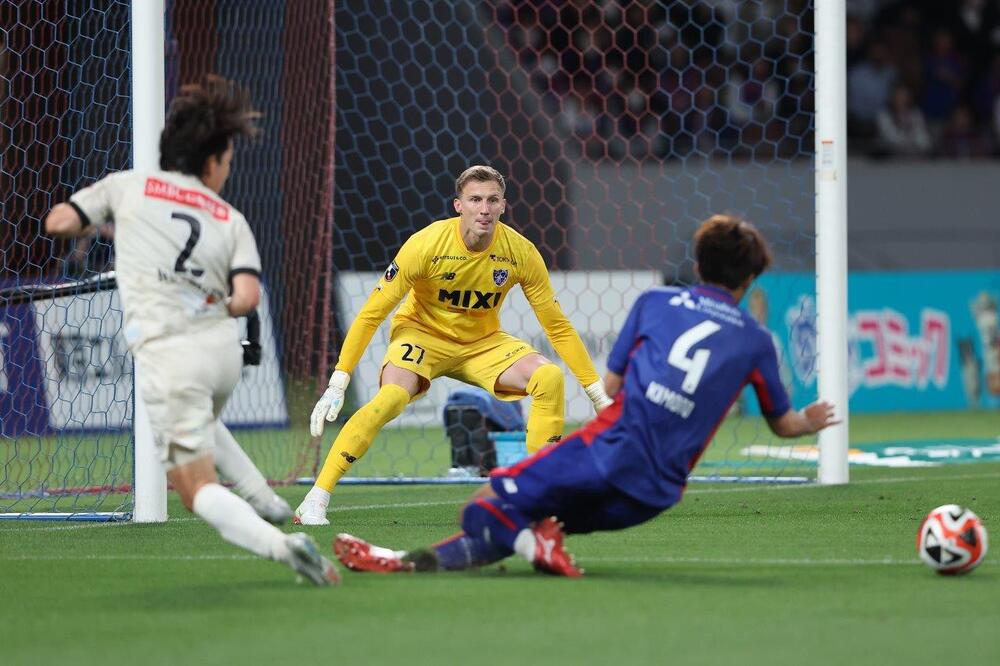
Q, congratulations on your victory.
A, I think it was a big victory. It was very important for the team to win today. Being able to win for Hotaka NAKAMURA, who suffered a serious injury, was a very important victory for this Tokyo family.
Q, you have been on a losing streak in the league, and it must have been a difficult situation, but what did you think was important?
A, although we haven't been able to win recently, I believe that being able to fight united as a team led to today's victory. I hope this win will serve as a trigger for us to become more united and to improve little by little in every match.
Q, it was a match with many fans and supporters in attendance.
A, not only I but all the players really enjoyed the atmosphere of this stadium. We are very proud of the atmosphere created by the fans and supporters who built this stadium.
<Shuhei TOKUMOTO>
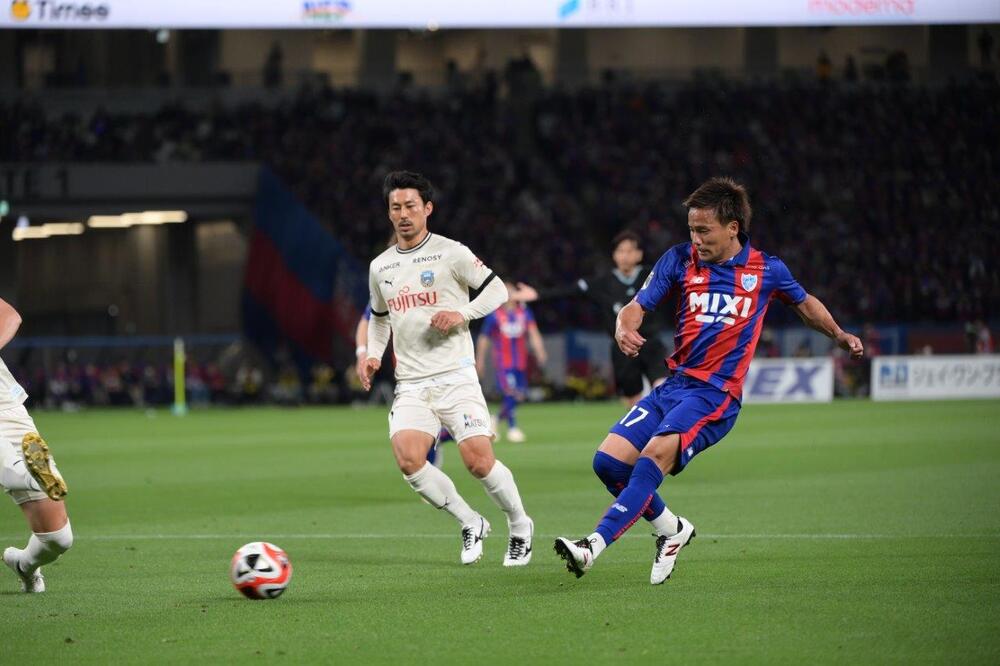
Q, how do you look back on the goal scene?
A, since it was my non-dominant foot, I think focusing on the impact and swinging through without putting too much power into it led to the goal.
Q, were you aiming to cut back and shoot with your right foot?
A, at the moment I cut back, I thought there was no cross, and since it was at the Japan National Stadium, I swung through with the determination to take a bold shot.
Q, I think it was the team's first shot.
A, I thought it was necessary to keep taking shots, so I'm glad we were able to create a good flow.
Q, how did you feel when you scored the goal?
A, I didn't know how to express my joy, but since all the fans and supporters stood up and celebrated, I was really happy.
Q: What are your thoughts on scoring your first goal in J1 on such a big stage?
A, it is very moving. Last season, I was on the side watching the matches at the National Stadium, but since yesterday, I felt a bit light-headed, or rather, I had a feeling that I could do something. I think I was able to give courage and hope to players in J3 and J2.
Q, how many times have games been held at the Japan National Stadium?
A, it was my first experience. It was since the opening ceremony of the National High School Soccer Championship. I had always wanted to stand on this stage and play someday. Playing here is something that high school soccer players aspire to, so becoming a professional and being able to play a home game here made me very happy, and it was a great day.
Q: During the hero interview, you waved your hand to your grandmother. Is there any reason for that?
A: I was very close to my grandfather and grandmother, so if I ever had the chance to do a hero interview, I wanted to do it with a feeling of gratitude. During the camp in January, my grandfather, who guided me onto the path of soccer, passed away. My grandmother and he raised me like a parent, so with a feeling of thanks, I looked up to the sky and said, "I scored a goal," and to my grandmother cheering from the other side of the TV, I was able to say, "I did it!"
Q, have you not had any communication with your grandmother yet?
A, not yet. I came here immediately, so I plan to contact her after this.
<Shuto ABE>
Q: How do you feel about the victory in the Tama River Clasico?
A, I am truly happy to have won at this wonderful Japan National Stadium.
Q: What were you conscious of from the previous match against Hokkaido Consadole Sapporo?
A: In this week's player meeting, we talked about first expressing the fundamental part of soccer, which is "fighting," so I focused on that and think we were able to play good defense from the start of the match.
Q, I thought the defense was working well together, what are your thoughts on the progress?
A, whether we applied high pressure or held our defensive stance, we were able to win the ball back. I believe we played with the mindset that it was not a problem even if the opponent maintained possession.
Q, please review the goal scene.
A, the short counterattack is also one of Tokyo's strengths. I think Shuhei TOKUMOTO was watching well. I was able to run into a good position, so in the end, I just had to touch the ball. I think it was a good goal.
Q, it was a play as if playing in the top position.
A, I played as an inside half, but since you can't score without showing up in front of the goal, I made runs into the box, and I'm glad a good ball came my way.
Q: After the match, Hotaka NAKAMURA was wearing the number 2 shirt.
A, we talked about definitely winning and everyone wearing Hotaka's shirt. I think Hotaka is also frustrated, so carrying that feeling, I'm glad we were able to earn 3 points with a good performance.
Q, how did it feel to have your name called at the Japan National Stadium?
A, it was a great honor to score a goal and have my name called by over 50,000 fans and supporters. I want to continue performing well so that even more people get to know my name.
<Teruhito NAKAGAWA>
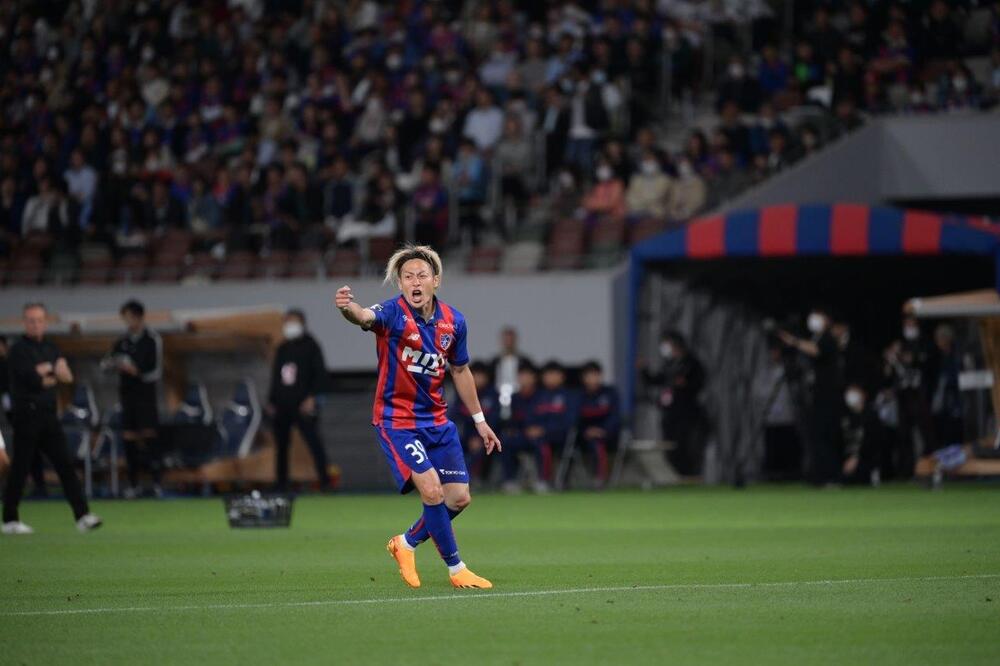
Q: Please tell us your thoughts on the first Tamagawa Clasico, even though you have played against Kawasaki multiple times at your previous club.
A, I felt a different atmosphere and intensity between the Kanagawa Derby when I belonged to Yokohama F.Marinos and the Tamagawa Clasico in Tokyo. We had lost two consecutive matches in that context, so we tried to return to basics and regain the grit and intensity that we have valued. I believe that strong determination to see it through led to our victory.
Q: Was the desire to win the Tama River Clasico shared within the team after two consecutive losses?
A, yes. Even though we were on a losing streak, we saw this as a good opponent and a good environment to stop the losing streak, which would be an opportunity to regain our confidence. Everyone was fired up, and I think we were able to surpass them in the basics and in the finer details.
Q, I got the impression that you were dribbling more than usual.
A: We didn't have many opportunities to hold the ball and create chances, but we were conscious of vertical momentum when we had possession and of extending the time we kept the ball. We knew Kawasaki is a team that dominates possession, so we thought it was important to create as much time as possible with the ball ourselves.
Q: There were many scenes where Ryoma WATANABE and the position were swapped from the beginning. Did you discuss it beforehand?
A, We play freely. Both Watanabe and I played freely and fluidly.
Q, please tell us the points where you think the defense went well.
A, compared to the past few matches, we tried to use long balls in the first 15 minutes to avoid the opponent's high press. From there, when we regained possession, we worked on connecting passes. Of course, ideally, we want to connect passes and break down the defense from the start, but there was also a part where we accepted a more pragmatic approach. Kawasaki's players have high technical skills and the ability to create chances with the quality of their passes, so I think this is an area we need to work on and improve.