

Last Match - Nagoya Review
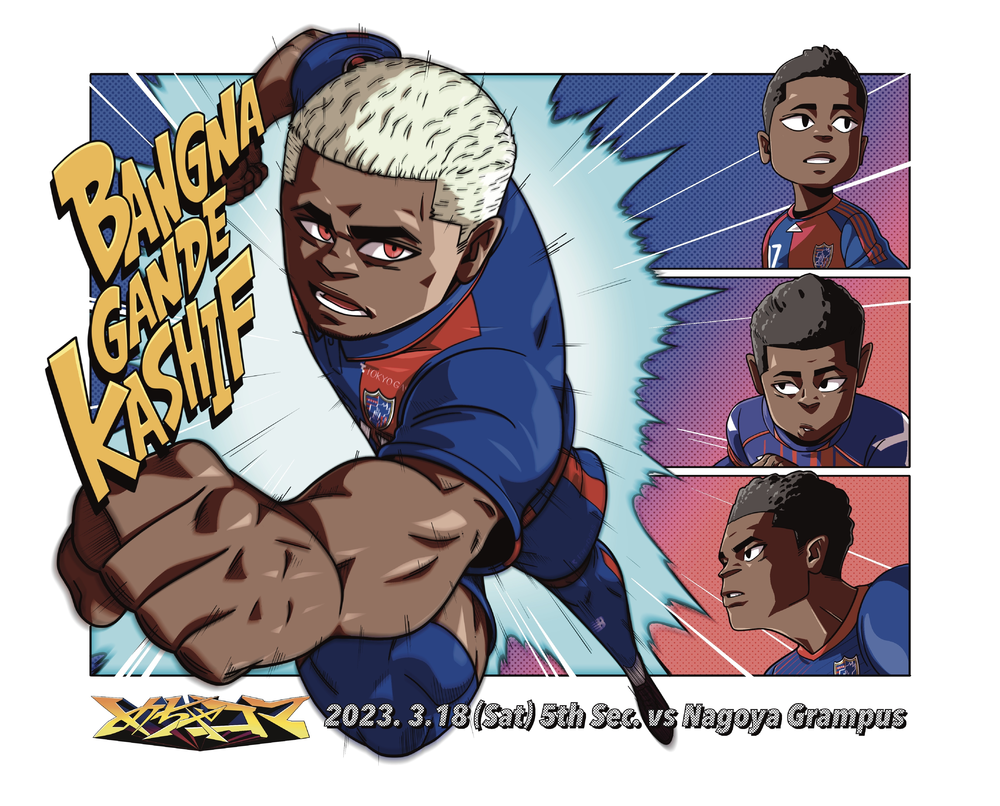
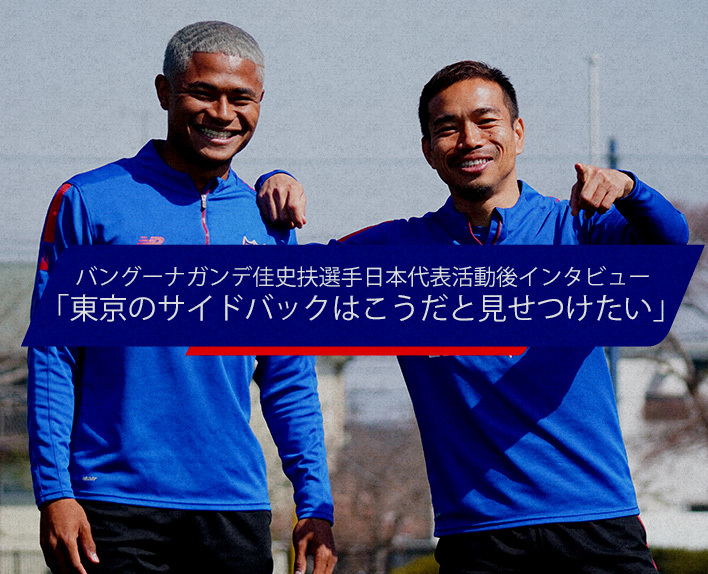
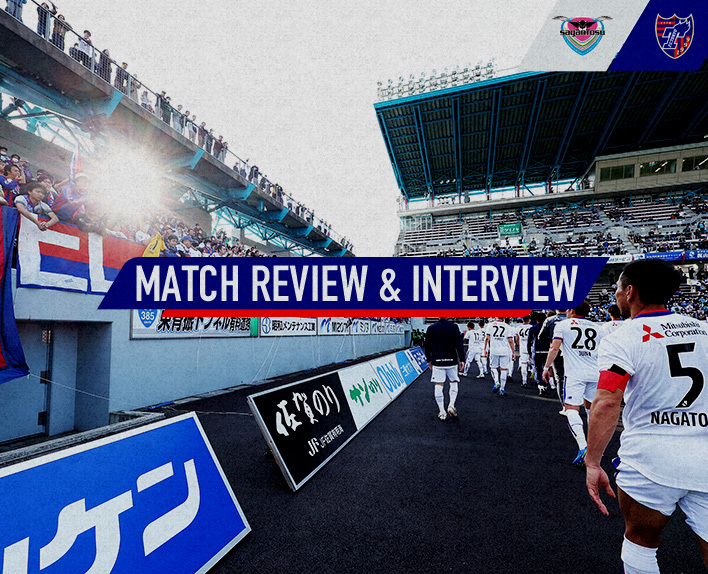
A match between Nagoya Grampus, led by Kenta HASEGAWA who brought the title to Tokyo, and the team that he coaches. Although the score did not change, it was a "tactical game" (Coach Albert) where both teams were cautious of each other's strengths. In this game, Kashif BANGNAGANDE, who was just selected for the Japan national team, showed his skills.
Tokyo also adopted a 3-back formation in the mirror game (where both teams have the same player configuration, resembling a mirror image) in order to be cautious of the opponent's strong counter attacks. At first glance, it may have seemed like a stalemate with few scenes in front of the goal. However, in each situation, both teams were fiercely trying to exploit even the slightest gap in their opponent's positioning and use their own attacking strengths to the fullest, resulting in a clash of sharp tactical thinking.
Tokyo collects the ball to Kashif BANGNAGANDE on the left side and searches for a way to attack the goal from the side, while Nagoya quickly counterattacks with their strong front three, exploiting the space behind Tokyo's aggressive play.
Tokyo was able to reach the cross ball, but they were unable to break through Nagoya's defensive net in front of the goal. On the other hand, they showed a defensive strategy of slowing down the counterattack with Jakub SLOWIK's fine saves and quick pressing back by the wing backs, lowering the accuracy of the counterattack opportunities.
This season, for rising star Yoshifu who has climbed up to the Japan national team, there were still challenges in terms of results, but it was an impressive match where he showed exceptional talent in the attack and defense on the left side, leaving an impression as a new star on the "blue and red" side.
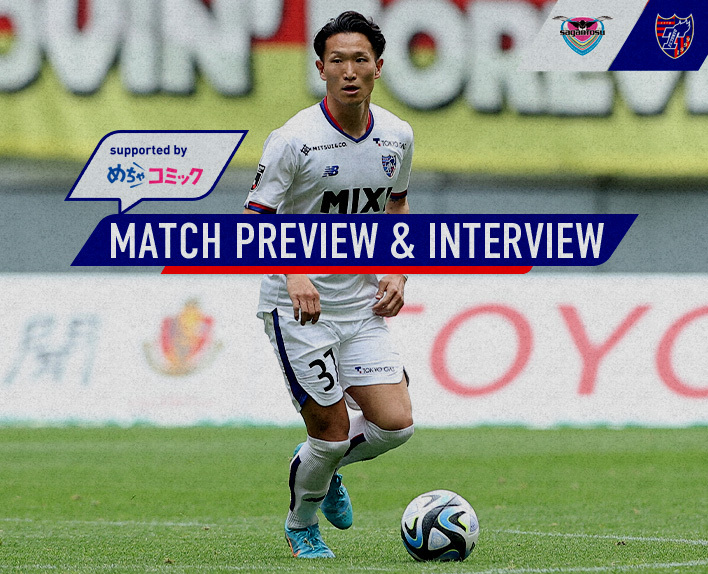
<Preview>
There is no need to mention recent match records here, as it is clear that Sagan Tosu, regardless of being the home or away team, is a formidable opponent for Tokyo.
As Kei Koizumi, who joined from Tosu this season, has repeatedly mentioned, the styles of Tokyo and Tosu are very similar. They both focus on possession of the ball, making decisive passes in tight spaces, and scoring goals. Their style of play prioritizes attacking with the ball rather than defending.
This season, the team has struggled with a record of 1 win, 1 draw, and 3 losses, placing them at 15th. However, in his second season as head coach, Kenta KAWAI's tactics and organization seem to have matured.
If it is a similar style of match, the difference will be in the maturity of organization and tactics, or the difference in individual tactics.
In the former, coach Albert Puig Ortoneda is working on deepening tactics in his second season, aiming for the maturity of the organization that can create various attacking patterns and set up games. The situation is similar for Sagan Tosu, where coach Kawai is also in his second season, and the key will be who will take control of the ball and the game. Depending on the situation, the game result may also be affected by the strategy of "letting the opponent have the ball".
In the latter, Tokyo should have an advantage in terms of talent. They have a well-balanced team with veterans, mid-level players, and young players, as well as foreign players with strong individuality. However, considering the away game last season where they were overwhelmed in terms of ball possession and lost momentum, the strength of the players will also be a determining factor in addition to their individual abilities and tactics.
There, the key player is Koizumi, who has outstanding strength in the intensity of the ball. Koizumi, who believes in playing based on victory, considers winning in the intensity of the ball to be absolute. Can he surpass the opponent in the intensity of the midfield and tactically take advantage of his knowledge of his former team's fighting style? We can expect a great performance from Koizumi.
[Albert PUIG ORTONEDA Interview] 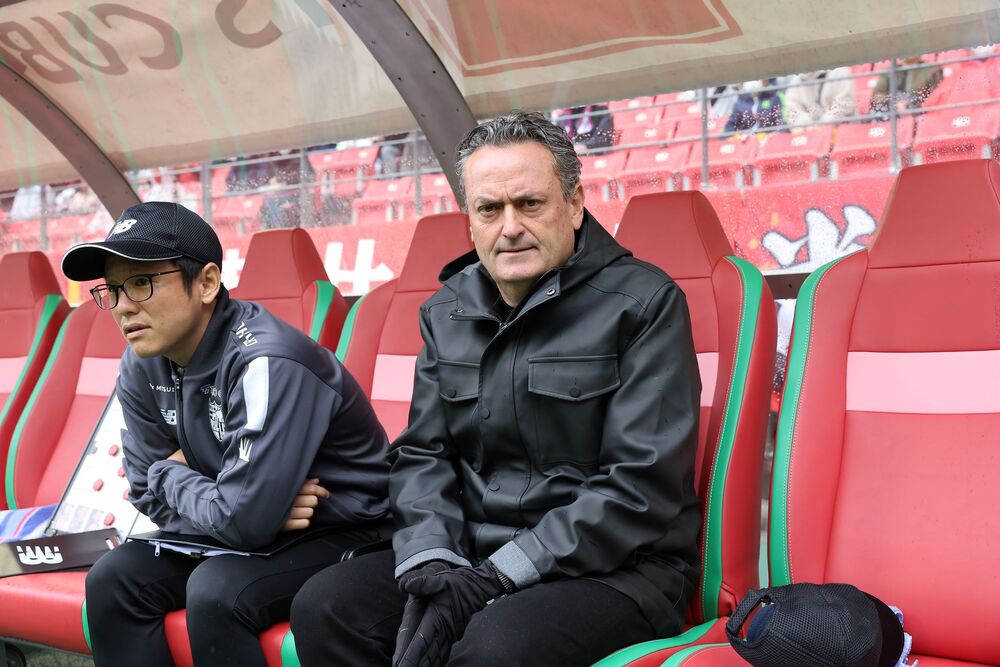
Q, Kashif BANGNAGANDE made his first cap for the Japan national team, did you see it?
A, I think he played well. He was calm, and especially in attack, I think he was able to take good positions and play effectively. For his first match with the Japan national team, I believe his performance was fully commendable.
Q, after 5 league matches, we have 2 wins, 2 draws, and 1 loss.
A, I believe we were able to start this season with a clear step forward. However, we did not anticipate multiple players being sidelined. With Matsuki’s call-up to the U-20 Japan national team and injuries piling up, the entire team struggled. Because of this, we were unable to maintain continuity within the team. The season is long, and situations like this can happen to any team. We are currently in a difficult situation, so we must overcome it firmly. Amid this challenging team situation, we want to accumulate as many points as possible and maintain a top position. The season has just begun, and I don’t think our current standing is bad at all. However, with players in the same position absent at the same time, we must overcome this together as a team.
Q, we were unable to win against Tosu last season and it was a tough match away.
A, last season, we struggled in matches against Tosu and Shonan. However, by the end of the season, we finished in a higher position than them. We faced them during a period when they were playing well, and they outperformed us with good soccer. Last season, we were dominated in midfield by our opponents. It’s not that we played well against Tosu either. Tosu is a dangerous team that plays well when you give up possession of the ball. In tomorrow’s match, we want to stay fully focused, control the game, and fight to win.
Q, Tosu is currently on a 7-game losing streak in the league.
A, I think that is an interesting figure. However, that number can also be seen as proof that Tosu, despite not necessarily having a large operational scale, consistently delivers excellent performances. For that reason, I believe they are one of the clubs worthy of respect. That said, what is important in the world of soccer is the ranking at the end of the season in a long league competition.
Q, I think Matsuki's presence was significant when watching the Levain Cup.
A, I don't think there is any need to comment now on how much I value him. At the same time, I believe everyone understands that he is an excellent player.
Q: There is a possibility that player Matsuki may be absent in May due to national team activities.
A, player Kumada will probably be called up as well. Having our players called up to the Japan national team can be seen as one of our successes.
Q, won't there be an impact on the movement of support in the attacking third if player Matsuki is absent?
A, Players Matsuki and Abe have abundant stamina and can sprint repeatedly to apply pressure. At the same time, their play with the ball has improved since last season. When these two are absent, we must approach the match by effectively utilizing players with different strengths. Naturally, there is a clear style regardless of the players' characteristics. However, for each individual match, we need to consider the players' traits when approaching the game. When Matsuki and Abe are present, their abundant stamina allows them to press and also make forward runs in attack. If those two are not available, it becomes my job as the coach to find alternative breakthroughs and solutions.
[Player Interview]
<KeiKOIZUMIPlayer> 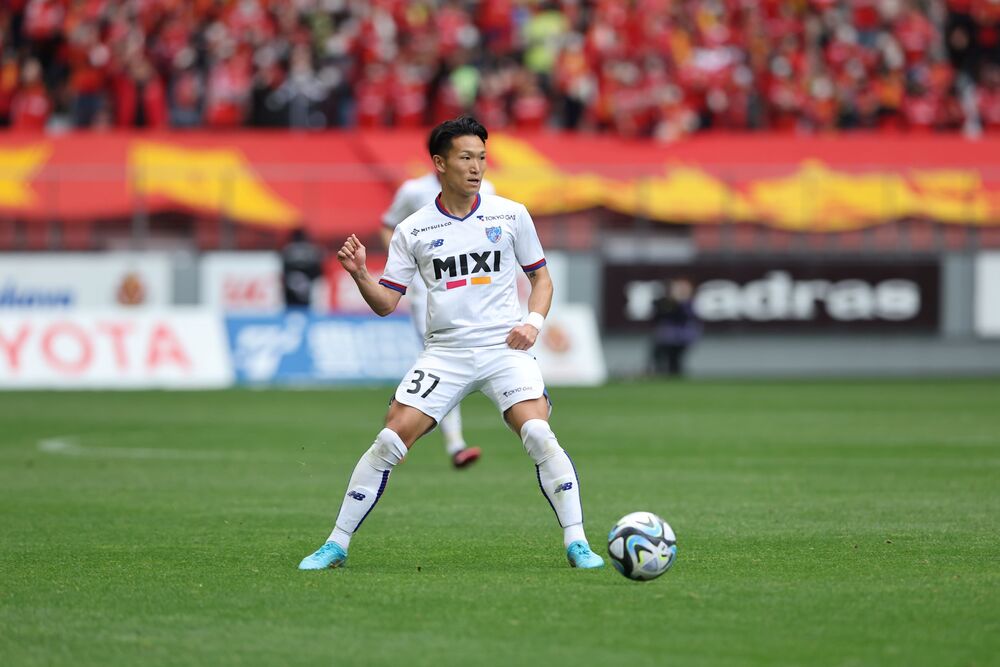
Q: How do you feel about the match against your former team, Sagan Tosu?
A, I am definitely looking forward to it. I spent one and a half seasons at Tosu, and I am truly grateful. I hope to play with a strong sense of gratitude. No matter who the opponent is, I am now a member of Tokyo, so I want to do what I can for Tokyo.
Q: Do you have any emotional attachment to playing against Tosu?
A: Since they are all players I used to play with, I’m looking forward to the match. I can predict what kind of soccer they will play. I also know each player’s strengths and weaknesses. While I’m excited, I absolutely don’t want to lose, and right now, my only focus is winning the championship with Tokyo.
Q, what is the most important thing you want to focus on to move up in the rankings?
A: During the season, there are injuries and various other things that happen. Whether it’s better to keep connecting passes or to play simply also changes depending on the opponent, and there will definitely be good times and bad times. However, as long as we don’t lose in terms of the intensity of play, which is the base for Tokyo, I don’t think we will collapse drastically. First, we need to fight firmly on that base level and be able to add what we practice in training. If we can be confident like we were in the Levain Cup match against Kyoto and continue to challenge ourselves in ball possession, I am certain we will improve.
Q, how was your time in Tosu for one and a half seasons?
A: It may have been a short period of just one and a half seasons, but I believe it was a club where I was able to grow significantly as a soccer player. As a player, I was able to learn ways of thinking that I had never had before through training and matches. It was a team that was very particular about build-up play, so there were many challenges for me as well, and when I first joined, I was a bit confused about how much they connected the ball. Moving from Kashima to Tosu, it was a team with a different style, so at first, I was unsettled and couldn’t fully demonstrate my abilities. Over the course of a year working with Tosu’s coach Kenta KAWAI from the training camp, I learned a lot about build-up, positioning, and more about the attacking side than defense. I was able to rediscover the joy of soccer once again, and many people, both younger and older players at Tosu, treated me very well. I feel a deep sense of gratitude despite the short period of one and a half seasons, and I hope to be able to express that through my play.
Q: How do you want to demonstrate what you have learned in the game at Tosu?
A, I am now a member of Tokyo, so once I step onto the pitch, I believe that doesn’t matter. The stadium in Tosu is a place I have a deep attachment to, and by playing boldly there, I hope to clearly express that I am giving my all here now. It is difficult to show gratitude through my play, but I think it’s important to compete with respect. Of course, since I have transferred, I don’t know how I am perceived. From the perspective of Tosu’s fans and supporters, some may think well of me despite only being there for one and a half seasons before transferring, while others may not feel the same. Including all of that, I have nothing but respect for Tosu, and I want to carry that feeling and do my best.
Q: How was it when Shuhei TOKUMOTO, Junya SUZUKI, and Kei KOIZUMI, who are the same age, played together in the Levain Cup?
A: During camp and before the Levain Cup match, we talked about the possibility of the three of us playing together someday. I was happy that, in the end, the three of us were able to stand on the pitch together. The presence of the other two is definitely significant, and they have been a great help both on and off the pitch. They are so mature that it’s hard to believe they are the same age as me. Tokyo has many young players, and I think the three of us are considered the middle tier. When we went out to eat, we talked about how the middle tier needs to speak up more. I hope to be conscious of that and raise my voice more.
Q: Do you think it is a good balance for each character to have their own unique personality?
A: I think the two of them are very reliable. I’m not sure about Tokumoto, but I think his mental age is so high that he doesn’t even look like he’s the same age.
Q: There is also an image of young players emerging, and the veterans and middle-tier players are also energetic. I think it will be even more exciting. What do you think?
A: This applies to the three of us as well as Ryoma WATANABE, Shuto ABE, and Hotaka NAKAMURA. By showing effort during practice and delivering results in matches, I believe it motivates both the senior and junior players to push themselves even harder. I feel that we, the middle-tier generation, need to work hard and lead the way.
Q: How do you feel about the presence and attitude towards training of Suzuki player?
A: In a world where only 18 players can be included in the squad, no matter how hard you work, not everyone is given a chance, which is a complicated situation. But that is also the reality. Even if Suzuki doesn’t get many opportunities to play in matches, by hearing his voice during practice and seeing him give his all in every single challenge for the ball, I think it makes the players who are on the pitch feel that they have to work even harder. When I play in matches, I feel I have to carry the feelings of those players who can’t get on the field. Of course, there have been times when I wasn’t even on the bench, but regardless of whether I play or not, I have learned the importance of persevering without getting too elated or discouraged. The players who do play definitely have to fight bearing the hopes of those people, so I want to do my best to fulfill that responsibility.
Q: Is it your mission to show your culmination in Tokyo?
A, I have truly gained a wide range of experiences. This is my tenth year, so being able to play for various teams has been a significant experience. I came here believing that if I were to win a title, it would have to be with Tokyo. I hope to make use of my past experiences within the team and feel that I must demonstrate them. Ultimately, no matter how good the soccer is, I believe we have to win, so I want to play with a strong focus on victory.
Q, I think Tokyo is also going through a process of change. Please tell us your enthusiasm for this season.
A, I joined this season, and I think Tokyo itself is also in a period of challenge. I want to work hard together with everyone, and I believe everyone's goal is to win the title. This season, I want to challenge together toward that goal. As long as I am playing in matches, I have to keep producing results to continue playing, and in that sense, I must focus not only on the result of victory but also on visible numbers. Above all, the most important thing is to play for Tokyo to win.
<Koki TSUKAGAWA> 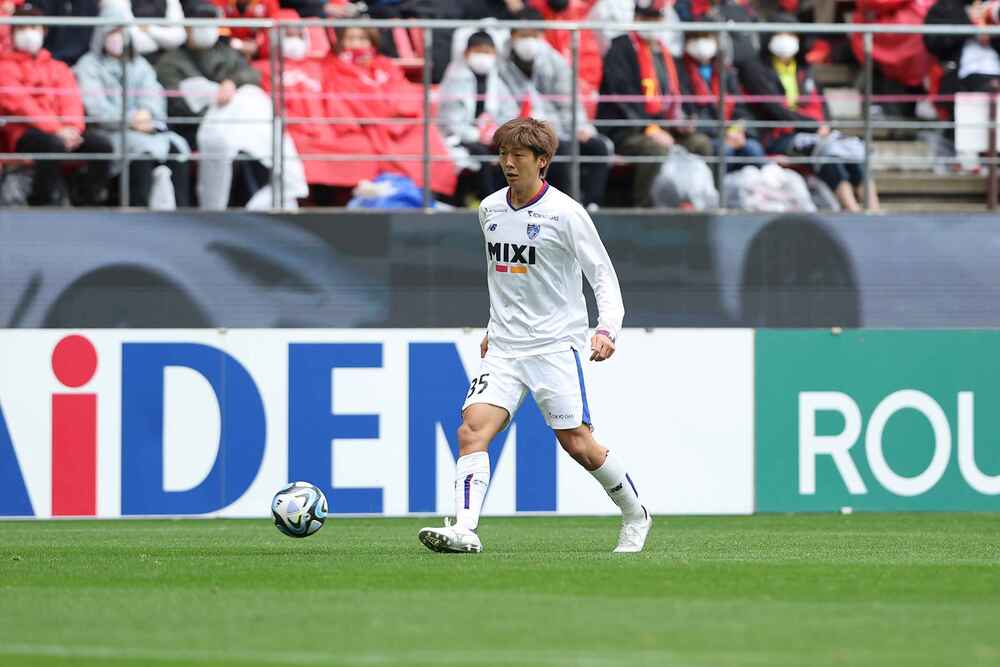
Q, What kind of play do you want to focus on in this tough situation where the number of injured players is increasing?
A, as I have always said, I focus on contributing to the team's victory by being involved in scoring plays.
Q: What preparations did you make for the Tosu match?
A, as the coach also says, I think it would be good if we can bring out our strengths. Last season ended with a frustrating result, so we have prepared to overcome that and want to express it through our play. I also think this is one of Tosu's strengths, but first, we want to prioritize not losing in one-on-one duels. Also, how to break down the defense in front of the goal to connect it to scoring will be important. After winning the ball, we want to coordinate as a team whether to carefully maintain possession or launch a quick counterattack.
Q, do you want to showcase your strengths in the attacking third?
A, As you said, I think what you can do once you enter the attacking third becomes important. I hope to better demonstrate in matches the final ideas and the ability to change decisions based on the opponent. I want to make sure to connect this to results in the Tosu match.
Q, I think it is important to stand firm here, even with the emergence of injured players.
A, I believe a strong team is one that can cover for injured or absent players. We want to demonstrate this through our results. Although there are players missing, I think everyone sees this as an opportunity, and I hope that by delivering solid results, we can create a positive cycle within the team.
Q, Do you need to leave an impact?
A, I think it is important to consistently showcase my strengths. The match against Tosu is also very important. I want to firmly seek results in each and every game.
Q: I think there were also appearances in positions that are not your main role. How do you feel about not being able to fully demonstrate your abilities compared to last season?
A, there are parts where I tend to overthink. I believe that is due to my lack of skill level. To grow on a larger scale, I need to work harder on my challenges starting from practice. Even within myself, if asked whether I was in great form during the Kyoto match, I would say no. I think the only way to resolve this is by achieving results in matches.
Q, are you struggling with physicality and fitting into the team?
A, rather than saying I’m struggling, I’m taking on new challenges with the team. Last season, everyone focused on connecting passes, and we were able to do that, but this season, we have various options such as connecting passes or launching quick attacks. It’s necessary for the entire team to coordinate on what decisions are best in each situation. I want to play while considering my positioning so that I can connect things smoothly. However, sometimes I overthink this and end up playing too small, which prevents me from showing my strengths. If I can play while balancing this well, I believe I can grow more and the team will improve as well.
Q, Tokyo has been unable to beat Tosu.
A: I want to win here to change the momentum and play in a way that completely dispels our psychological disadvantage.