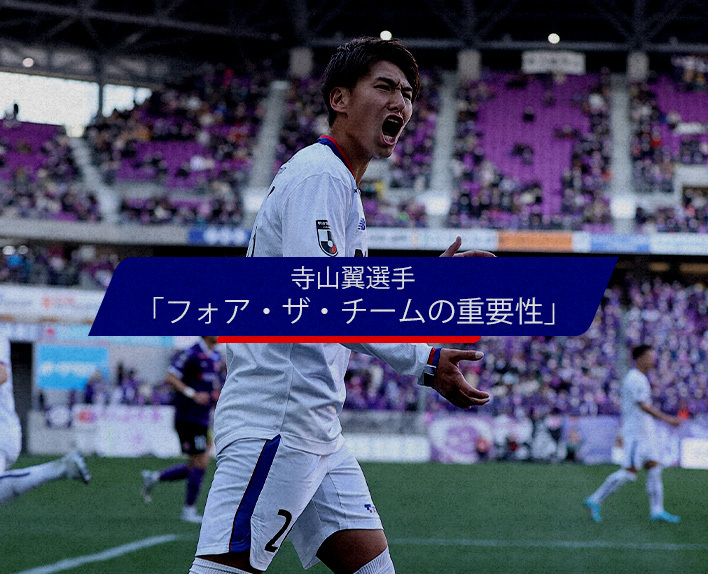


Q: How did Tsubasa TERAYAMA join FC Tokyo U-15 Musashi after being in the Niiza Katayama FC youth team?
A: I was a member of the Niiza Katayama FC youth team, and when we won the All Japan U-12 Soccer Championship and I became the top scorer, I was approached by Tokyo. That was the trigger.
Q, what was the reason for changing your position from forward to midfielder?
A: At the beginning of my third year in junior high school, there was a situation where Rei HIRAKAWA was absent from the team due to his activities with the age-group national team. Additionally, a player who usually played as a defensive midfielder got injured, and there was a period when the team was short of players. Coach Masahito Kyomasu at the time asked me if I wanted to try playing as a defensive midfielder, and from there I started playing in matches in that position and made the switch. Since I had hardly played in matches as a forward, when the opportunity to play as a defensive midfielder came up, I saw it as a new challenge. When I joined FC Tokyo U-15 Musashi, I was amazed by Rei HIRAKAWA’s skill. Whether during practice or while sitting on the bench, I consciously watched his play. I never felt any negative feelings about playing as a defensive midfielder.
Q: What was the reason you started playing soccer, even though you had a dream of becoming a carpenter when you were a child?
A, I used to watch a TV program that closely followed carpenters. I saw families who were having their houses built very happy, and I thought it was cool how they were particular about building their homes, which made me want to become a carpenter. The reason I started playing soccer was because my older brother played soccer, and I used to go along with my parents to watch his matches. Influenced by that, I thought it was cool and started playing soccer.
Q: Did you have a strong determination when you were a child, and is it still the same now?
A, being highly competitive is my most distinctive personality trait. It’s not that I was consciously putting in effort, but I think I naturally put my energy into my feelings and things.
Q, I started aiming to become a professional soccer player when I was in the fourth grade of elementary school.
A: When I was in the fourth grade of elementary school, I liked soccer, of course, but I also wanted to play basketball. However, the Niiza Katayama FC youth team I belonged to made it to the Semifinal Round of the national tournament, and I had the opportunity to go watch. When I saw that match and witnessed the seniors at the time fighting on the field, I was instantly moved and felt that I wanted to stand on that stage too. I thought it must feel great to play in front of many people and win matches, so from then on, I devoted myself seriously to soccer and began aiming to become a professional soccer player.
Q, there was a mention of directing oneself towards Victor in order to become a professional, but please explain specifically.
A: There were players around me who tended to blame others when things didn’t go well. I always thought it was important to direct the vector toward myself first, and then consider how to deal with those around me. In the end, I had the impression that many players who rarely directed the vector toward themselves were the ones who struggled. Watching that, I felt the importance of directing the vector toward oneself.
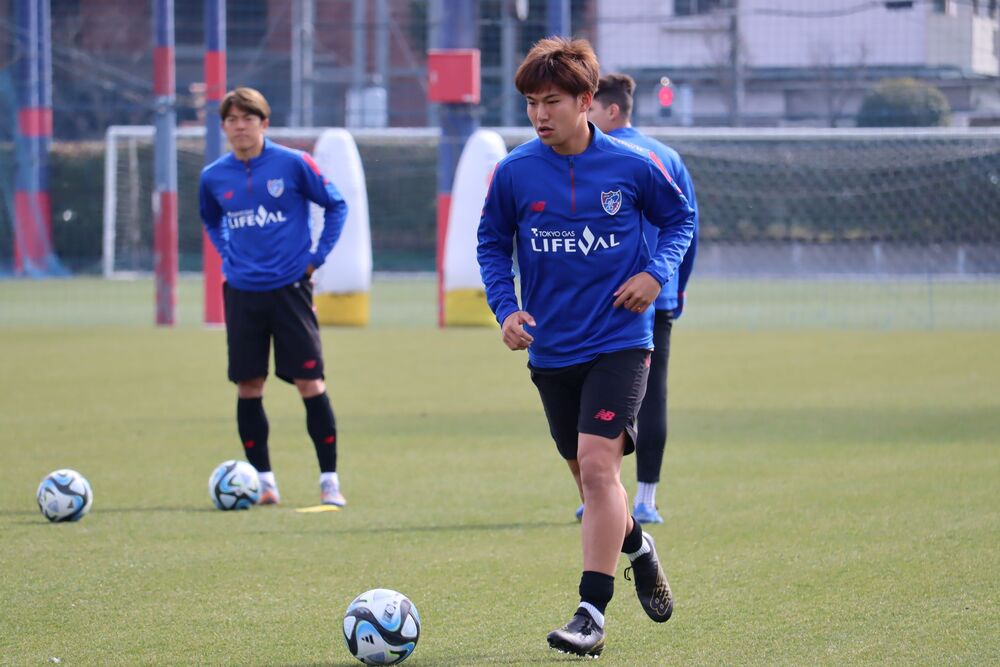
Q, when you were a member of FC Tokyo U-18, do you remember your official debut in the J3 League Sec. 20 match against YSCC Yokohama?
A, I was registered as a Type 2 player and made my debut in the match the next day. I came on as a substitute for Yohei KAJIYAMA. I was excited and vividly remember stepping onto the pitch, replacing such an amazing player who had carried Tokyo on his back. Playing on the professional pitch, I could truly feel how incredible it is firsthand.
Q: How did you feel about playing in J3 while belonging to U-18? I think you were accompanying the team while not participating in the youth matches, how did you feel?
A, what I always valued was how I could be useful to the team. I was conscious of continuing that mindset consistently, whether in J3 or in the youth team.
Q, what are the things that have given you confidence on the field and what do you think are the challenges?
A, the intensity between the youth team and the top team was significantly different. While I was able to play with composure in the youth team, there were aspects that didn’t work when I moved up to the top team. Even in terms of the accuracy of each pass, since a player only touches the ball for about two minutes in a 90-minute soccer match, how well you can play without making mistakes becomes crucial. The top team players make very few mistakes, and through conversations, I also felt differences in awareness and the quality of play.
Q: What were your goals during your three years in high school?
A: Of course, my goal was to be promoted to the top team. Around the summer of my third year in high school, I had a conversation with the Tokyo staff. At the initial stage, the promotion to the top team was put on hold. After the Japan Club Youth Soccer Championship ended, the promotion to the top team was postponed.
Q: What was the reason for entering Juntendo University?
A, I had the opportunity to participate in training sessions at Juntendo University and Meiji University. Meiji University has a high training intensity and is one of the leading teams in university soccer, having won many titles. At first, I was thinking of going to Meiji University. At Juntendo University, I got the impression that there were more technically skilled players rather than just strong players. I had a strong desire to improve my soccer skills, and after actually participating in training and realizing there were many skilled players, I decided to choose Juntendo University as my path.
Q, U-18, and university, I think you served as a captain. What do you feel is the reason you were entrusted with the captaincy?
A: I believe I was valued for the part I hold most important, which is playing for the team. Even during matches, I made a point to communicate frequently with my teammates, and this was something I consciously worked on even before being entrusted with the captaincy.
Q: Do you have a mentor who has been influential in your growth? Are there any turning points that have been catalysts for your development?
A: It is the people involved with me so far. I have truly met excellent managers, coaches, and staff who have guided me. They are all mentors, but Coach Makoto KITA, who coached me when I was in the first year of junior high school, really cared about me and talked to me. He taught me various things even when things weren’t going well. I am very grateful. I also learned a lot from Takumi Horiike, who was the manager at Juntendo University. Those four years at university were when I felt I grew the most, so I am truly thankful.
Q: How was the period of injury?
A: It was an injury just before the university league started. Rather than feeling anxious, I felt a strong sense of frustration. I switched my mindset to accept that what had happened couldn’t be helped, and I focused on rehabilitation to get back on the pitch as soon as possible.
Q: I think it's also a preparation period for professionals, what were you conscious of in college?
A: When I became a university student and had more time, I truly felt that it was all up to me. What I focused on was, of course, giving 100% in practice, but also thinking about what the coach expected while developing my own strengths, and making up for any shortcomings through extra training on my own. In the professional world, players coming from university are often said to be ready to contribute immediately. I also worked hard in practice with the hope of becoming an immediate asset. I felt that the real starting line was after turning pro, and while there are players promoted from the youth ranks, as a player coming through university, I had to work hard to be an immediate contributor. Those four years at university were spent striving to return to Tokyo.
Q: I think you were also selected for the All Japan University Selection and the Japan National Team by age group. Please tell us about your thoughts on representing the national team now.
A: Watching the Qatar World Cup, it was the first time I felt such frustration even through the screen. I also want to stand on the World Cup pitch myself. Kashif BANGNAGANDE was selected for this Japan national team, and having a younger player than me join the national team is very motivating. I believe that if the team achieves results, the Japan national team is not a distant world, and if I always play seeking results, I will naturally get closer to the national team. I want to focus on continuing to work hard and achieving results.
Q: Do you think that players of the same generation are also in the Japanese national team? First of all, do you want to achieve results with the team? And are there any rival players?
A: The players who joined the professional ranks this season after graduating from university are my rivals. I have the desire to be the first among them to join the national team.
Q: What do you think is expected in Tokyo? Albert Pobor highly values the mental aspect, but how do you feel?
A: Rather than just myself, there are expectations for the entire team and for each position. I want to internalize the overall approach and consistently demonstrate it in my play. The aspects I believe are being recognized include my communication during matches, my aggressive challenges for the ball, and my attitude of repeatedly taking on challenges.
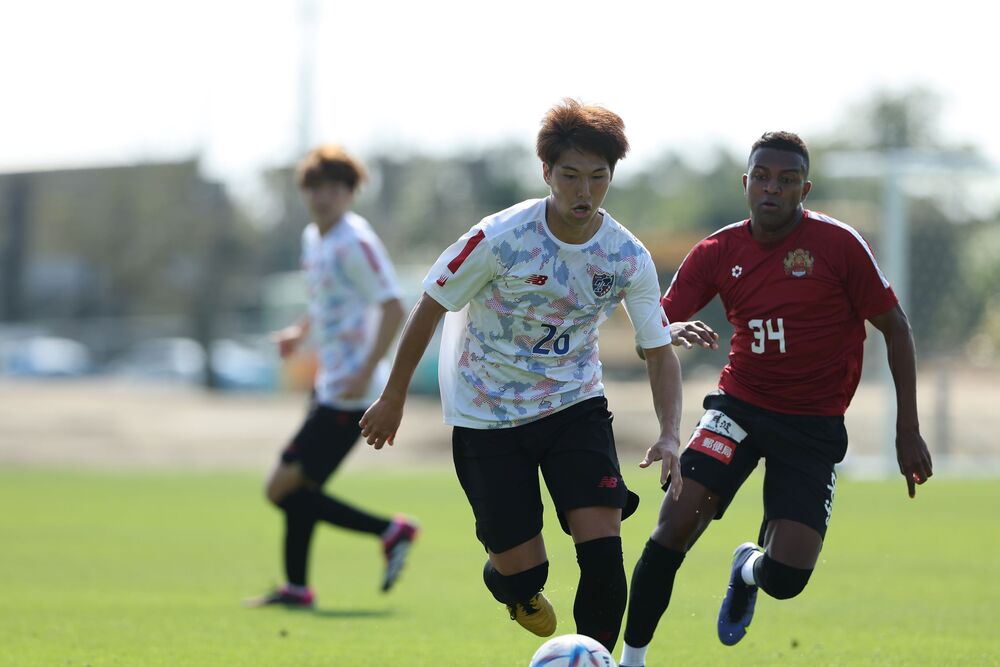
Q: "If you were to have a brother among your teammates, who would it be?" and "Who is your close friend on the team?" In response to these questions, Hotaka NAKAMURA mentioned Ryo NAKAMURA. What made you choose him?
A: The main reason is his stoic attitude. We shared a room during camp, and he was stretching in the room even before practice started. He is particular about his meals, and when talking in the room, I felt that he lives each day with a plan. I was influenced by that stoic attitude. Although he is a senior, he interacts with me like a friend, so he is easy to talk to. Of course, I am also close with my同期 Hisatoshi NISHIDO, as well as Shuto ABE and Koki TSUKAGAWA. Recently, Kei KOIZUMI took me to a café. Tokyo really has many great players, and it’s enjoyable.
Q: In Tokyo, there is a favorite chant that says "The city that never sleeps". I think it's a song that I often heard since my academy days. It was also impressive to hear it sung loudly after the last home game.
A: I think "The City That Never Sleeps" is a chant sung when Tokyo wins. Hearing it near the end of a match when we're ahead really lifts my spirits. I believe it also serves as a driving force that helps the players push just a little harder. When I heard it on the pitch, I got goosebumps.
Q: You mentioned Jose KANTE as your favorite foreign player. How do you plan to utilize his playing style?
A: I think there is no player who can win the ball, run, and maintain such a high level of quality both offensively and defensively like him. I want to become a player who can do the same, and I believe I can. I often watch highlight reels focusing on KANTE. I also watch the J.League frequently. It's not about any specific player, but I sometimes observe how players in the same position as me move and use that as a reference.
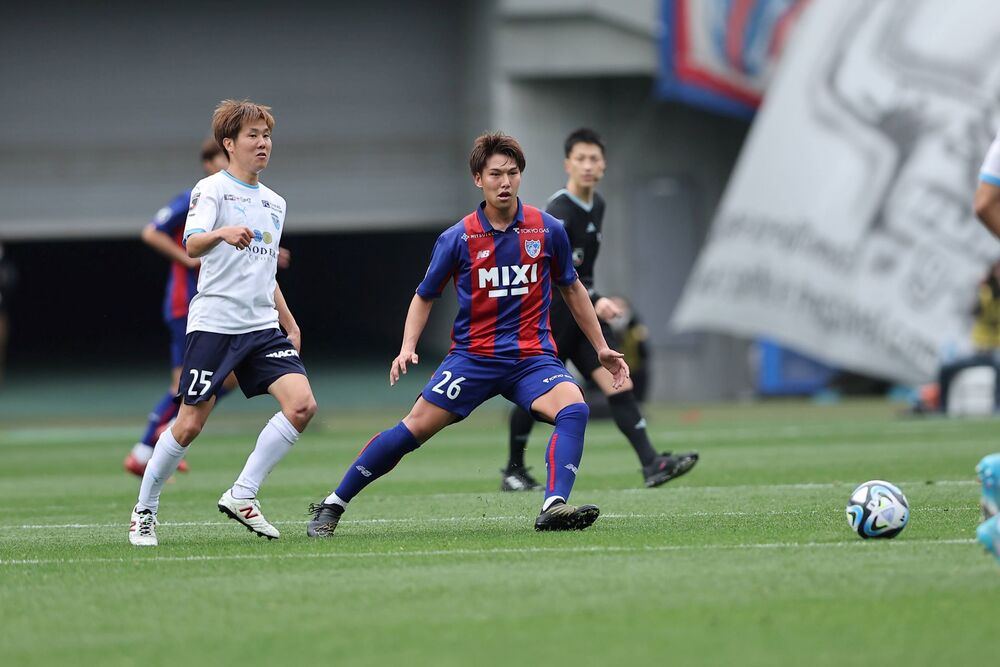
Q: What kind of year do you want the 2023 season to be? Please tell us the team's goals and individual goals.
A: As a team, our goal is to win the upcoming matches and become league champions. Personally, I aim to participate in more games, contribute to the team's victories, and deliver many wins to our fans and supporters. I also want to increase my involvement in plays that lead to goals.
Q: What is the strength of Tsubasa TERAYAMA when it comes to football?
A: I want people to see my fighting spirit in one-on-one battles for the ball.
Q: When asked what is good about being a soccer player, he answered "There are many high-level players and a lot of stimulation." What kind of stimulation do you receive?
A: Coming from university to the professional world, the intensity was the first thing I noticed. This applies to Keigo HIGASHI and all the players, but when I ask questions during practice, they are thinking one or two steps ahead, and their decision-making speed on the field is incredibly fast. That is still an area where I am lacking, and it is a great source of motivation for me.
Q: Do you have any message for children who dream of becoming professional soccer players?
A: I think the most important thing to become a professional is to first enjoy playing soccer. If you find it fun, you will practice, and you will be able to work on it thoughtfully.
Q: Finally, do you have a message for the fans and supporters?
A: This season, I want to win the title no matter what. I hope many fans will support us. I will do my best to respond to their cheers.