

Former right-hand man of Josep Guardiola (Pep), Tito Vilanova, who also managed FC Barcelona's first team after Pep's departure, listed the following two points as the principles of Barça style:
One is to "keep possession of the ball and continue attacking in the enemy's territory", and the other is to "regain possession immediately after losing the ball".
Regardless of the system—or rather, the system is secondary—the most important thing is to practice these two principles, he said during his lifetime before passing away prematurely at the young age of 45 in April 2014, eight years ago.
The idea is actually very simple. To put it bluntly, theoretically, any club in the world could become Barça just by following this. However, practicing this daily is, like drawing a perfect circle in one stroke, seemingly easy but actually much more difficult than imagined.
The Pep Barcelona of the late 2000s was able to establish an era of overwhelming possession football because it was built on a solid philosophy.
"If you must win ugly, better to lose beautifully."
"Football must always be offensive and spectacular. As long as you control the ball, you won't be attacked by the opponent."
"There is no need to run. You just have to make the ball run."
The Barça-ism advocated and instilled by Pep’s mentor, the legendary Johan Cruyff, continues to be passed down to this day.
In 1988, Cruyff returned to Barça, where he had spent his playing career, as a manager. To instill his philosophy within the team, the first thing he tackled was a "consistent education" from the cantera (youth academy) to the first team. From very young boys to the stars of the first team, Cruyff had all his players under his command play with the same philosophy of valuing possession of the ball and in the same style.
Thus, Pep, Xavi, Andres INIESTA, and Lionel Messi naturally acquired the Barca style just as a young child learns a new language by listening.
Here lies the unique advantage of Barca, something not easily imitated. Of course, there were managers like Louis van Gaal in the past who entrusted much to Dutch players, but it was Pep, who took charge of the top team for four seasons starting from the 08-09 season, who maximized that advantage and achieved great success that remains in football history.
"The reason why a cantera player (a product of the youth academy) who has just been promoted can smoothly fit into the first team is because they have been exposed to exactly the same style of football in the cantera."
Pep once said this, but since the players inherently understand how they should fight, there was no need to build tactics from scratch tailored to the characteristics of the players. To put it bluntly, even if left alone, a sophisticated automatism would naturally emerge on the pitch.
Therefore, I personally believe that Pep began to emphasize his tactical identity more strongly after leaving Barça and taking charge of Bayern Munich and the current Manchester City, where such advantages did not exist.
Of course, even during his time as Barça's manager, he was so dedicated to studying that he would spend entire days in the video room analyzing opponents, and there were quite a few “inventions” Pep created at that time, such as Messi’s deployment as a “False Nine” and converting defensive midfielder Javier Mascherano into a center-back. Still, Vilanova, mentioned earlier, testified this during his time as assistant coach.
"Pep completely anticipated the opposing teams' strategies against Barça. To prevent us from freely circulating passes, the opponents would set a high defensive line and try to win the ball by pressing from the front. However, that didn’t mean Pep prepared any special training routines or gave us specific tactics. He simply instructed us to exploit the space behind the last line, and the highly skilled players executed it perfectly."
In the modern football world, where the transfer market has become liberalized and internationalized, Pep Barcelona, which reached the pinnacle of the world centered on homegrown talents developed in-house, can be said to be an extremely exceptional existence.
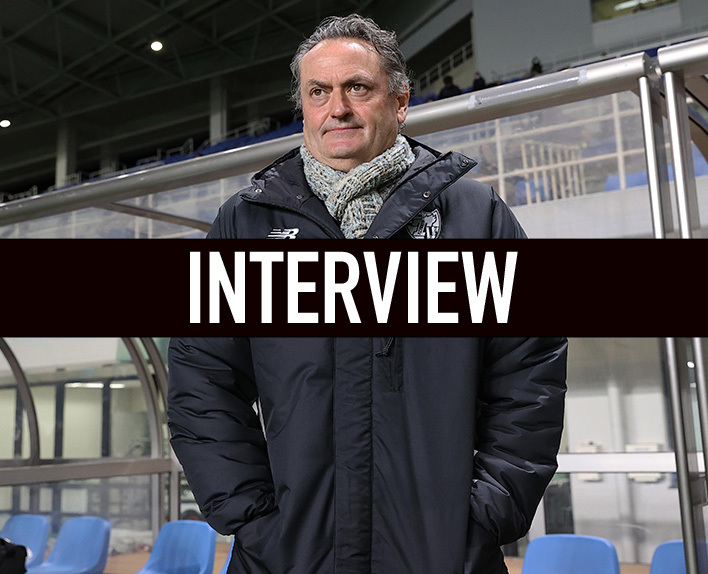
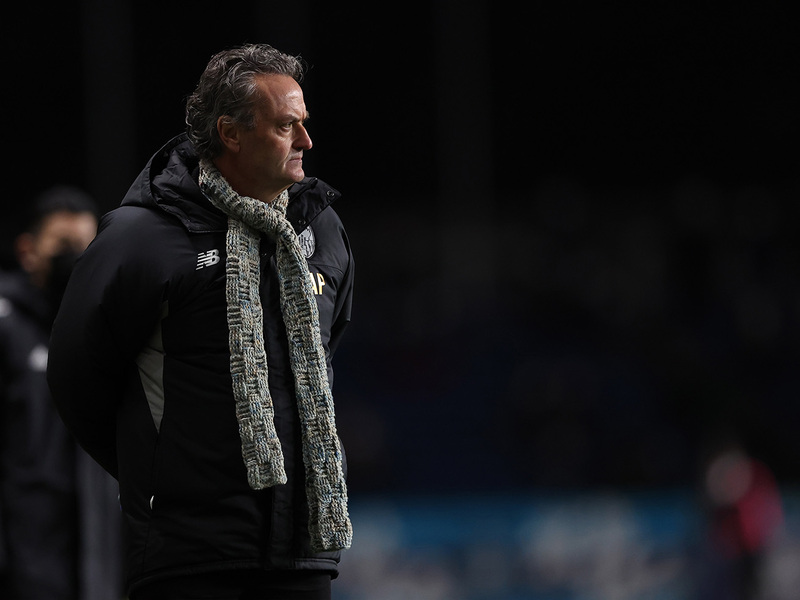
This season, the Spanish Albert PUIG ORTONEDA, who was appointed as the manager of FC Tokyo, aims to implement possession football based on positional play, idealizing that Pep Barcelona.
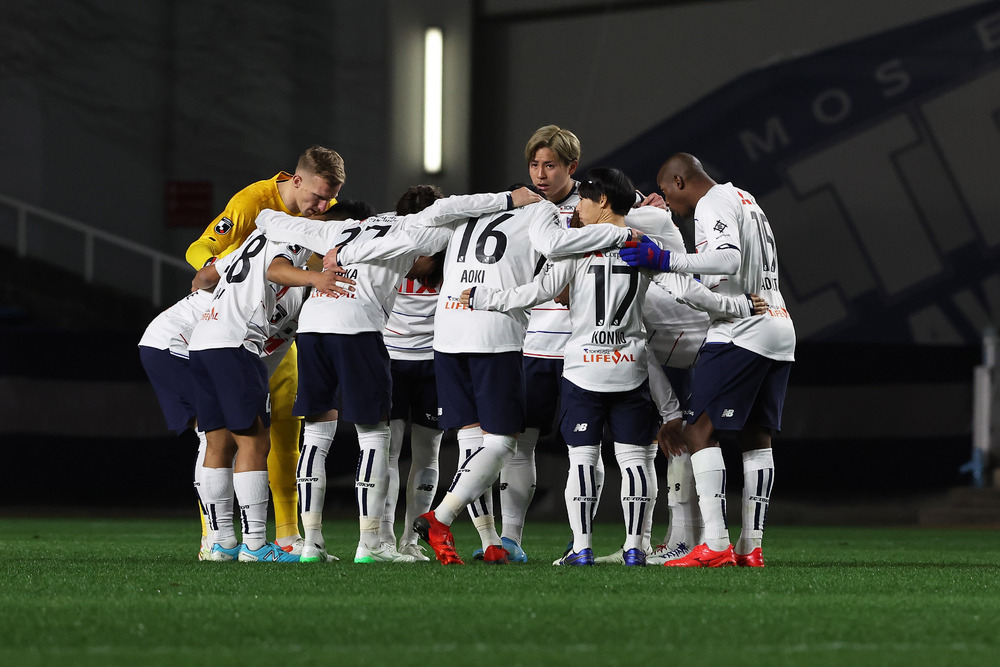
However, as a devoted follower of Cruyff and Pep, and having once served as a coach and academy director at Barcelona's cantera, he surely understands just how difficult that is. Even during his two years leading J2's Albirex Niigata until last season, while providing a spectacle with football that maintained possession, he was unable to achieve promotion to J1.
FC Tokyo currently does not have a Barcelona-like attacking philosophy ingrained, nor do they have players who have been consistently educated in a possession-based style from the academy, leading the team's core.
"We need time."
When Coach Albert PUIG ORTONEDA repeatedly says this, it is not an excuse but a sincere and honest feeling. To realize highly coordinated football that creates triangles one after another on the pitch like cells dividing, advancing toward the opponent’s goal, or the breathless high-press football where the moment the ball is lost marks the start of the attack, it inevitably takes time.
For FC Tokyo to seriously realize the style of football that Albert PUIG ORTONEDA aims for, the club, including the fans and supporters, must not rush to leap directly into that realm. Therefore, the first task for Albert PUIG ORTONEDA is to cultivate the role that Cruyff played in laying the foundational way of thinking. In other words, it is about fostering not Barcaism but “Tokyo-ism.”
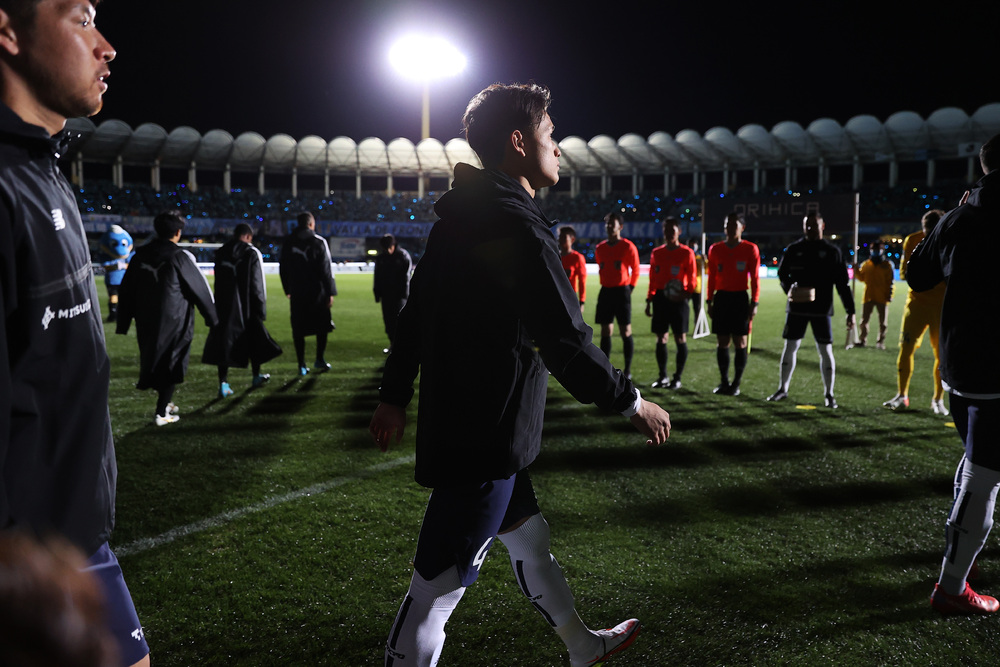
"We want to build a foundation in the first year and get off to the best possible start in the second year. However, we cannot guarantee any titles."
From Albert PUIG ORTONEDA’s comments, as well as the fact that he immediately started 18-year-old rookie Kuryu MATSUKI in the opening match against Kawasaki Frontale, we can see a medium- to long-term strengthening policy. Even so, if they want to minimize the time spent on laying the foundation, they should nurture excellent talent in the academy while also skillfully incorporating external players who fit the playing concept. In Pep’s Barcelona, outsiders like Dani Alves, Pedro Rodriguez, and David Villa were valuable assets who filled gaps that the cantera players alone could not cover.
In terms of reinforcement, Pep at the time also drew a lot of bad luck. Examples of this include Ukrainian center back Dmytro Chygrynskiy (now at AEK Athens), who was acquired for his footwork but did not fit in with the team. There was also a conflict with Zlatan Ibrahimovic (now at AC Milan) over his usage, showing that Pep's management skills were not as strong as they are now when he was still inexperienced as a coach.
That is precisely why the importance of philosophy and the excellence of the cantera players stand out even more.
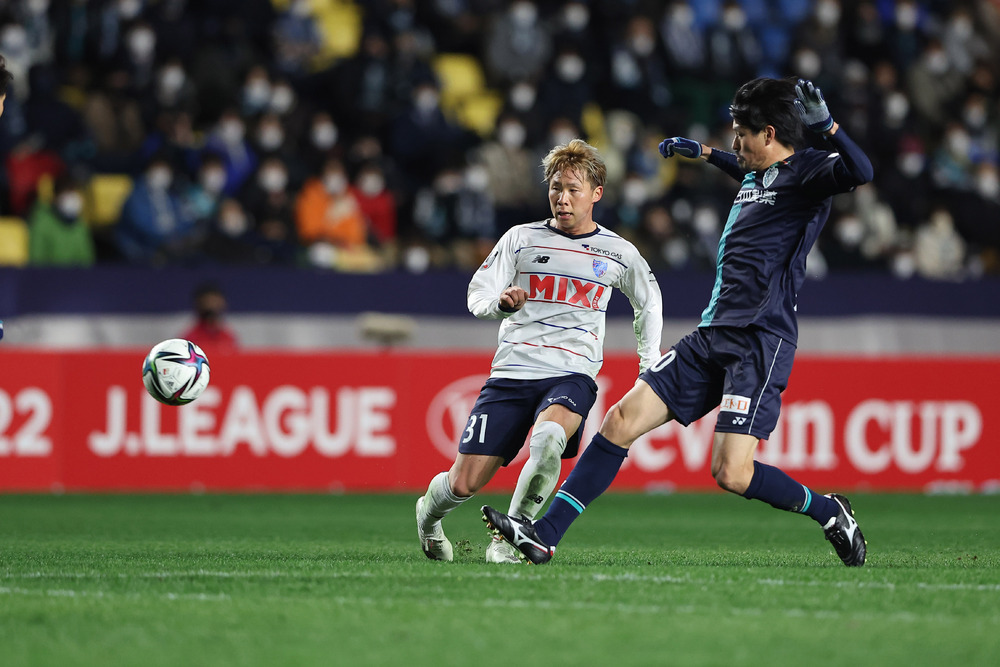
Of course, about ten years have passed since the Pep Barcelona era, and modern football now demands greater physical and athletic abilities. Both Barcelona and Pep, after leaving Barcelona, have been updating their tactics almost every year to adjust to these changes. Positional play trends that emphasize positional advantage, such as the “false full-back,” can be said to have been pioneered by Pep. However, recent Barcelona may give more of an impression of trial and error rather than smooth updates. Still, the underlying philosophy remains unshaken, and having a foundational point to return to when in doubt is a great strength.
Once, in the 01-02 season at Barça, there was a left-back named Francesco Coco. The club’s first-ever Italian player, he was raised in AC Milan’s youth system and was even called the “successor to Paolo Maldini,” but at Camp Nou, he was always the target of boos. Barça’s style is to fearlessly connect and break down from the back line. The fans (the Culés) could not forgive him for playing it safe and easily kicking the ball out of bounds.
How long will it take for such a culture to take root at FC Tokyo, and for Albert Tokyo to find the original foundation to which he can always return?
Needless to say, the reforms under Coach Albert have only just begun, and cultivating the mentality of "love the ball like a lover" in the players cannot be achieved overnight. Even so, we must wait patiently. Beyond that, surely a style that defines FC Tokyo—unwavering even after 10 years, or even half a century—will be firmly established.
Text by Osamu Yoshida