

This is a record of life.
In my teens, I tightly clenched my trembling hands in my pockets and jumped into an unknown city.
To seize the rolling future, the dream chaser has continued to challenge.
What I saw beyond the possibilities was the current me――.
The ace of the city that never sleeps keeps running.
If you don't give up, your dreams will come true.
Because the rolling ball taught me that.
Boy who admired the RO-RO combination
Diego OLIVEIRA was cornered.
While wishing to become a professional soccer player, he reached his mid-teens without even standing at the starting line, let alone joining the reserves, and found himself in a desperate situation.
Making a name for himself in street soccer, being scouted by club officials who heard the rumors, or being approached by intermediaries and joining a club through their introduction—this is the typical way to rise in the soccer kingdom.
However, Diego's case was different.
"I was playing at a local soccer school while waiting for a chance, but the offers never came, and I ended up in high school. I started to think that turning pro might be too difficult because of my age. But I absolutely did not want to give up..."
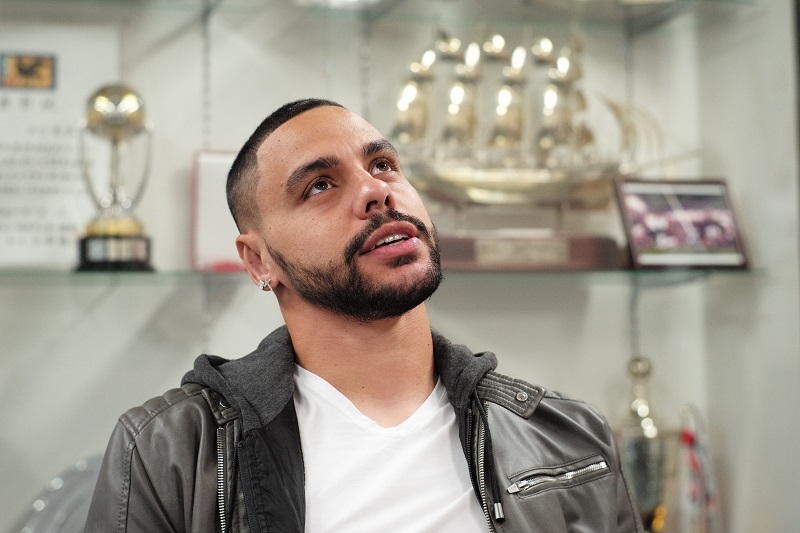
Curitiba, the largest city in southern Brazil and said to be the most livable city in the country. Diego was born in this city as the youngest of four siblings.
“I have an older brother, Vinicius, who is seven years older, an older sister, Natalia, who is three years older, and another sister, Camila. Camila and I are twins. I was born two minutes later than Camila, so I’m the younger brother and she’s the older sister.”
Diego's older brother Vinicius was a promising player belonging to the youth team of the local soccer club, Paraná Clube. In Brazil, the first birthday present a boy receives from his parents is a soccer ball—that's the kind of country it is. By the time Diego became aware, he was already chasing after his brother's footsteps while kicking a ball.
"The idols back then were the RO-RO duo: Romário and Ronaldo. Of course, I also admired my older brother Vinicius."
While playing at the local soccer school, Diego felt somewhat inferior to his teammates who were seizing their chances, yet he kept kicking the ball, relying on the light emitted by his own dream. That turning point came when he was 16 years old.
After entering high school, Diego started playing futsal and participated in a famous futsal tournament in Curitiba, where his team won the championship. Two of his teammates were invited to the Paraná Club selection, and fortunately, Diego was also able to take the test with them.
"Then, I was the only one who passed. So, from the age of 17, I started playing for the Paraná Club youth team. It was a chance I finally grabbed. I was happy. I thought, I'll become a professional with this team."
The Dream Chaser's Decision
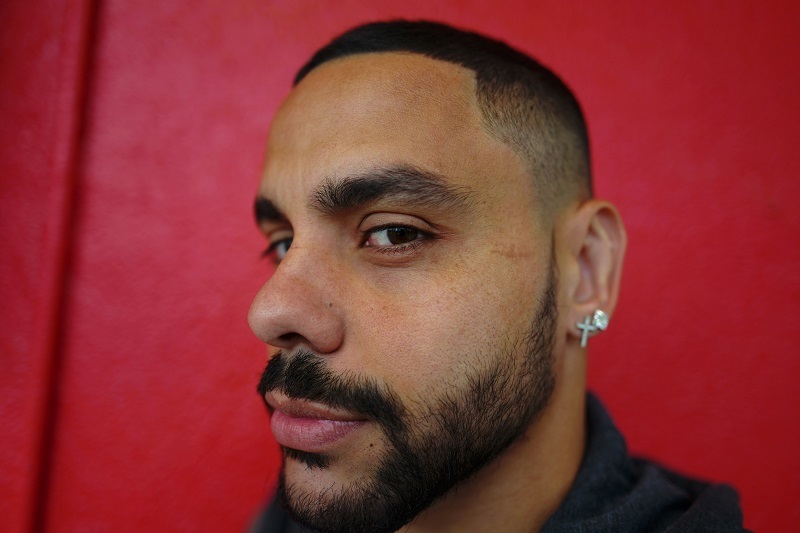
Diego played as an FW at the soccer school, but at Paraná Club, he played as a defensive midfielder. It's a bit hard to imagine from his current appearance, but Diego laughs, "I was marking the opposing team's number 10 and just kept chasing the ball relentlessly."
However, people eventually find their rightful place. In one match, Diego was put on the front line as a substitute for an injured player, and he scored two goals there.
"That felt so good that I switched to playing as a FW."
At 18, he also participated in the São Paulo Cup, the largest youth tournament in Brazil. Opportunities to train alongside professional players were increasing. It seemed he was steadily getting closer to his dream. However—.
"When I was turning 19 from 18, I couldn't get promoted to the top team and couldn't become a professional at Paraná Club."
For a player who missed promotion to the top team at Paraná Club, which is by no means a big club, it is realistically difficult to sign with other clubs within Brazil.
However, Diego did not give up. He clung to his dream. He decided to become a professional not in Brazil, but in a foreign country.
"It was Qatar. The agent who was supporting me introduced me. He said if I was okay with the second division league in Qatar, there was a chance. Of course, I was surprised. I didn’t know what kind of place Qatar was, so I was anxious. But if I didn’t go to Qatar, I couldn’t become a professional. I told myself this was a chance."
Thus, in 2009, 19-year-old Diego packed his daily necessities, dreams, and hopes into a suitcase and headed to the desert country.
Now, as a country that has hosted the World Cup for 22 years, there is no shortage of efforts to strengthen and improve the environment. The national team has become the Asian champion and there are also many clubs, including Al Sadd, that have advanced to the top in the AFC Champions League.
However, the place Diego crossed the sea to was Al-Mesaimeer, a club that had just been officially professionalized the previous September and belonged to the second division league.
"The level of soccer wasn't high, and the environment wasn't good either. I had imagined it, but honestly, I was surprised. On top of that, language, religion, food, climate—everything was full of difficulties. But I wanted to somehow make the most of this chance. It was a path I chose myself. Although it was tough, I learned a lot. I believe I grew significantly as a person in Qatar."
Late-Blooming Talent
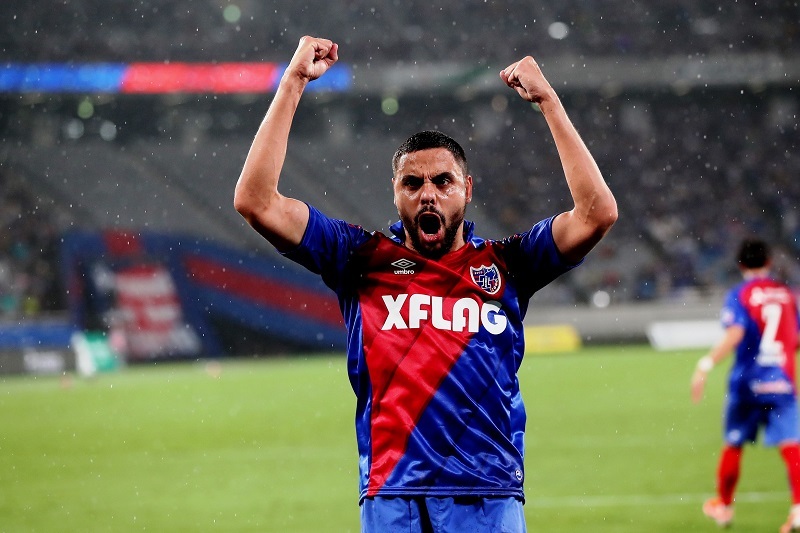
After spending two years in Qatar, Diego returned to Brazil as a professional soccer player as he had long wished and joined Noroeste. After a while, when an offer came from Suwon Samsung in South Korea, Diego once again jumped into an unknown world.
"I already had experience living abroad, so I wasn't worried. Besides, it was a very attractive offer. The treatment I received was good, and Noroesthi also got some money. So, with a six-month loan transfer, I headed back to Asia."
However, he was unable to make an impact as a foreign player in the K League. In fact, he was hardly seen on the pitch at all. This was because he suffered an injury.
Sports hernia—this was the diagnosis that tormented Diego at the time. He played in only three matches before the six-month loan period ended, forcing him to return home. After returning, he received treatment at a clinic in his hometown of Curitiba, and it took another four months for the pain to subside.
After moving through Noroeste, Bahia, Audax, Novorizontino, Boa, and Linense, Diego finally came into the spotlight at Ponte Preta in the Brazilian first division league, where he played in 2015.
Diego, who won the position battle against Borges—who was once the top scorer in J2 with Vegalta Sendai and was also selected for the Brazilian national team in 2011—showed remarkable performances as an attacking midfielder and winger.
"Taking the position from Borges gave me confidence. At that time, I was 25 years old, in the prime of my career as a soccer player. Because of this performance, I received talks of contract extension from Ponte Preta, and I also got several other offers."
One of those offers came from Kashiwa Reysol in the J.League.
"My agent also had experience playing in Japan, and I heard a lot about the good aspects of Japanese soccer from my teammates, including Borges. Besides, I was already used to stepping out of Brazil to take on new challenges, so without hesitation, I wanted to try playing in Japan."
Never give up!!
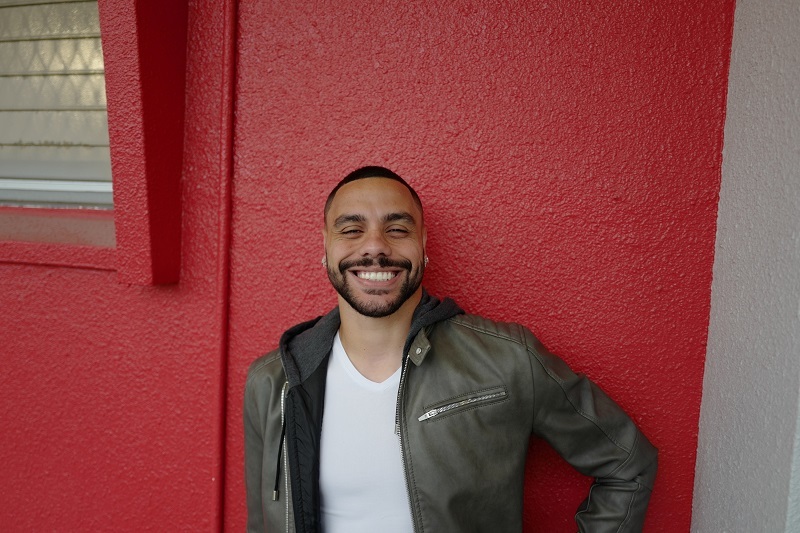
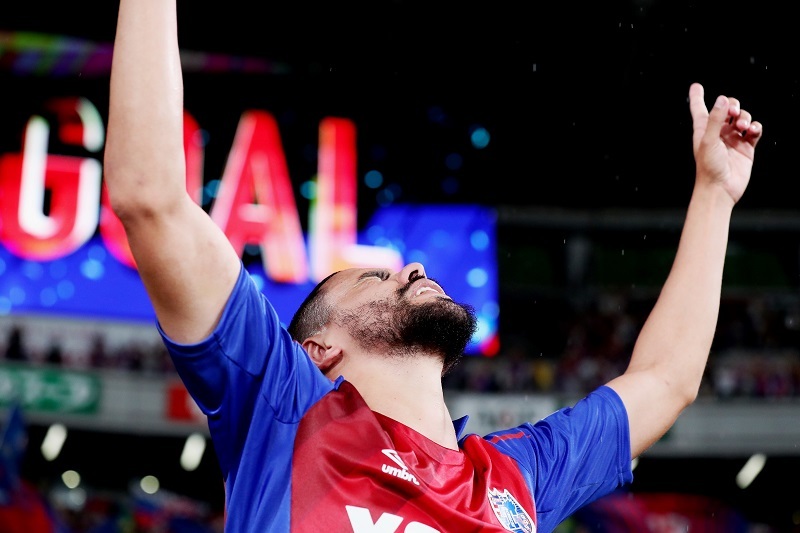
Two years later, Diego had the opportunity to put on the blue and red uniform.
"I was very happy. Actually, I had received offers from other teams as well. I chose FC Tokyo because I felt they were a good team to play against and because they are a club in the capital. When I actually came here, my teammates and club staff were warm, and the fans and supporters were passionate. I feel a great sense of fulfillment. Personally, coming to Tokyo and being given the role of a striker, I can feel myself growing."
There is no need to mention his subsequent success. Without Diego, FC Tokyo's front line is beyond imagination.
Reflecting once again on his career, Diego said, "I think I was also blessed with good luck."
"There are many times I feel that God has helped me. I am who I am now thanks to God."
But, as Diego continued.
"I also take pride in the effort I've put in. After school, I practiced every day, and whether in my teens, in Qatar, or in Korea, no matter how tough it was, I used that as motivation to keep going. I believe that because I never gave up at any time, I am where I am now."
Diego now has two dreams.
"One is to definitely win a title in Tokyo. The chance to achieve the club’s first-ever league championship, which players, team staff, and fans have long awaited, is right in front of us. How wonderful it would be if I could contribute to that. The other is to continue playing in Japan for as long as possible. Of course, I like living in Japan, and so does my family. If I can keep playing in Tokyo, that would be the best."
Having once fallen from the top spot, they fought back and rose to the top again after Sec. 31. No matter how tough the match situation, they battled tenaciously and steadily accumulated points. Never give up――. FC Tokyo’s fight this season is exactly the same as Diego’s soccer life itself.
◇Diego OLIVEIRA Profile
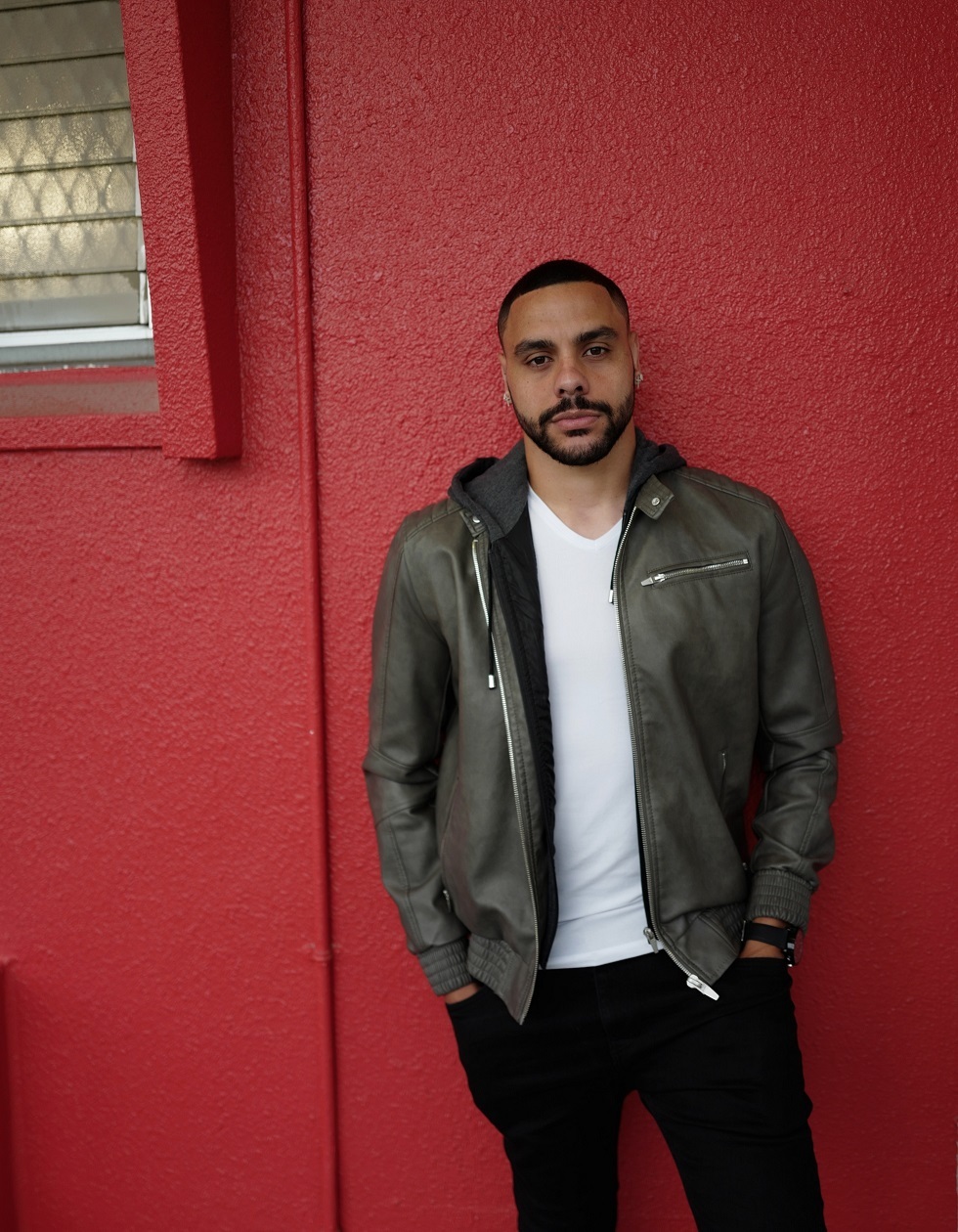
Kazunori Iino : interpreter
text by Atsushi Iio
photo by Kenichi Arai,Masahito Sasaki