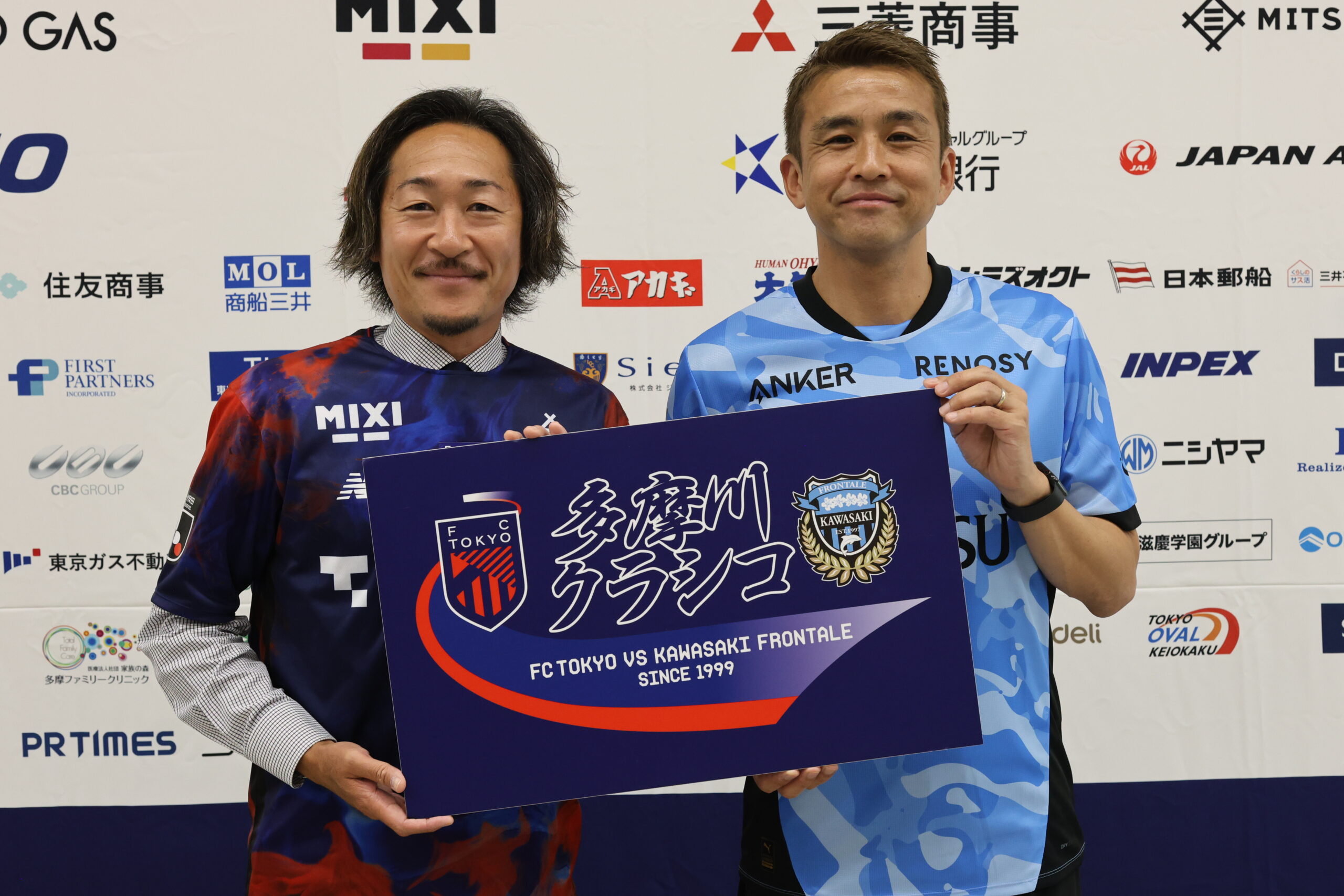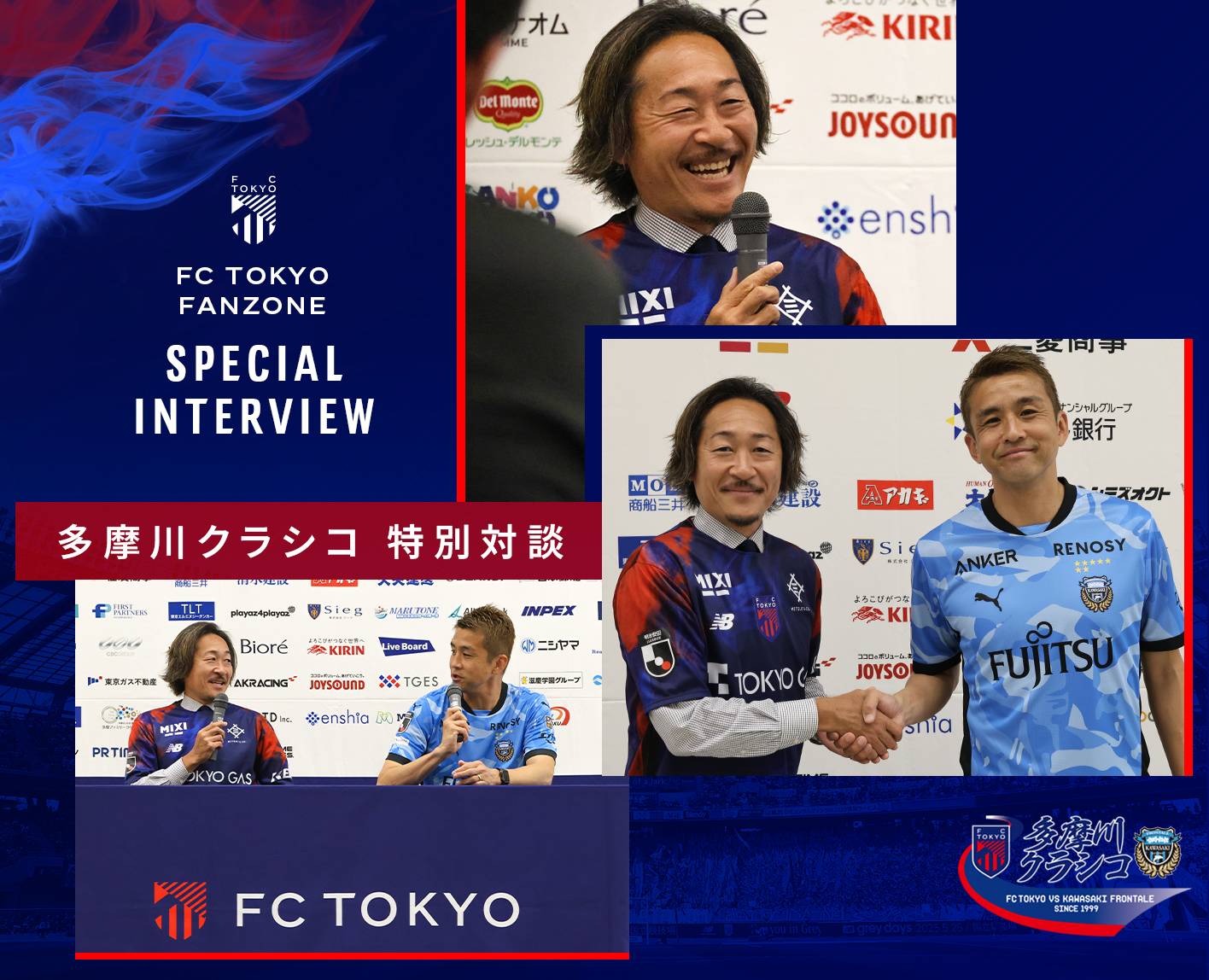


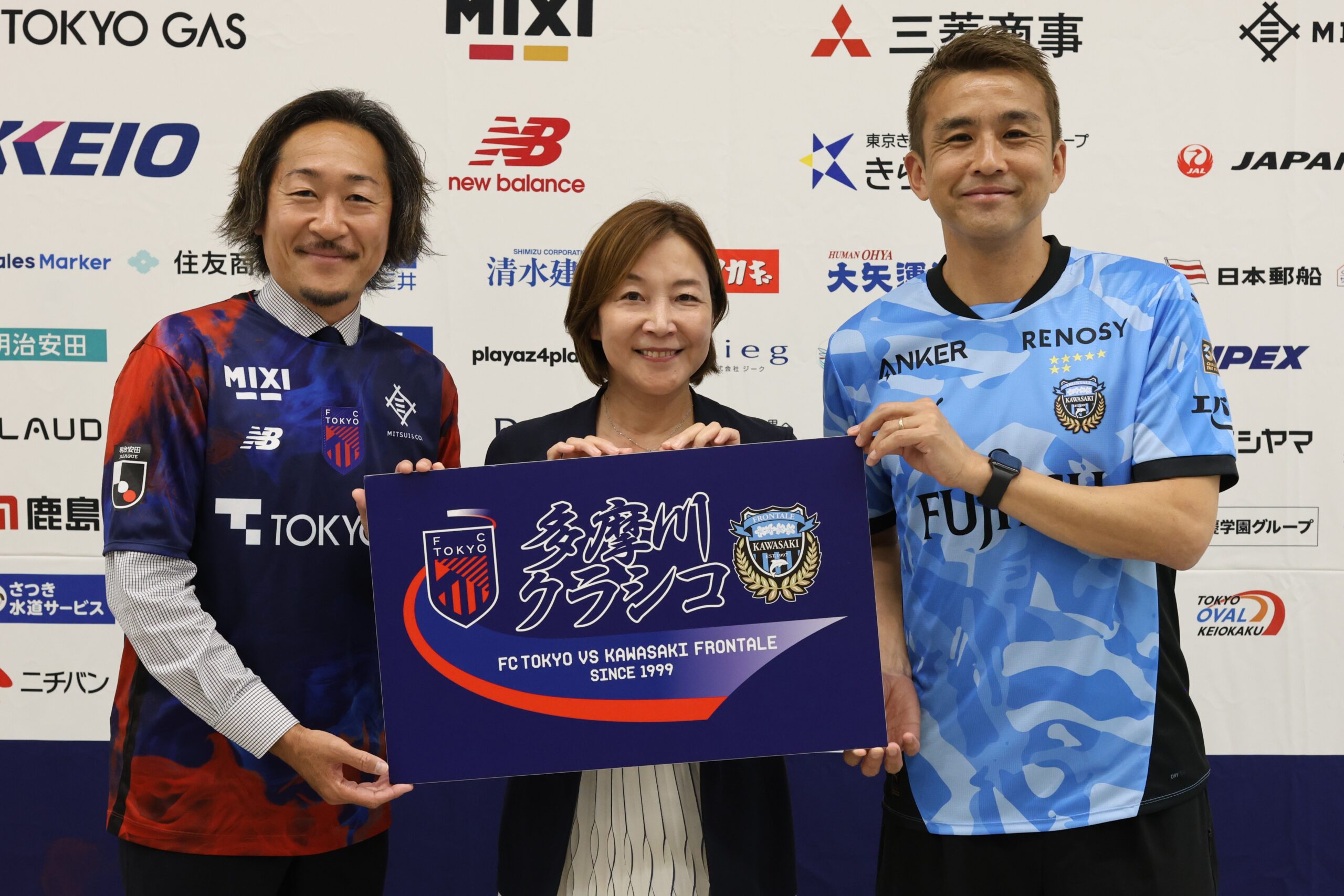
Special Talk for the Tama River Clasico
FC Tokyo: Naohiro ISHIKAWA Community Generator
Kawasaki Frontale: Junichi INAMOTO Frontale Relations Organizer
Moderator: Mari HIBINO
Hibino: I would like to ask both of you about your impressions of each other during your playing days.
Ishikawa: Mr. Inamoto is two years older than me, and I think he was unaware of my existence at that time. Inamoto was in the first year of junior high at Gamba Osaka's junior youth team, while I belonged to Yokohama Marinos' (at the time) junior youth team in Oppama. So, I had always known that Inamoto was an amazing player.
Inamoto: Did the news reach the east side too? (laughs)
Ishikawa: They said, 'Who is this Inamoto?' Later, he appeared in the J.League, and I watched him play with Mboma and others at places like Mitsuzawa.A Stadium.
Inamoto: That was in 1997.
Ishikawa: I was watching the seniors climbing up like that. But the first time we played together was in the Japan national team in 2003, when ZICO was the coach. That was the first time we played together.
Hibino: What was your impression of him in the national team?
Ishikawa: He was already playing vigorously overseas, and I was too intimidated to talk to him easily. Around my generation, there were players like Daisuke MATSUI, and our generation was called a gap generation, so while feeling the desire to catch up and surpass, he was like a reliable older brother figure.
Hibino: On the other hand, how do you see Ishikawa from your perspective, Inamoto?
Inamoto: I hardly have any image of him from Marinos; it’s definitely the impression of FC Tokyo. The first time we interacted was on the national team, so I barely remember that his speed, breakthrough ability, and the quality of his crosses on the right side were really good (laughs).
Hibino: In terms of generation, since there is only a two-year difference, was it a time when Mr. Inamoto was someone you admired?
Ishikawa: Yes, that's right. I was thinking about how I could catch up. I transferred to FC Tokyo in the 2002 season, and at that time, I watched the scenes of him performing brilliantly at the World Cup from the stands, even though we were both professional players. On that stage, even though we were both professionals, I felt a huge gap. From there, I kept thinking about how I could close that gap and fought with that in mind.
Hibino: Inamoto-san, what do you think?
Inamoto: I was active back then (laughs).
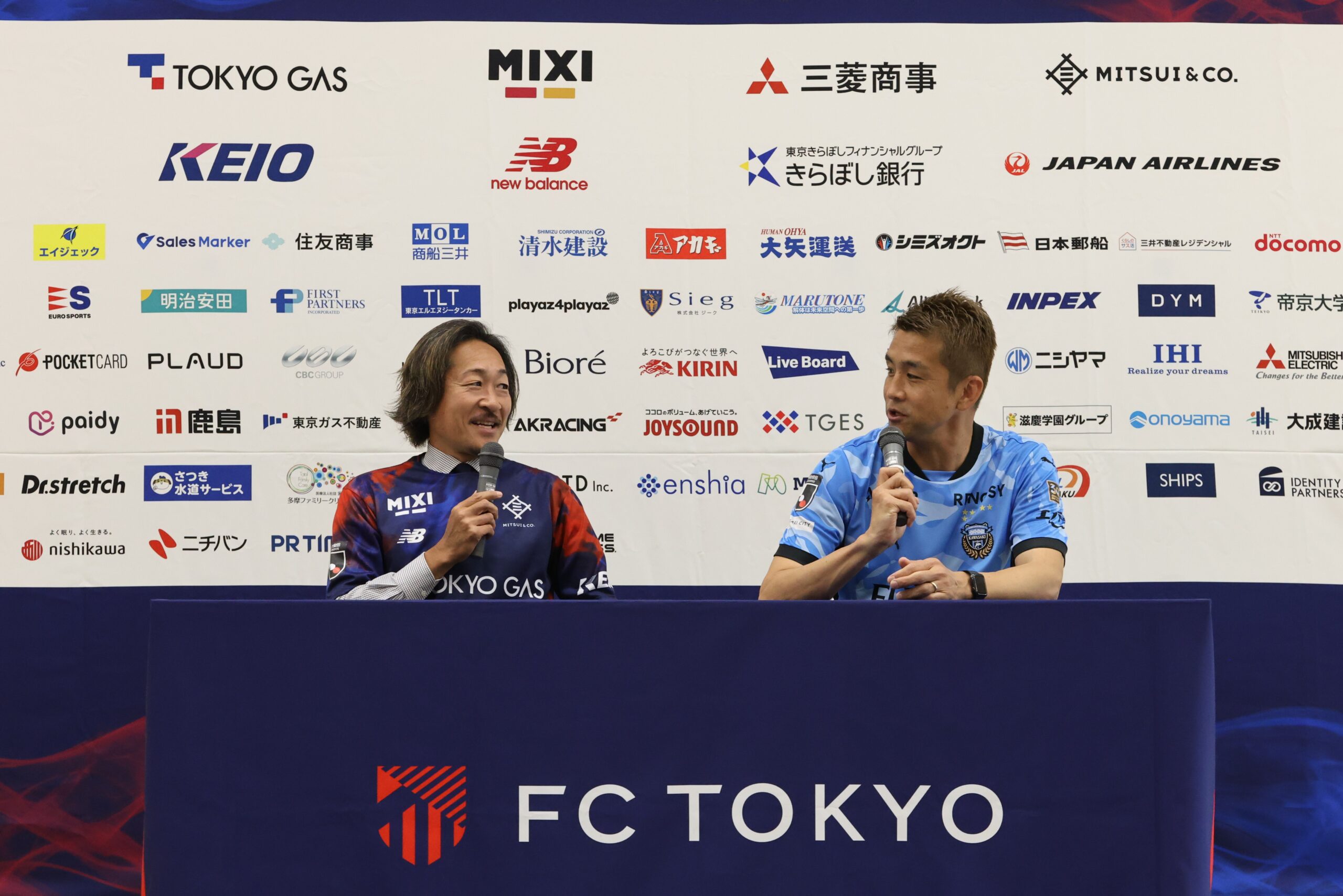
Hibino: I think this upcoming Tamagawa Clasico will be an important match. Could you share your analysis of both teams, or rather, how you view the current form and condition of the clubs?
Ishikawa: In a word, my impression is that the players are able to play without stress. I think this season, especially, they have managed to blend the build-up play with their characteristic fast vertical soccer through trial and error. The balance and relationships in the overall sense between each player's position and the players around them in front, behind, left, and right seem to be very smoothly coordinated in both offense and defense.
Hibino: It feels like various players are stepping up on different days, and the competitiveness is really showing.
Ishikawa: That's right. While there is always a rival in each position, it's not only about expressing your own style but also about how smoothly the coordination to create an environment where everyone can play comfortably has improved compared to last season. As I mentioned earlier, there is an impression of stress-free, naturally flowing movements in both offense and defense.
Hibino: What is your recent impression of FC Tokyo from your perspective, Mr. Inamoto?
Inamoto: I have a very strong impression that they are scoring goals. In total goals, they are around first or second place in J1 right now, and they also have a very good balance with few goals conceded. They haven’t lost much, I think only one defeat, so I feel they are really on the rise. The fact that even when various players come in, they achieve the same results and can play the same style of soccer is the fruit of what Coach Matsuhashi has been continuously working on, and it has emerged over the past six months.
Hibino: How has Kawasaki Frontale been recently?
Inamoto: Despite some injuries, winning two consecutive matches (against Yokohama F.Marinos and JEF United Chiba) is very significant. The team is gaining momentum, and since the next two matches are away games, if they can secure victories there, I think they still have a chance to climb higher.
Hibino: How do you see the current situation of Kawasaki from your perspective, Ishikawa-san?
Ishikawa: Their destructive power, or rather the individual abilities, are indeed high, and there are aspects they have maintained over a long period. I think they are currently working on blending the strengths Kawasaki has had so far with the style of football that Coach Hasebe is building. I strongly feel the danger when these elements come together, so we need to be very careful.
Hibino: As we approach the upcoming Tamagawa Clasico, I would also like to look back on the last match, the Tamagawa Clasico held on February 21. At that time, Kawasaki was the home team, andFC Tokyo won 2-1.
Ishikawa:In terms of build-up and advancing quickly forward, we were able to score through a long ball from Motoki NAGAKURA to Marcelo RYAN, and then there was also a wonderful goal by Kawasaki’s Yamahara. Regarding coordination, recently both Sei MUROYA and Keito SATO have been active, and the relationship between these two players led to goals. Even when we conceded, being able to score again immediately was very significant, I think.
Hibino: Junichi Inamoto, what are your thoughts?
Inamoto: It was a home game, but the impression was that it was almost entirely at FC Tokyo’s pace. Yamahara scored a wonderful golazo, but FC Tokyo quickly responded, and the 90 minutes ended without many good moments after that. It felt very unsatisfying, and considering it was a home game, the content wasn’t very good. Personally, what I paid attention to in that match was the matchup between Yuto NAGATOMO and Ienaga, and I viewed that from a slightly different perspective.
Hibino: How was it actually watching them? They are teammates who have been together for a long time.
Inamoto: They were energetic, both of them. When I was around 40 years old, I was barely in J1 or not, so seeing the two of them playing at the top level in J1 made me think, even if just a little, that I still want to play soccer.
Hibino: About how many minutes did you feel like playing soccer?
Inamoto: Well, about one or two minutes (laughs).
Hibino: I'd like to ask about the highlights of this Tamagawa Clasico. Ishikawa-san, could you tell us what the key points are and which players we should pay attention to?
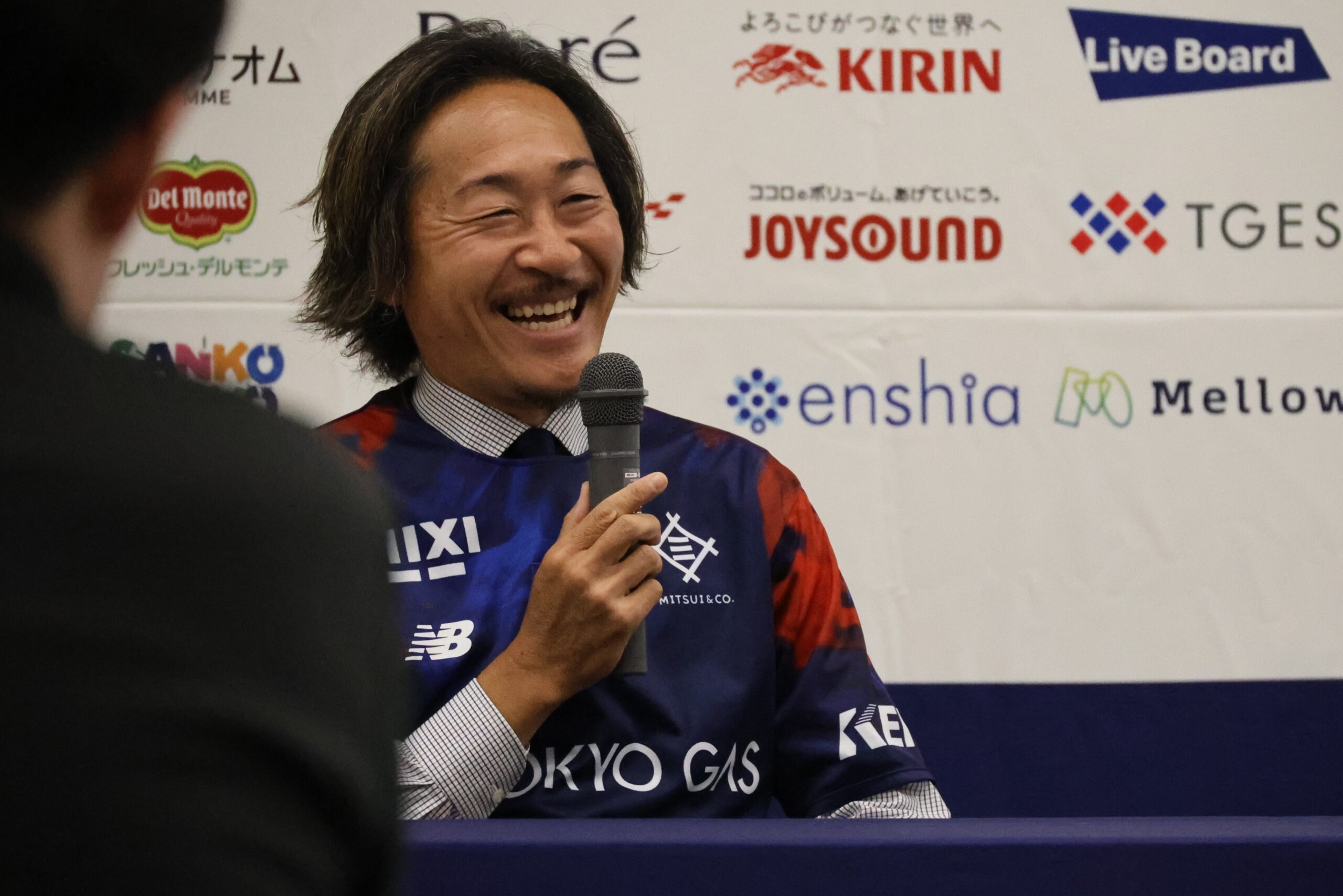
Ishikawa: Since it’s a home game and during Golden Week, the back-and-forth scoring and how we express our style are things I have always been particular about since my playing days. No matter how many goals we concede, we always aim to score. Looking back, there were many times we got caught out because of that, but that also means there are many goals scored. Like in the match against Mito, it’s about how we create matches and opportunities to share the joy of scoring with everyone. We also have our theme of ‘+1 Goal (One More Goal),’ and I expect an attacking style of soccer where we keep scoring, recover goals when conceded, and continue to pile up goals.
Hibino: Junichi Inamoto, what are your thoughts?
Inamoto: As Nao just said, I don’t want the Clasico to end 2-1 or 1-0. I think it’s always been about the back-and-forth battle, seeing who comes out on top. That’s the kind of match it is, and since it’s Golden Week, I think the theme this time is family. I hope it will be an exciting game with goals scored back and forth that makes people want to come watch again.
Hibino: Both of you mentioned this in common, but why do you think the Tamagawa Clasico ends up being a match with lots of goals and leaves such passionate memories?
Ishikawa: It might be a clash of wills. Our style is clear, and it’s about which team can achieve results with that style. It also draws a lot of attention, and honestly, at the start of the 2007 season, it began with the question, "What is the Tamagawa Clasico?" Mr. Inamoto has experienced Clasicos and derbies overseas, but I think this is a little different.
Inamoto: When I joined Kawasaki and heard about the Tamagawa Clasico, I thought, "Oh, I see," (laughs). However, I believe it’s something that everyone builds together, and this match has been held quite a number of times now. I think the history woven since the 2007 season has shaped the Clasico, and as time goes by, it will become more and more a clash of pride. So, I hope many goals are scored and that the Clasico becomes even more of a cultural event.
Hibino: Mr. Ishikawa, you have experienced the Tamagawa Clasico from the very beginning. Do you have any memories?
Ishikawa: I have many. What left a strong impression was that even when we scored, we couldn’t win.
Hibino: There were also times when we conceded an incredible number of goals.
Ishikawa: There was a time when we conceded 7 goals, and it was the first match in my soccer career where I thought, "Please stop already." The previous season featured a dramatic comeback victory (the 5-4 turnaround in the 2006 season), where Yasuyuki KONNO scored the winning goal at the end. There have truly been many flashy matches. The last time was 2-1, so as Tokyo, we don’t want to concede goals, but more than that, we want to show that we can score.
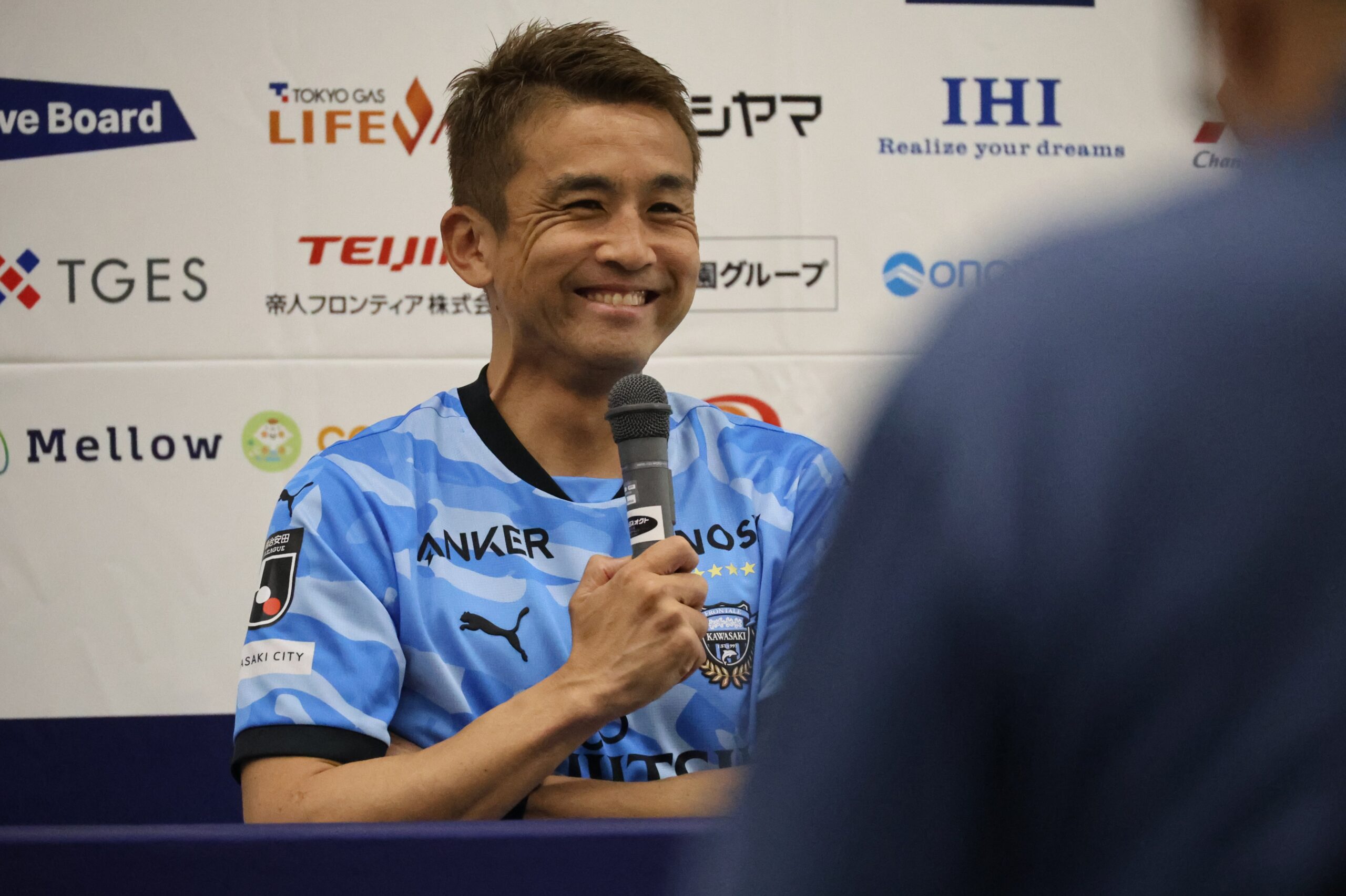
Inamoto: That's right. I transferred in the 2010 season, and the match we played that year at Todoroki Stadium featured the best dribbling I've ever had in my life, which left a very strong impression on me. We won either 3-1 or 3-2, but that memory is very vivid. On the other hand, I don't recall winning much away, so I'm looking forward to seeing how it goes away this time.
Hibino: In that context, I would like you both to name players you are paying attention to.
Ishikawa: Several come to mind, but it’s Kouta Tokiwa. There are many attackers, but I expect this match to be a turning point for Tokiwa, who has firmly taken his position and shown his presence through the coordination of offense and defense since this season, to build his career along with the club and Clasico history. I definitely want Kawasaki’s fans and supporters to recognize his presence as well.
Hibino: He is a player with a very passionate spirit, isn’t he?
Ishikawa: Yes, he is passionate and now in his second year after graduating from university. He originally came through our youth system and then went to Meiji University to gain experience. Even back then, he played in J3 matches with FC Tokyo U-23, so while he has a certain roughness in a good way, he has now become more refined and plays with consideration for the team. We have very high expectations for his leadership in that regard.
Inamoto: Like the previous player, it’s definitely Maruyama in the back. He’s a veteran, but since Kawasaki tends to focus more on the front, how much they can hold firm in the back and his leadership become crucial. The team feels a bit quiet overall, so if Maruyama, who talks the most, can firmly take leadership, I think there’s a chance to win.
Hibino: FC Tokyo is also his old club, after all.
Inamoto: That's right. I think his motivation is high, and since it's a series of consecutive matches, we don't know how it will turn out, but I want to have expectations. Even watching practice, the feeling that the defense tightens up considerably was different, and in actual matches, he has shown stable performance. I think that is truly a skill that only a veteran can achieve.
Hibino: Since the theme this time is family, and both of you have children, if you were to bring your children to watch this match, what aspects of soccer would you like them to enjoy?
Ishikawa: It’s definitely the atmosphere at the stadium. It will be dyed in blue and red, and while you can hear Kawasaki’s cheers as well, I want families to experience the rhythm and changes within the match—the moments when the voices get louder depending on the flow of the game, when chants come out at certain timings, the exciting parts, and the calmer moments. Rather than overthinking it, I hope they can really feel that atmosphere, the voices, and the overall vibe of the match.
Inamoto: I think a huge number of fans will come, so experiencing that atmosphere and the extraordinary feeling at the stadium is the true charm of soccer. I hope families can enjoy each other's chants and cheers, their timing, and so on, and since I’m expecting many goals in the match, I want them to firmly imprint those moments in their memories before going home.
Reporter: Since we talked about family, if you were to introduce a player you want children to see at least once, who would that be?
Ishikawa: It would be Kei Sato. What I want people to focus on is his dedication. His defensive intensity and quick transitions led to goals in the match against Mito Hollyhock. He pays attention to the details, especially in situations where he doesn’t have the ball, applying pressing and steadily building up that intensity, which eventually creates opportunities. Of course, I want people to see the moments when he scores or assists, but above all, I want them to see him fighting aggressively for the ball with full effort.
Inamoto: It's Wakisaka. I think he is the player who is closest to what Frontale stands for, and in terms of technique and carrying the ball, he is definitely a player who embodies Kawasaki's style. He is an academy graduate, and I believe that imitating his play is very helpful for development.
Hibino: We've heard a lot of stories, but now I'd like to ask both of you to predict the score for this Tamagawa Clasico match. So, please both say it at the same time. Inamoto-san says 4-3, Ishikawa-san says 4-1. Could you please explain your predictions?
Ishikawa: Well, it’s about a back-and-forth scoring battle, but still, I don’t want to concede many goals, so I set it at one goal against. Also, Ajinomoto will erupt four times. In the last home game against Mito, we scored five goals, and I do want us to score more, but considering past matches against Kawasaki, I thought it wouldn’t be that easy. So, including hope, I went with 4-1.
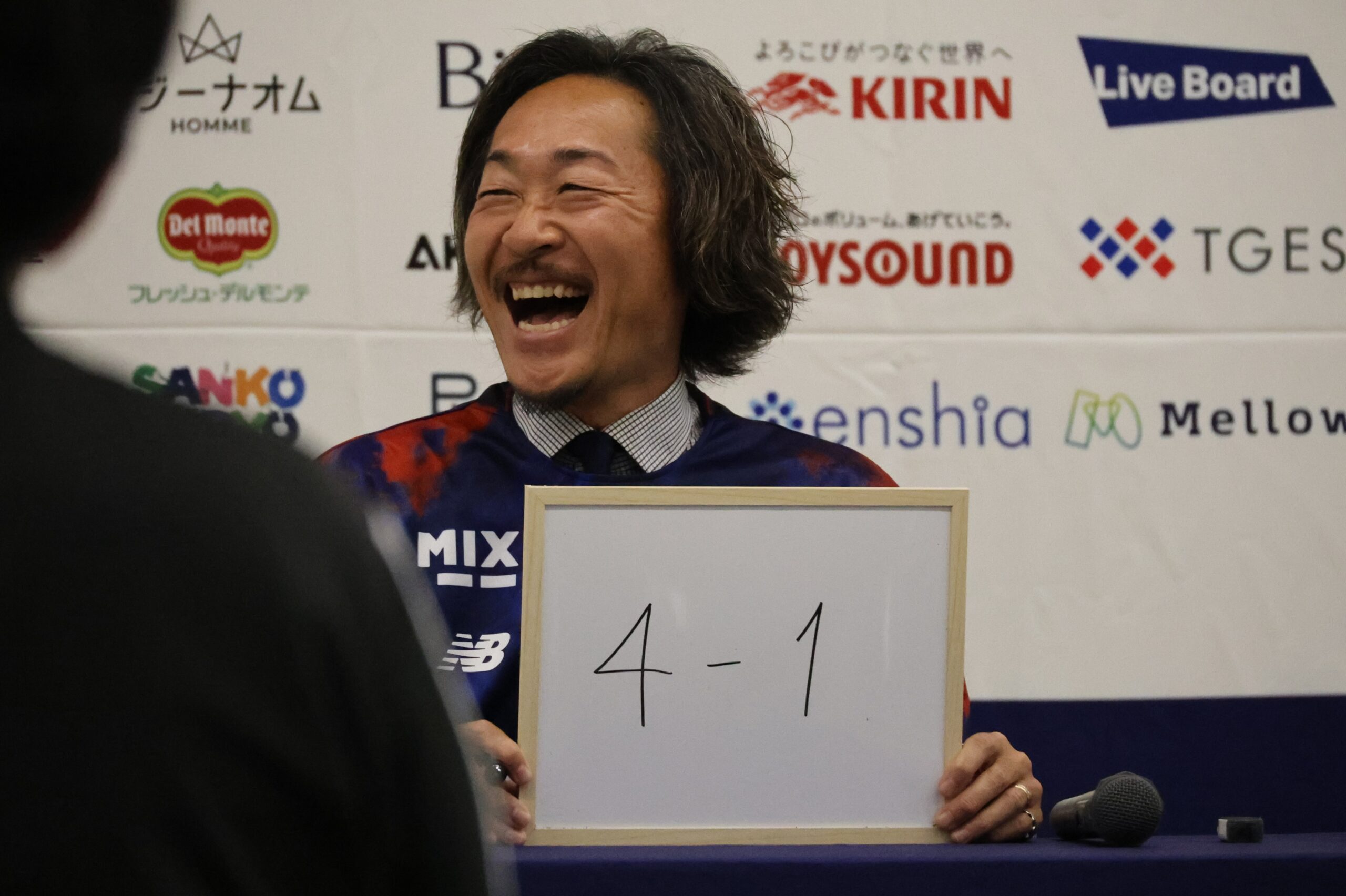
Hibino: Mr. Inamoto, you predicted 4-3, right?
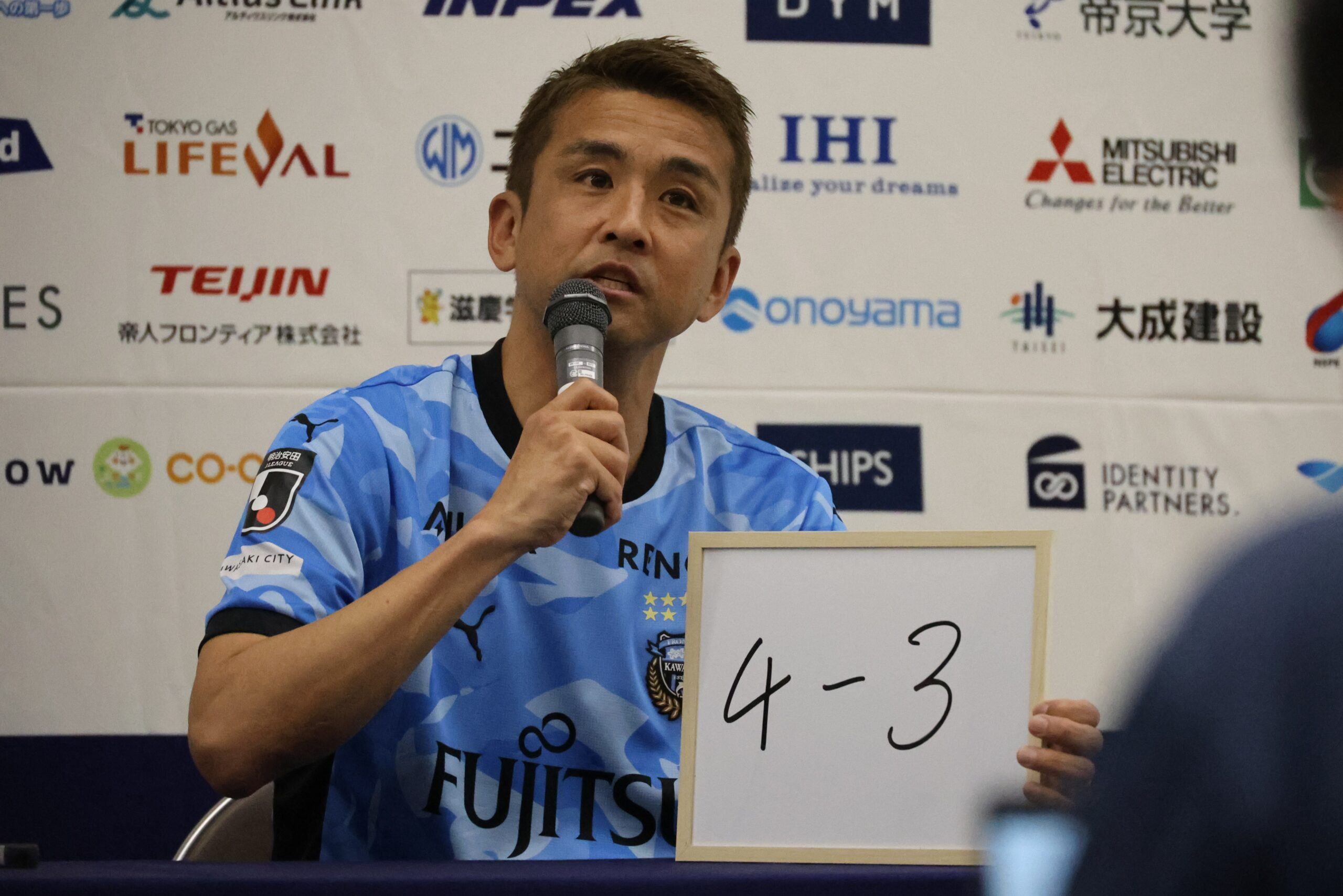
Inamoto: I think that score would be the most exciting to watch. It’s hard to tell how the game will unfold with goals being exchanged, but a match with a total of seven goals would definitely be a memorable experience for families watching together.
Hibino: How do you see the flow of the game?
Inamoto: The score will be 2-2 at halftime. I think a comeback from there would be more interesting. If it unfolds that way, it would be really exciting.
Hibino: Ishikawa-san, how do you see the flow of the game?
Ishikawa: The flow is that we concede a goal a little earlier, but recently we don’t panic even if we concede. So, we first score one goal in the first half to make it 1-1. From there, including the substitute players, we accelerate and score three more goals to make it 4-1.
(Honorifics omitted in the text)