[Albert PUIG ORTONEDA Interview]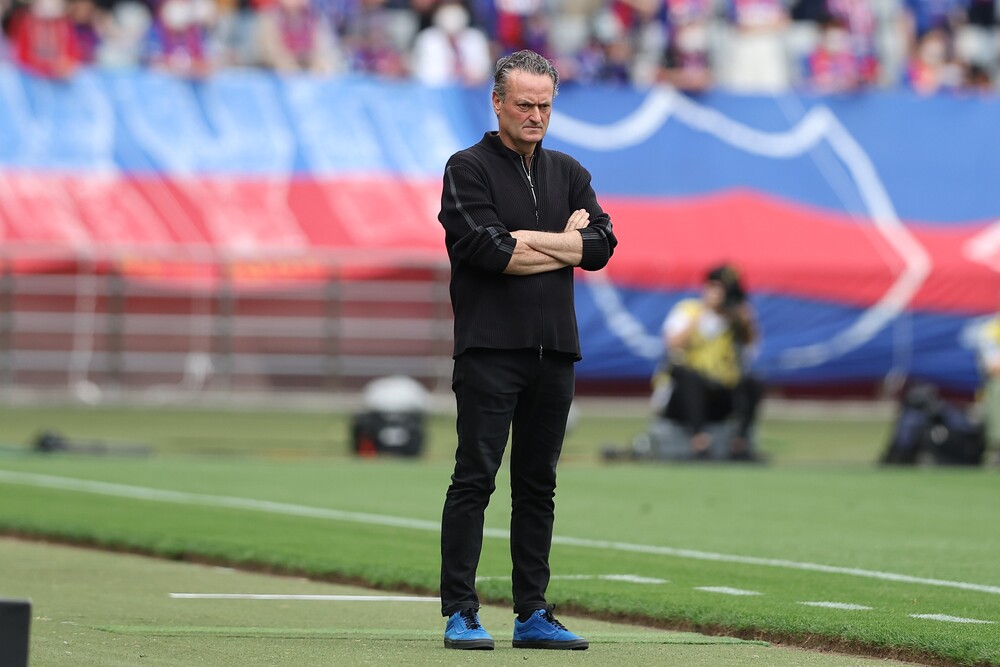
Q, the members are different from the previous Levain Cup, but I think Iwata's attack was quite powerful. Can't we come up with countermeasures by defending properly?
A, from watching Iwata's matches over the past few years, I analyze that they have a stronger defensive tendency. They commit more players behind the ball to defend and use counterattacks as a major weapon. Set pieces are also dangerous, and they are good at attacking from the sides. Additionally, they have several high-quality players. They tend to proceed with the game cautiously, but when they are behind due to conceding goals or when the match situation requires a win, they tend to boldly shift to a more attacking style by frequently using direct play and change their style of play to aim for victory.
However, it is more important for us to be above our opponents. At this stage of the team's growth, we have been able to increase the amount of time we can possess the ball and control the game. In the process of moving on to the next phase of growth, various issues may arise. We have been able to accumulate points at the beginning of the season. It is also possible for such a development to occur in the process of growth. I think that was also the case in the Tosu match.
For example, in the opening away game against Kyoto, we were able to achieve victory, but I don't think our performance was particularly good. It may be evaluated as a result of earning 3 points, but the match content and result were not necessarily linked. In the process of growth, there are many cases where the team's growth is not properly reflected in the match results. In training, the players are starting to express better plays. They are gradually becoming able to apply those plays successfully in official matches.
Q: Although we lost to Iwata in the away game of the Levain Cup, I think there were some good parts in terms of combination.
A, the team is gradually developing good combinations in both the Iwata and Tosu matches. However, that has not necessarily been reflected in the match results. Although we were able to play well, we lost those two matches. On the other hand, in the Kyoto and Hiroshima matches, we did not necessarily play well, but we secured victories. However, I believe that experiencing the struggles of growth now is a valuable process for achieving significant growth and continued success in the future. My role is to nurture this club so that it can continue to win more matches in the future.
Q, do you want to let those players play in the game precisely because they have a good image remaining?
A: I prioritize my own sense from the recent few days of practice over the feeling from the Iwata match when selecting players.
Q: Can the team make detailed adjustments?
A: Until now, Tokyo was not accustomed to pressing the opponent continuously and attacking into tight spaces. We were required to play faster and move quickly toward the goal in situations where there is more space.
As in the Tosu match, the time when we can control the game and push the opponent is increasing as I expected. The fluid attack when pushing the opponent, and the timing of the attack, are exactly what we are training for. At the same time, because we are pushing the opponent, it is important to train for defense against counterattacks when the ball is taken away.
Q, I think it's about how long we can hold the ball and how we can connect it to a goal. What is the most emphasized thing for the players right now?
A: I emphasize playing with composure. I believe that in terms of ball possession, the team as a whole has been able to build up more calmly in the past few matches compared to the start of the season. This composure is also required to be expressed even better in front of the goal. It is necessary to continue training diligently and take the time to develop this.
Q, do you want to develop your skills or your judgment more?
A, of course I want to develop both, but I believe the technical aspect is still lacking. Since there will be more play in tight spaces, the players are still mostly accustomed to fast attacks in open spaces, and that must of course be utilized as one of our strengths. There is no need to lose that; on the contrary, we must continue to make use of it. I think it is about adapting to every situation without fixating on one thing and making the best choice each time.
Q, is it also important for the players to have a challenging attitude when they are encouraged to challenge themselves more?
A, exactly right. However, it is precisely when pressing forward that players are required to take risks at the right timing. When done well, even if the ball is lost, the team can quickly regain possession.
Q: Is creating the shape of a goal through repetitive practice improvisational?
A, it is important to gain composure in order to effectively utilize imagination. I believe confidence makes that possible. In that sense, not only the football aspect but also the mental part, training to play with confidence, is conducted in daily practice.
Q: How many Tokyo players are able to practice the concept of "pause" or "break" (in Japanese) that has recently started to permeate in Japan?
A, I think it is something that everyone must have first and foremost. However, as a characteristic of the players, for example, Shuto ABE struggles to have a pause. Considering his own playing style, I think Leandro and Yojiro TAKAHAGI do have a pause. However, Shuto ABE contributes greatly to the team in terms of winning the ball more than the two who have a pause. On the other hand, the contribution of the two in that aspect is not as much as Shuto ABE’s. In that sense as well, it becomes important for the whole team to maintain a good balance.
[Player Interview]
<Adailton>
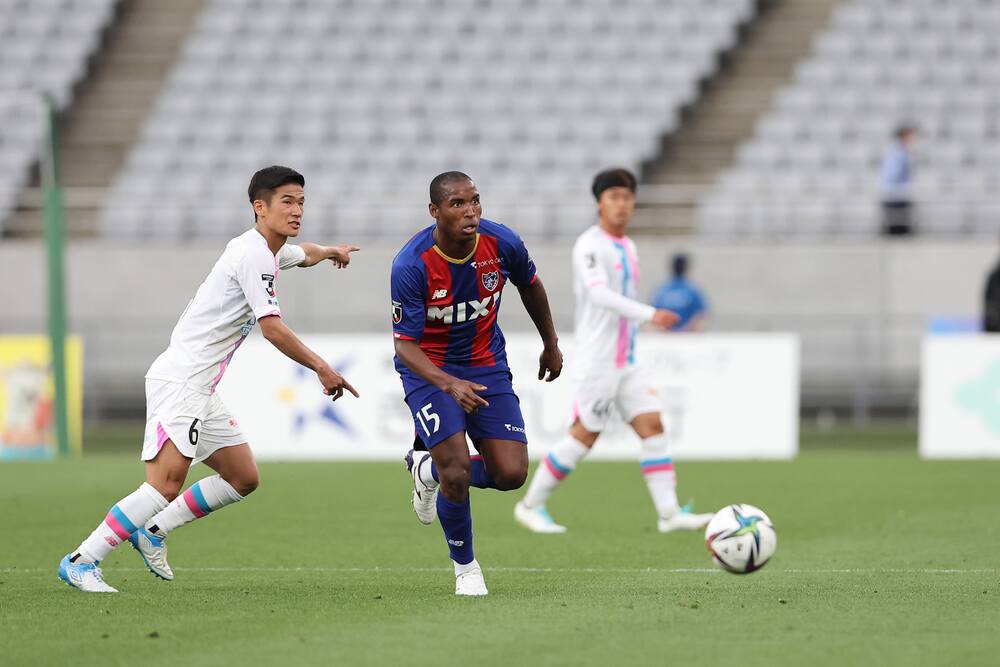
Q: How do you feel about facing your former team Iwata for the first time?
A, Although it is an away game against my former team, I am really excited and fully motivated. I look forward to seeing the players I used to fight alongside again, but I want to prepare well and achieve good results.
Q, Do you have any memories of Yamaha Stadium? You must have a desire to score goals as well, right?
A, I spent five years at Iwata, so I have many good memories. Although this is not our home game, I believe we can approach the match with a positive image, play well, earn three points, and return to Tokyo.
Q: What do you need to do to change the team's negative momentum?
A: We haven't gotten results yet, but our mindset hasn't changed. I believe that if we can produce results, the team's atmosphere will improve even more, and we all want to fight together to move up the rankings.
Q, I think you were involved in chances, such as shooting that was deflected by the post, in the Tosu match. How is your performance?
A, there were times when my shot hit the goalpost and didn’t go in, and conversely, in the match against Gamba Osaka, the ball hit the opponent and went into the goal. Of course, luck plays a part, but I believe that not only luck but also the process leading up to the goal is important. I’m in good form and think I just have to keep going consistently.
Q, what do you think is required of Adailton to further deepen the new soccer style within the team?
A, with the change of the coach and the team playing a new style of soccer, I think everyone, including myself, is somewhat confused, but there are also parts that we are managing well. Personally, I am talking with the coach to resolve the areas of confusion, and I hope to deepen my understanding, play better, and contribute to the team.
Q, please share your enthusiasm for the fans and supporters who continue to support us positively.
A, we also feel the strong support from all the fans and supporters. Although we have been unable to win matches recently and there may be times when fans and supporters need to be patient, our feelings remain unchanged. We look forward to winning the title or finishing in the top ranks so that we can all celebrate together.